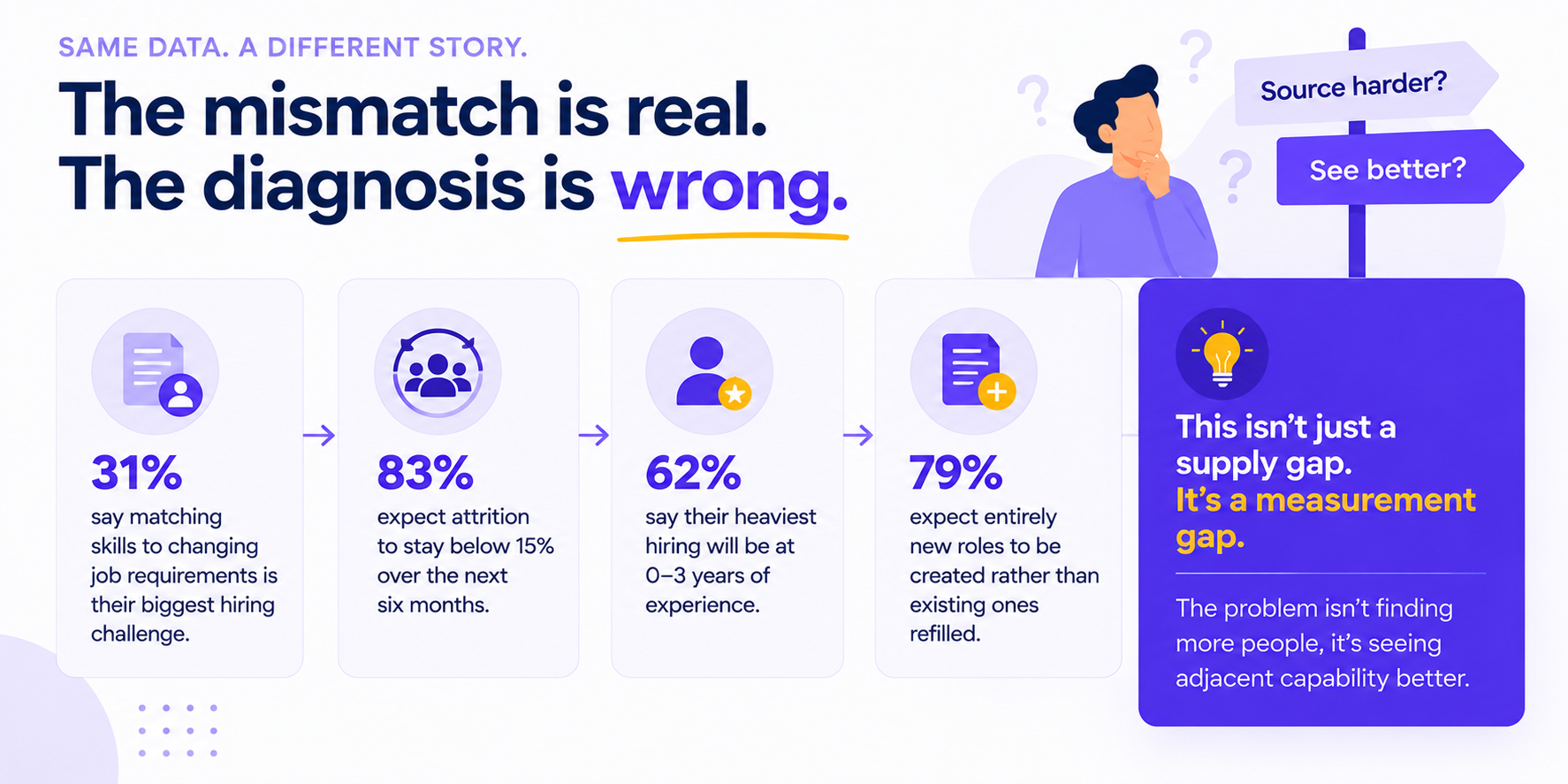
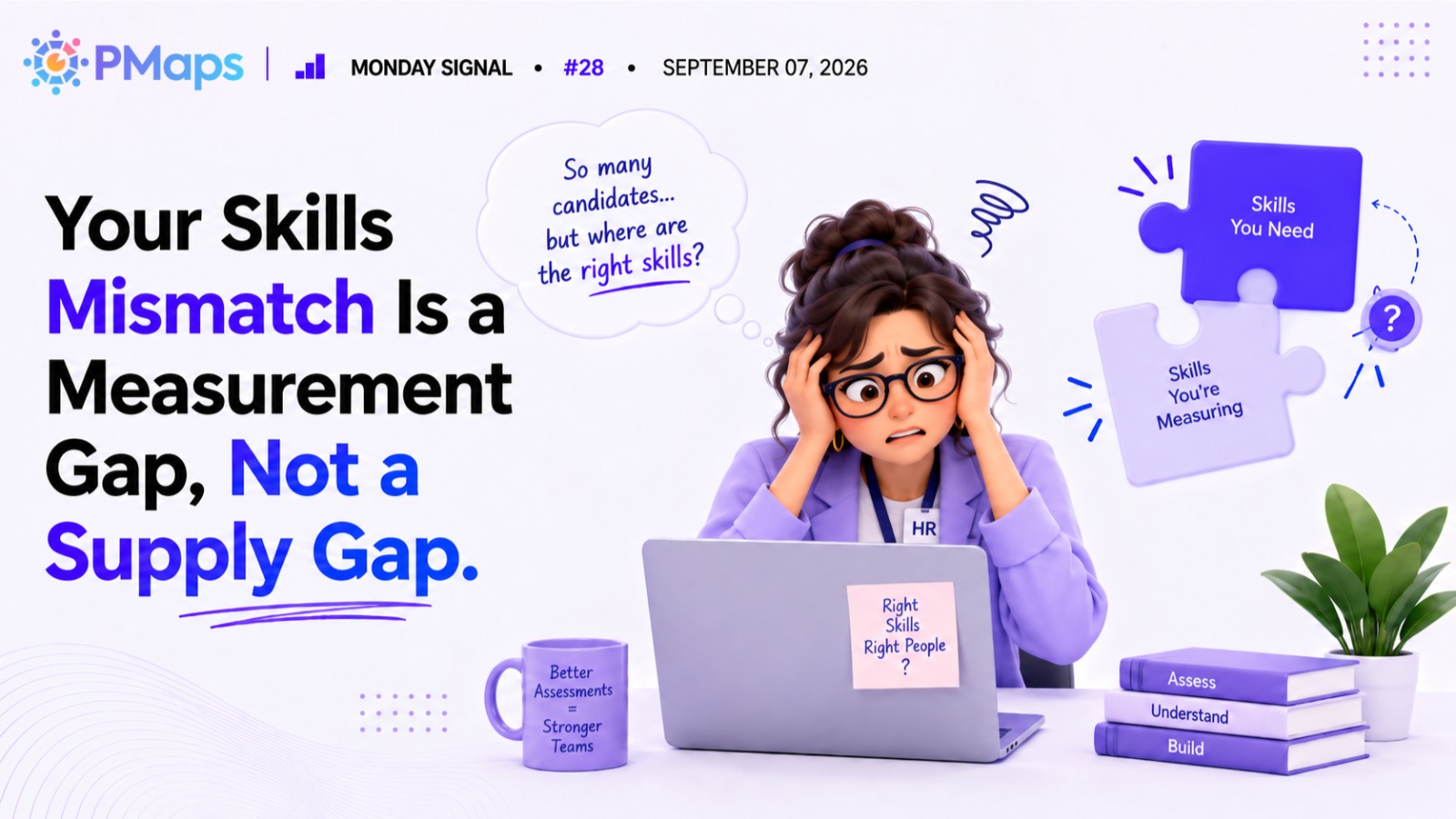
31% of Indian HR leaders name matching skills to changing job requirements as their biggest hiring challenge, while 83% expect attrition to stay below 15%. Those two numbers cannot both be a talent shortage, and what sits between them is worth an hour of your week.
Naukri published its H2 2026 Hiring Outlook on 25 August, built on responses from more than 540 senior HR leaders and hiring decision-makers across sectors. The headline was optimistic: 97% expect hiring to continue through the second half, and 79% expect entirely new roles to be created rather than existing ones refilled.
Three numbers further down the same survey are more interesting than the headline.
Thirty-one percent named matching available skills to changing job requirements as their single biggest hiring challenge - the leading obstacle in the study. Eighty-three percent expect attrition to stay below 15% over the next six months. And 62% said their heaviest hiring will be at zero to three years of experience.
This is a survey of expectations, not a record of outcomes, and it should be read that way. But read together rather than separately, those three numbers describe something quite specific.
The obvious reading is a supply problem. If available skills do not match job requirements, the market is not producing the people, and the response is to source harder: more channels, better offers, a campus program, a partner in a new city.
That response is expensive, and it does not fit the other two numbers.
If attrition is running below 15%, then more than eight in ten of the people who will do the work in March are already inside the organization today. And if the heaviest hiring is at zero to three years of experience, those hires are not arriving with the missing skill either. At that band an employer is buying potential and paying to develop it, which is the same problem in a more expensive wrapper.
Then there is the third number, and it is the one that makes sourcing structurally unable to solve this. Seventy-nine percent of these leaders expect new roles. A genuinely new role has no incumbents anywhere. Nobody's CV carries the experience, because the experience does not exist yet in the labor market. You cannot recruit your way to a skill nobody has performed.
The mismatch is real. The diagnosis is wrong.
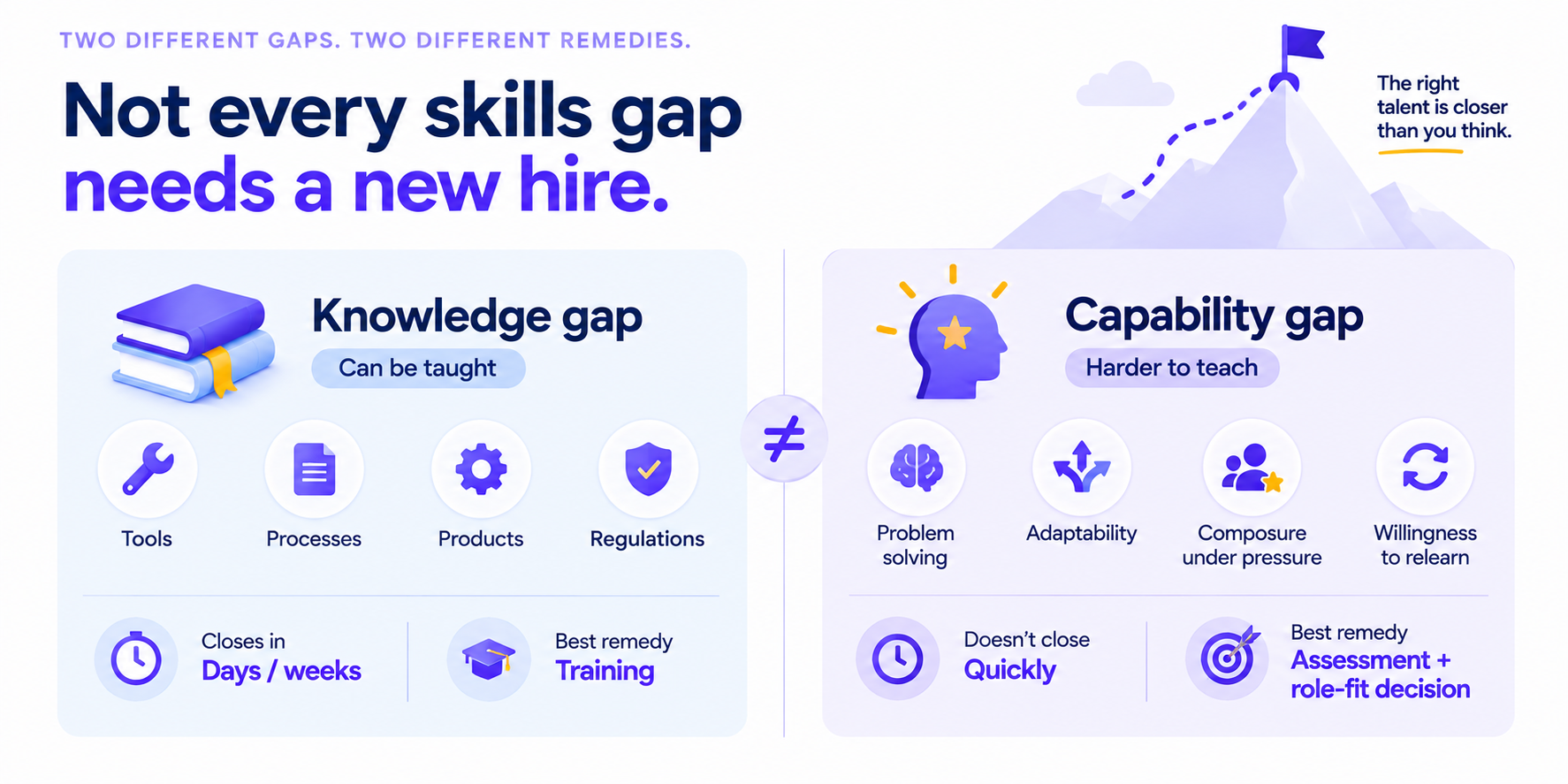
"Skills mismatch" is doing two very different jobs in one phrase, and the two have opposite remedies.
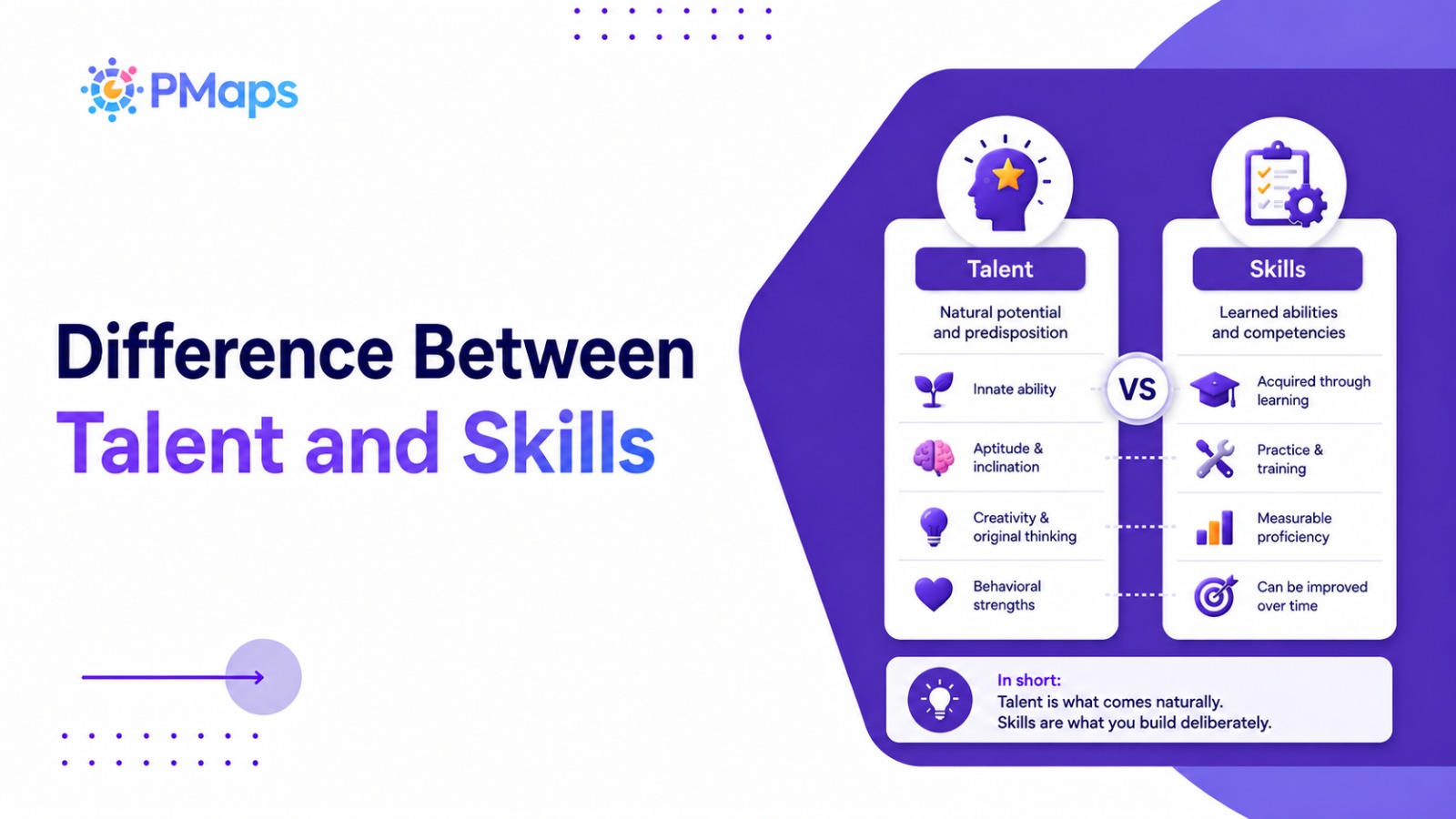
The first is a knowledge gap. Someone does not know the tool, the regulation, the product line, or the process. Knowledge gaps close on a training timeline - weeks, sometimes days, and reliably.
The second is a capability gap. The role needs a different kind of thinking, or a different behavior under pressure, than the person has shown: structured problem-solving where there was procedure-following, comfort with ambiguity where there was a script, a willingness to be a beginner again at forty-two. Capability gaps do not close in a training week, and they are not visible on a CV.
Most organizations treat both as one problem and hand both to the same team. Recruitment is asked to solve the first, which training could have solved for a fraction of the cost. Training is asked to solve the second, which it cannot.
The reason the two get confused is that nobody measured. An organization typically knows what its people were hired to do, and what they currently do. It rarely knows what else they could do, because it has never assessed anyone for anything except the job they already hold.
That is what the 31% is actually reporting. Not "the skills are not available." It is "we cannot see which skills we have."
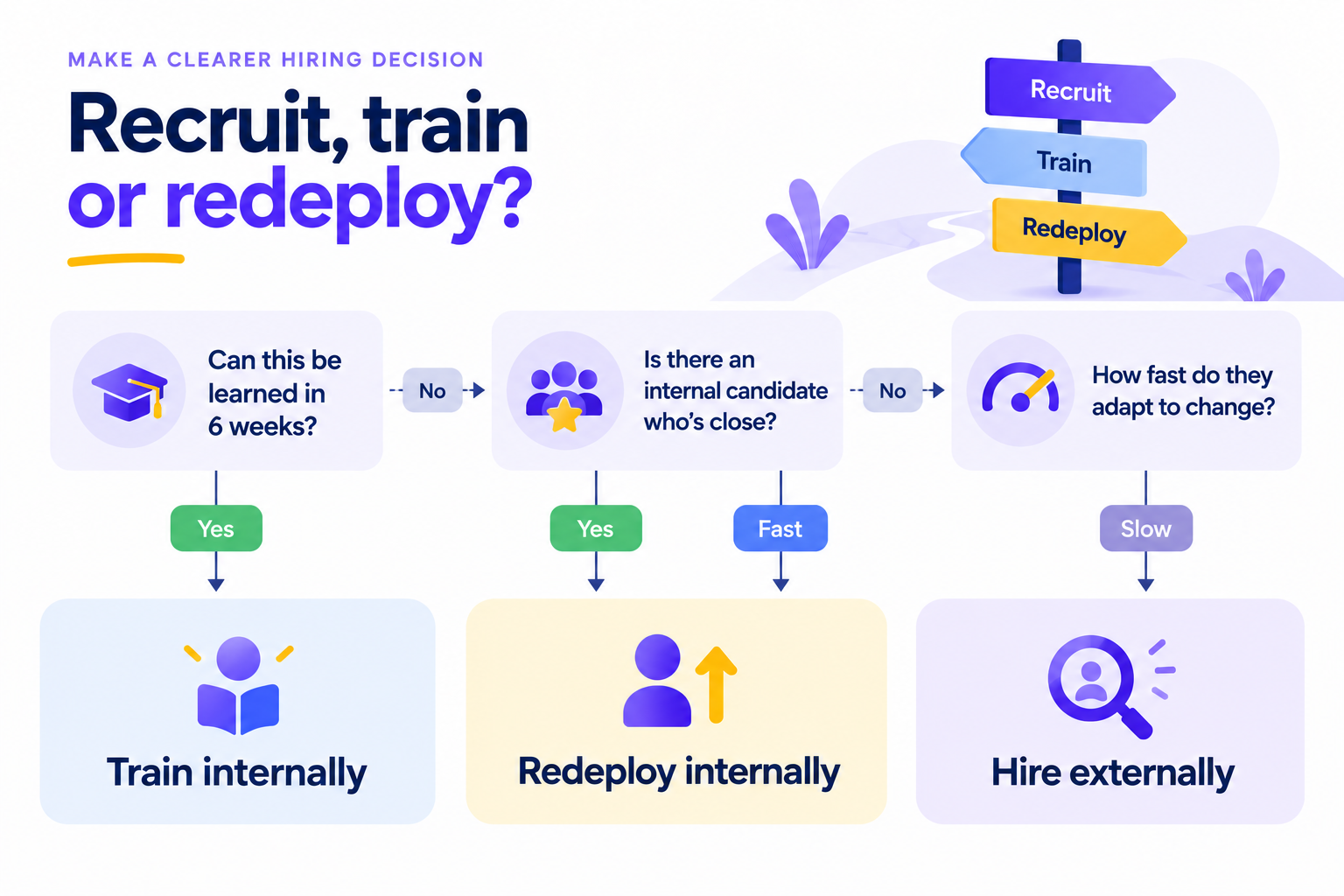
None of these requires a platform, and all three fit inside a working day.
One. Split the requirement list in two. Take the description for one role you are creating and sort every requirement into two columns: things a competent adult could learn in six weeks, and things they could not. Tool proficiency, product knowledge and most regulatory content belong in the first column. Judgment under incomplete information, composure with an unhappy customer, and the tolerance for being newly incompetent belong in the second. If most of your requirements land in column one, you have a development problem you are trying to solve with a requisition.
Two. Benchmark against people, not against the job description. Job descriptions are written aspirationally and they inflate. Find the three or four people already doing the nearest adjacent role well, and write down what they actually do in the hardest hour of their week. That list is your real requirement set, and it is almost always shorter, more behavioral, and more useful than the description you were about to advertise.
Three. Ask the adaptation question about the bench you already have. For any internal candidate, one question is worth more than a skills inventory: when the process, system or product last changed under this person, how long was it before they were productive again, and what did they do in the first week? The answer sits in performance records and in their manager's memory, it costs an afternoon, and it predicts a move into a new role far better than a list of tools they have touched.
Run those three on one role and you will usually surface at least one internal candidate nobody was considering, plus a specific reason the others are not ready - which is a training brief rather than a rejection.
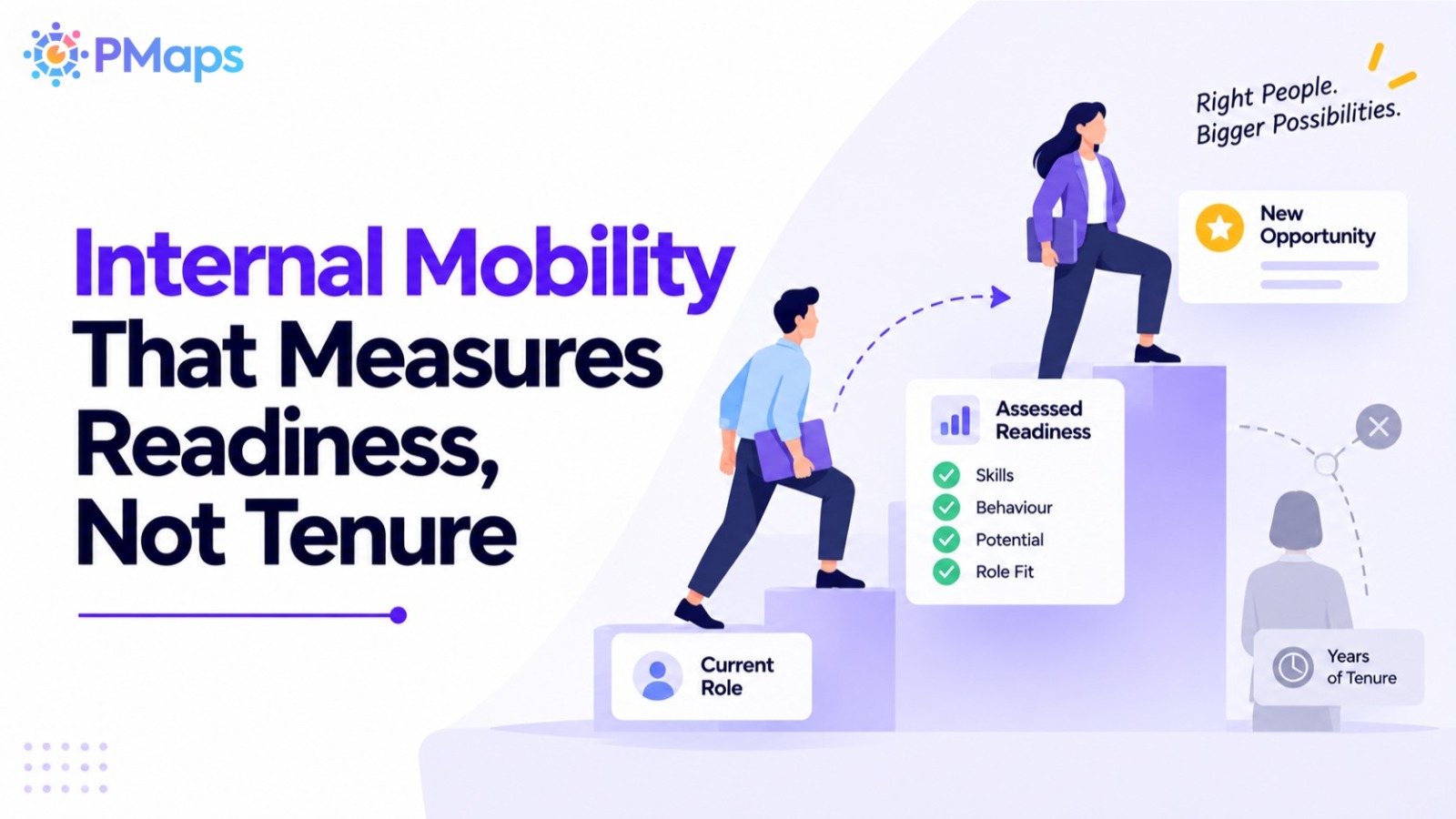
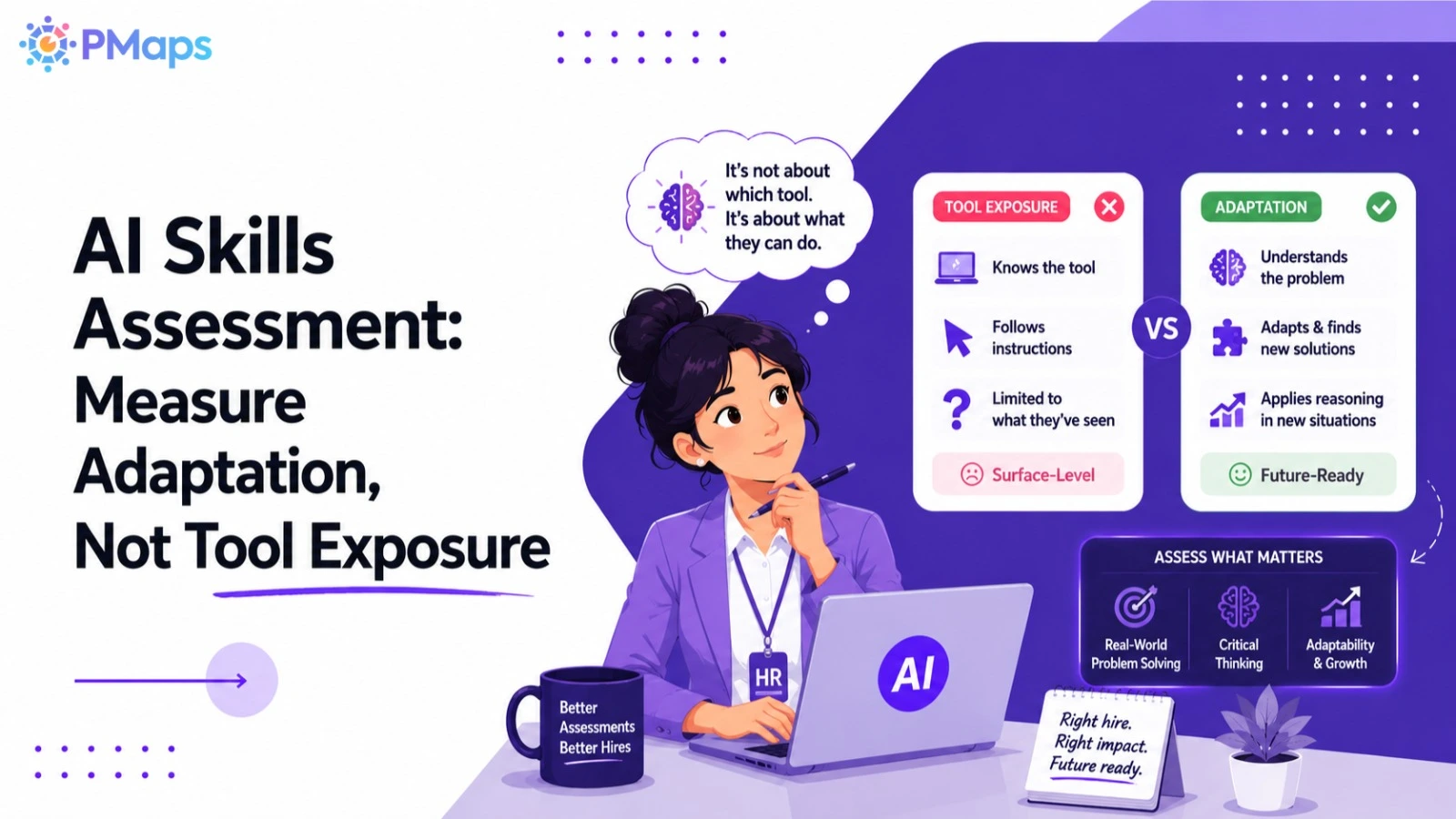
This is the post-hire half of what PMaps does. Career Elevation Assessments cover skill-gap analysis for existing employees, high-potential identification, succession planning and internal mobility decisions, including AI resilience assessment - which measures how readily a person adapts to working with AI, rather than which AI tools they have already used. Scores are read against validated role benchmarks, so a good score means good for this role rather than good in the abstract. 4M+ assessments over 12 years, across 200+ enterprise clients in 7 countries, is the outcome data those benchmarks are validated against.
One caution, because this is a category that invites overclaiming. Structured, competency-based assessment reduces bias relative to a manager's instinct about who is ready. It does not remove it, and a vendor telling you otherwise is describing a marketing position rather than a measurement one.
The three steps above are yours to run this week and no vendor is needed for any of them. If it would help to do the second one properly: we run a 30-minute working session where we take one role you are creating, map it against our job ontology, and you leave with a competency profile you can run against your existing bench - whether or not you ever run an assessment with us. Bring the role you are least sure how to fill.
To see how structured internal mobility assessment can reveal ready talent within your existing bench, read the full guide here: Internal Mobility Assessment
Improve your hiring odds. Scientifically. Book a Demo today!
Reach us at — ssawant@pmaps.in | +91 8591320212
Get informed when we create and distribute a webinar on the right topics, delivered live, or right to your mailbox
Get informed when we create and distribute a webinar on the right topics, delivered live, or right to your mailbox
Get informed when we create and distribute a webinar on the right topics, delivered live, or right to your mailbox
Get informed when we create and distribute a webinar on the right topics, delivered live, or right to your mailbox

I would rate PMaps highly for their responsiveness to feedback. We have been advocating for the conversion of tests into Hindi, and currently, we are working with their technical team to make this happen.


PMaps delivered a fully customized assessment experience tailored to our domain-specific technical needs. The platform was intuitive for both admins and participants, and the support team was prompt, collaborative, and solution-focused throughout the process.


The psychometric and behavioral tests, delivered through images, have significantly contributed to minimizing the risk of cheating, which is a highly impressive and effective approach.


Need support? Fill out the form and we'll get back to you shortly.