
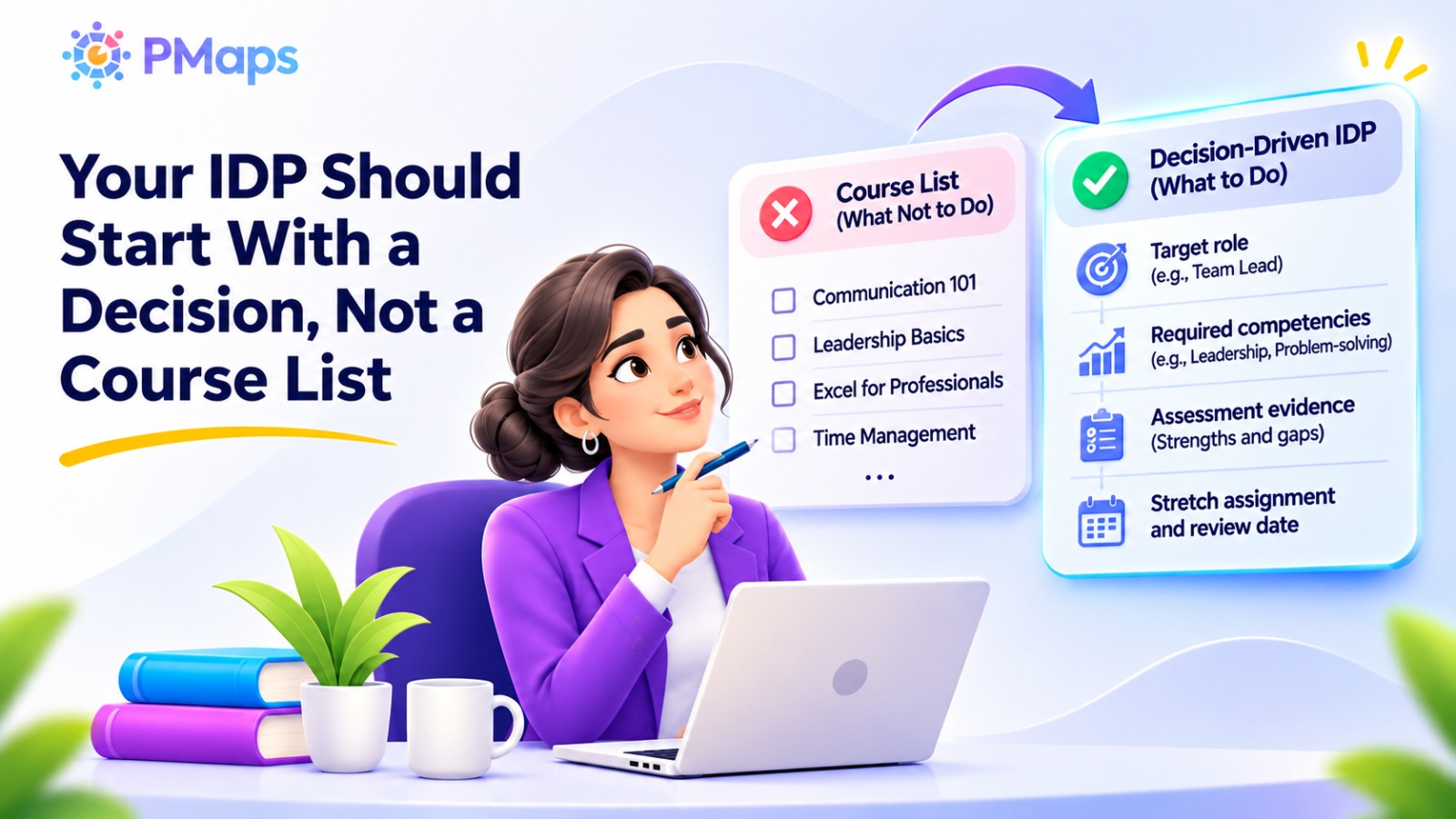
An individual development plan (IDP) should begin with a career decision, not a training requirement. Before assigning courses, HR teams must identify the role or responsibility an employee is preparing for. They must also determine what evidence would demonstrate readiness.
Many individual development plans are built backward. A manager opens the learning catalogue, selects relevant courses, and sets a completion date. Six months later, the employee completes the training. Yet, the manager cannot determine whether the employee is closer to the next role.The problem is not the effort invested in development. It is the starting point. A course list answers what training the organization can offer. A useful IDP answers what career decision the organization is preparing to make.
How to Define the Target Role in an Individual Development Plan?
Every individual development plan needs a defined career destination. Identifying the target role, expected responsibilities, and required competencies gives employees and managers a shared basis for evaluating progress over time.
“Grow as a leader” is not a measurable development objective. “Prepare to lead a team of eight in collections within 12 months” gives the employee a specific responsibility to work towards.
Once the destination is defined, the required competencies become clearer. HR teams can identify skill gaps, establish development priorities, and determine which work outcomes demonstrate progress towards the target role.
A structured employee skills assessment helps organizations identify capability gaps against role-specific requirements rather than relying solely on self-evaluation or past performance.Defining the destination establishes what the organization must measure. The next step is gathering the evidence required to assess readiness.
What Are the Four Key Inputs for an Employee Readiness Review?
A readiness review combines four distinct sources of employee development evidence. Together, they help talent teams establish current capability, identify development priorities, and determine how employees can demonstrate measurable progress.
The fourth input is often overlooked. Employee development becomes observable when learning is connected to real work rather than course completion alone.
For example, an employee preparing for a team leader role could manage weekly performance reviews or handle client escalations. Each assignment should have defined expectations and a review date. However, readiness evidence becomes useful only when HR teams distinguish current performance from future potential.
What Is the Difference Between Employee Performance, Potential, and Readiness?
Performance, potential, and readiness represent three distinct employee evaluations. Separating these measures helps organizations avoid promotion decisions based entirely on current achievements, manager nominations, or assumptions about future leadership capability. Many talent reviews combine three separate judgments:
A strong performer is not automatically a high-potential employee. Similarly, a high-potential employee may not yet be ready for promotion. A first-time manager must demonstrate capabilities that an individual contributor role may never require. These include delegation, conflict management, coaching, and team-level decision-making.
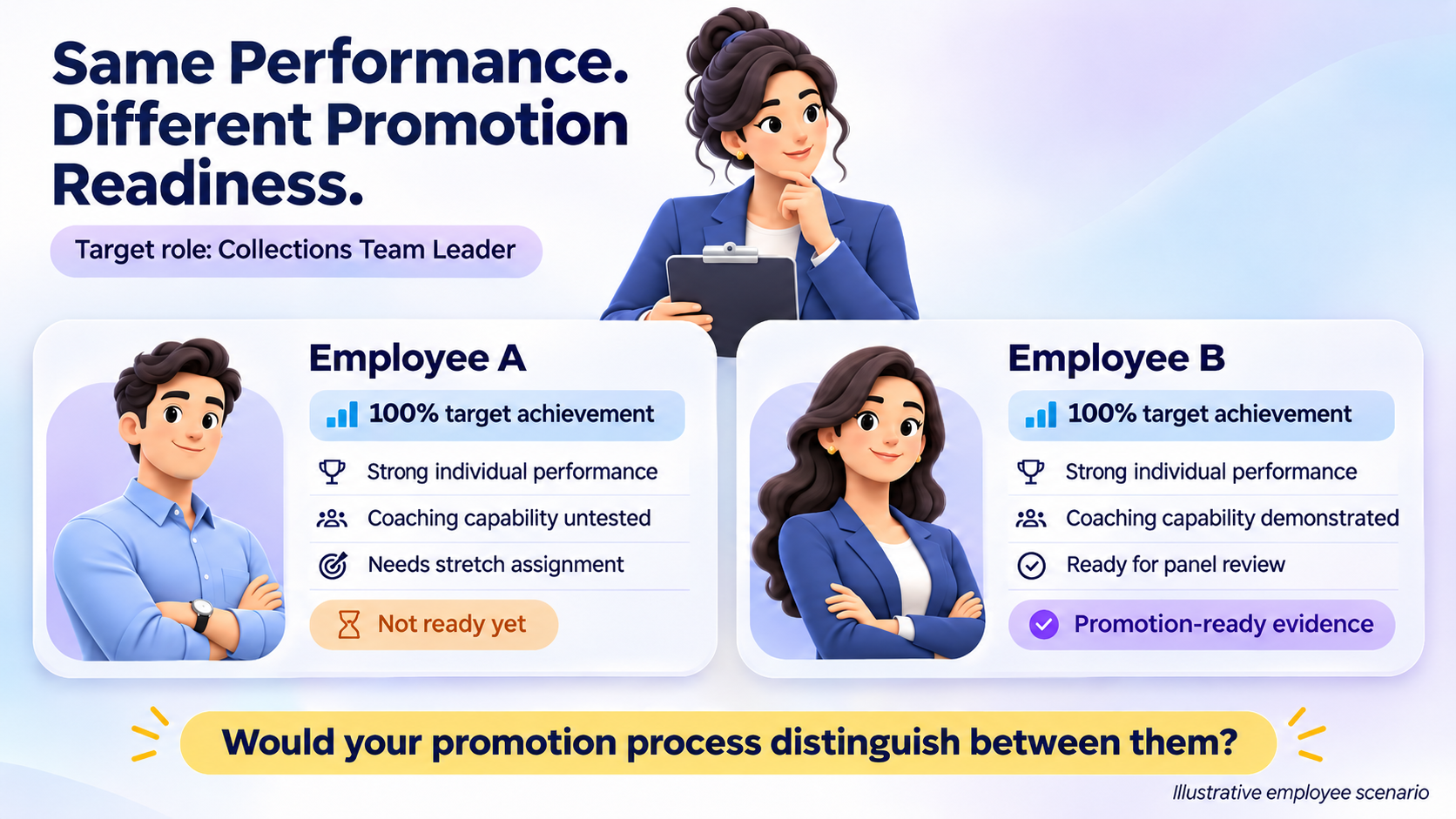
Understanding why tenure does not predict leadership readiness helps talent teams look beyond experience and examine capabilities relevant to future responsibilities.
This distinction also determines how assessment results should be interpreted within an individual development plan.
How to Use Assessment Results in an Individual Development Plan?
Role-relevant assessments provide consistent evidence of employee capability across comparable groups. Their value depends on appropriate benchmarks, supporting workplace observations, and a clear understanding of the development decision under consideration.
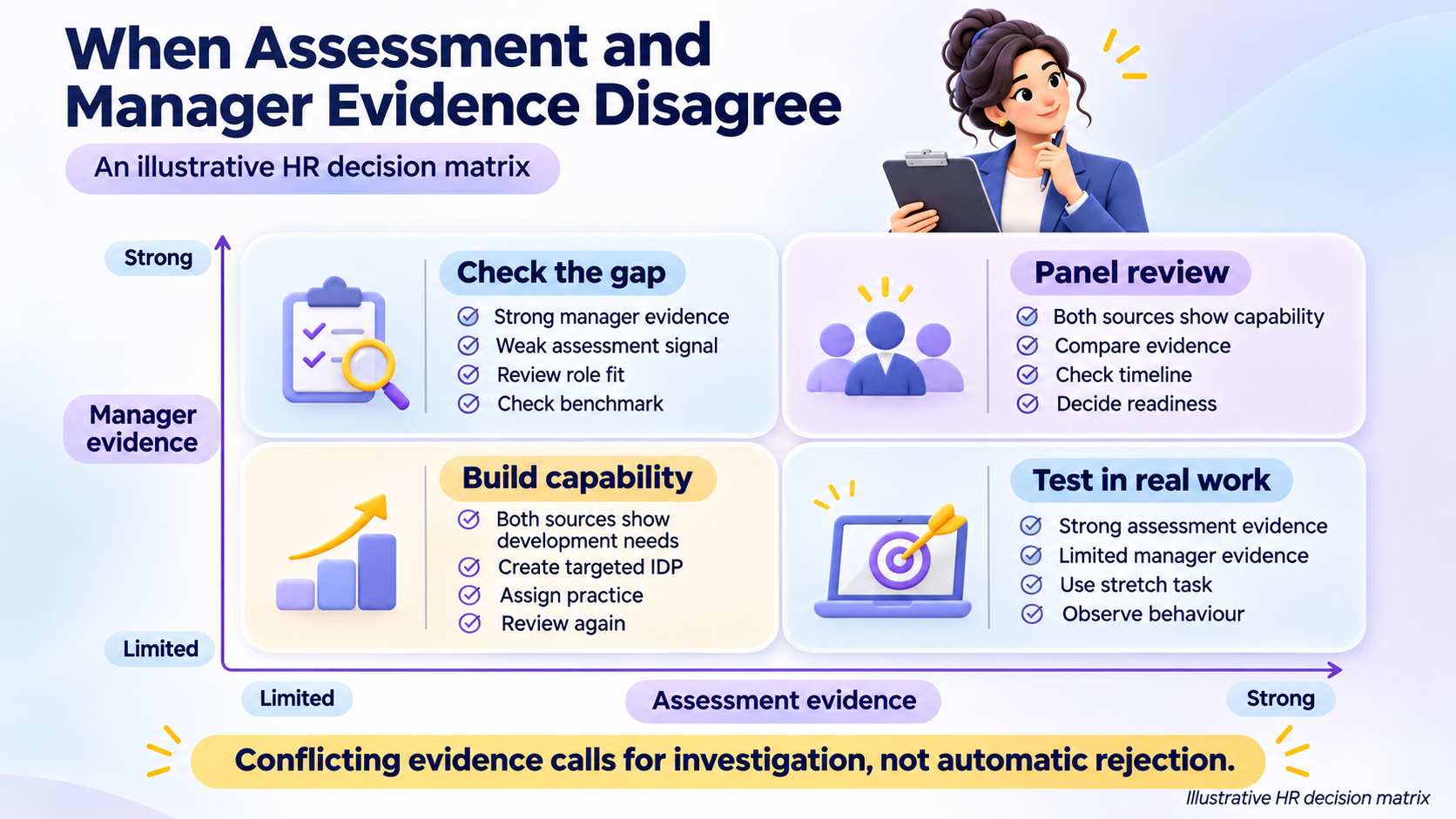
Managers bring valuable knowledge of employee behaviour and workplace performance. Assessments complement these observations by measuring defined competencies under consistent conditions. For example, two employees may receive similar performance ratings. However, their assessment results may indicate different development needs in strategic thinking, interpersonal communication, or decision-making.
At PMaps, data analyst Akshada Khopade conducts validation exercises using assessment attempt data to examine measurement evidence.
Three principles help organizations use assessment evidence responsibly:
- Use the right benchmark: Compare employees preparing for team leadership against team leader expectations rather than senior leadership benchmarks.
- Never let one score decide: Combine assessment results with manager observations, work outcomes, and structured panel reviews.
- Share results with employees: Explain competency gaps, development priorities, and the evidence required to demonstrate progress.
HR teams can review the PMaps Leadership Assessment Sample Report to understand how competency scores, benchmarks, readiness findings, and development recommendations appear within an assessment report. These findings should become part of a documented employee development plan that all stakeholders can review.
What Should a One-Page Individual Development Plan Include?
A one-page individual development plan documents the evidence required for an employee's next career decision. It gives employees, managers, and talent teams consistent expectations, development priorities, and scheduled review points.
An effective individual development plan should contain six essential components. Each component connects employee development activities to a defined responsibility or career outcome.
A completed individual development plan should provide more than a record of learning activities. It should help the review panel identify whether sufficient evidence exists to support the next career decision. If evidence remains incomplete, the organization can assign additional development activities or extend the review period.
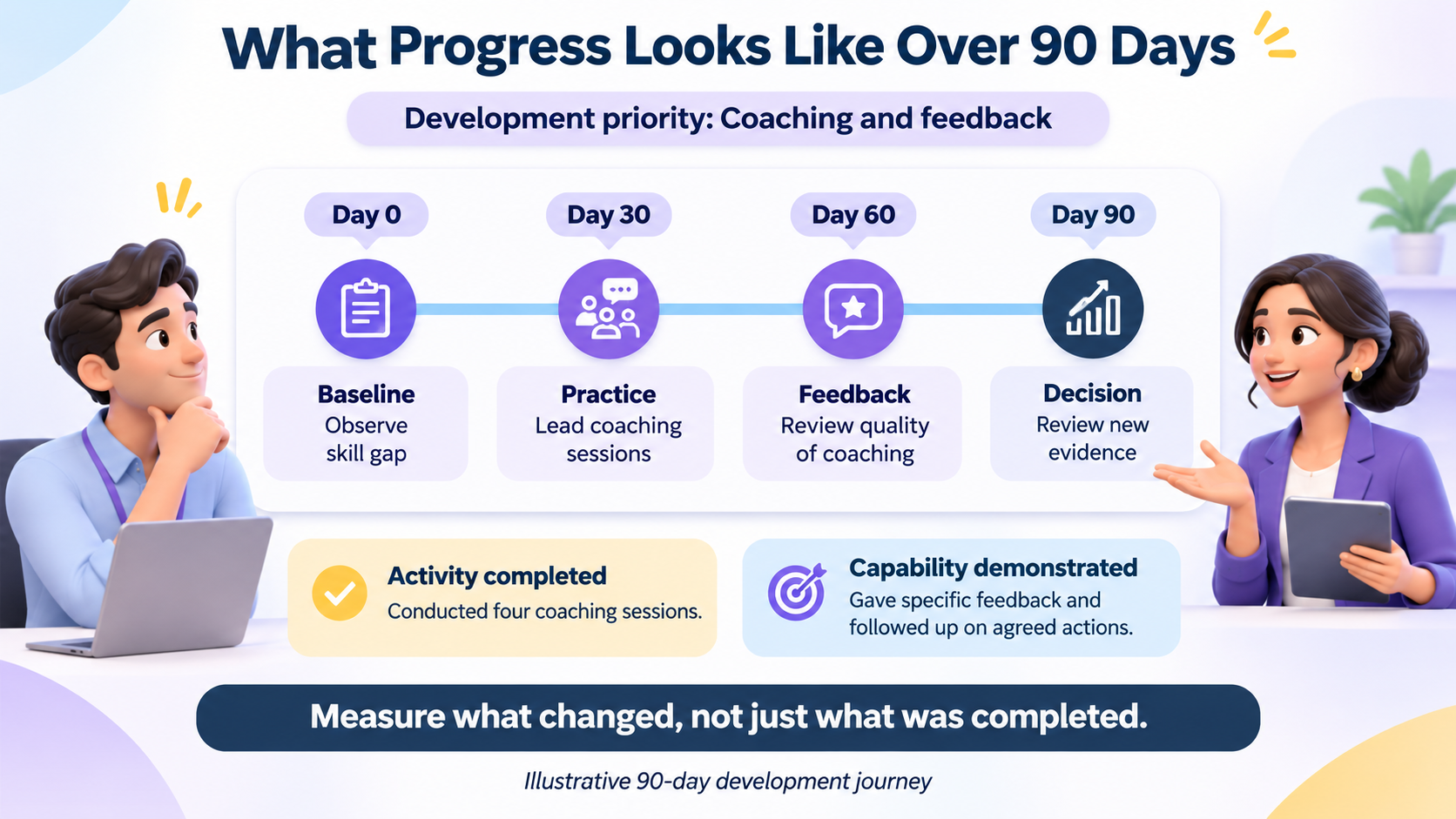
This structure supports several recurring post-hire talent management decisions.
How Do Individual Development Plans Support Promotion and Succession Planning?
Individual development plans support several post-hire decisions beyond routine learning activities. Their greatest value comes when organizations connect employee capability evidence with internal mobility, leadership development, promotion, and succession requirements.
The same readiness framework can support four important talent management use cases:
- Internal job postings (IJPs): Evaluate internal applicants against target-role requirements rather than tenure or organizational visibility. An internal mobility assessment can provide additional evidence for these decisions.
- High-potential cohorts: Identify development priorities, allocate learning budgets, and review whether employees demonstrate progress towards larger responsibilities.
- First-time managers: Assess managerial capabilities before promotion. A Managerial Assessment can help identify development needs beyond individual performance.
- Succession planning: Distinguish employees who are ready now from those requiring further development over the next 12–24 months. A structured succession planning framework helps organizations document these differences.
A PMaps leadership assessment case study demonstrates how a consumer-fintech lender evaluated 78 senior leaders. The assessment helped distinguish leadership readiness from development needs across the cohort.
Without a readiness-based approach, organizations may invest in training without knowing whether employees are developing the capabilities required for future responsibilities. Connecting development activities with assessment evidence gives HR teams a clearer basis for reviewing these investments.
How Do PMaps Post-Hire Assessments Support Employee Development Decisions?
PMaps assessments provide competency evidence that supports structured employee development decisions. Organizations can use role-relevant results alongside manager observations and workplace outcomes to identify development priorities and review employee readiness.
PMaps Post-Hire Assessments help talent teams measure employee skill gaps, identify development needs, and assess capabilities against relevant role or level requirements. The High Potential Employee Assessment supports the identification of employees demonstrating behavioural and cognitive capabilities relevant to future responsibilities.
The Leadership Assessment provides competency evidence for leadership development, promotion reviews, and succession planning discussions. PMaps is also extending this work into IJP readiness reporting to support internal mobility decisions using role-specific evidence.
The assessment informs the decision. It does not make it. Development, promotion, and succession decisions remain with the organization.