31% of contact center agents say they're likely to leave within six months.
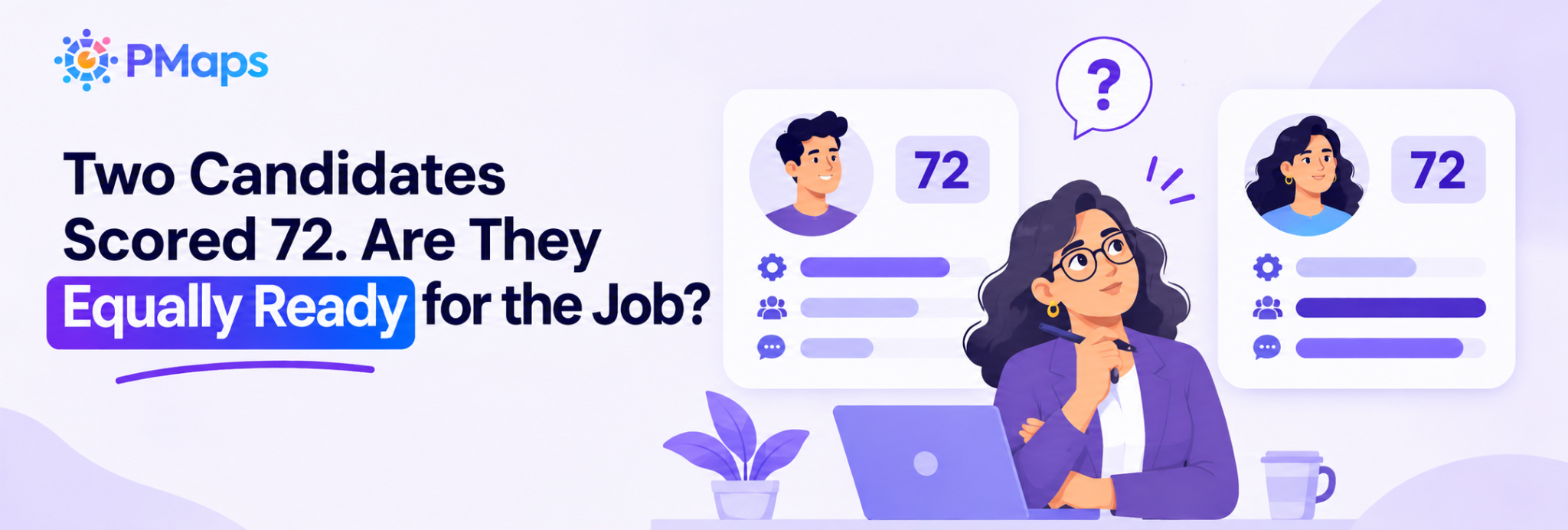
When hiring teams rely on overall assessment scores alone, they risk overlooking skills that matter for the actual role. A candidate who performs well in written communication may still struggle with live customer calls.
The real question isn't just who scored higher, but who has the right skills for the channel they're being hired for.
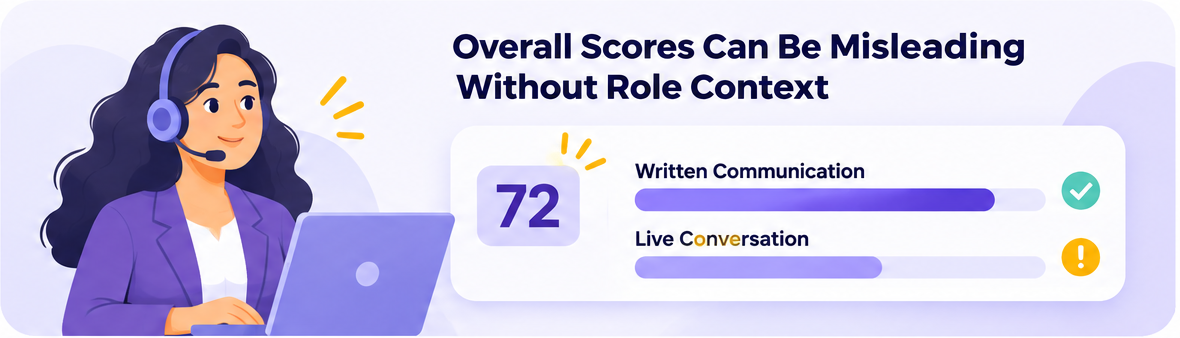
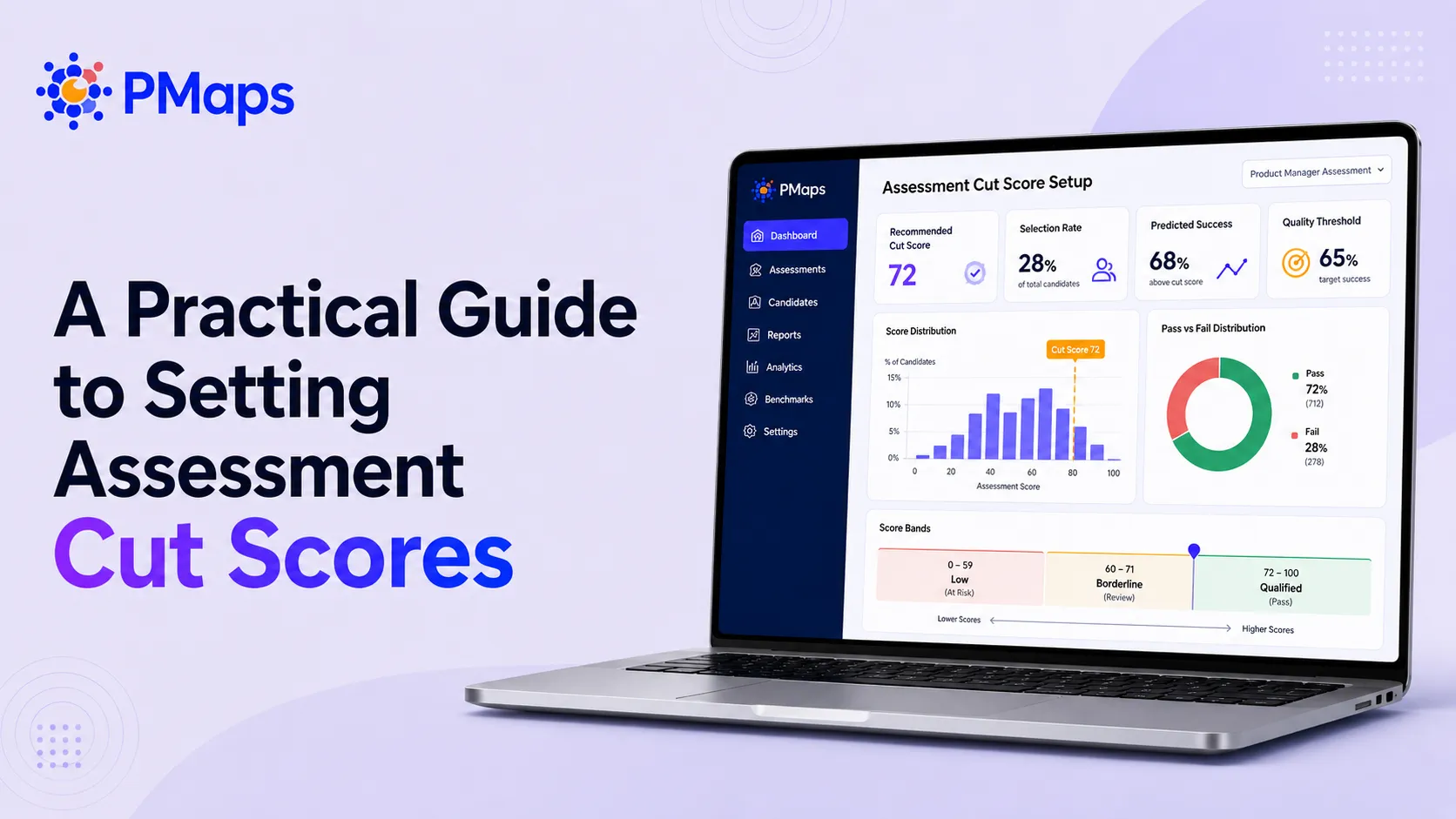
A score of 72 doesn't mean the same thing for every customer service role. What matters is whether the candidate has the skills required for the channel they'll handle.
The hiring impact: A strong overall score can hide a skill gap that only becomes visible when the candidate starts handling real customers.
An assessment report should do more than rank candidates. When interpreted against actual job requirements, it helps hiring teams make informed shortlisting decisions, conduct focused interviews, and review incomplete attempts fairly.
Candidates are evaluated against the skills required for voice, chat, or blended support, rather than relying on an overall score.
Recruiters can use identified skill gaps to ask relevant questions instead of repeating what the assessment has already measured.
Incomplete assessments can be reviewed to distinguish technical interruptions from candidates who chose not to finish, rather than treating every incomplete attempt equally.
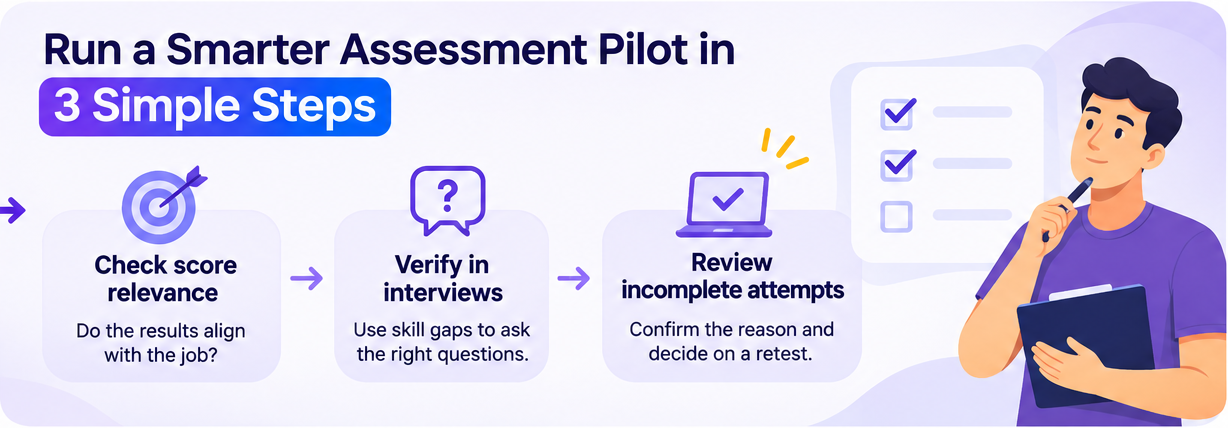
Before using assessment scores to shortlist candidates, review a sample report with your recruitment and operations teams. These three checks help establish whether the results support actual hiring decisions.
Identify which skills matter most for the role. For example, a voice support position may require stronger listening and pronunciation skills than written communication.
Use weaker assessment areas to create targeted interview questions. If a chat support candidate scores well in comprehension but poorly in tone, ask them to rewrite a response to an upset customer.
Check whether candidates stopped because of technical issues, accessibility barriers, or personal reasons. Offer a retest where appropriate before making a decision.
The takeaway: If your team cannot explain what a score means, what to verify, and how to handle incomplete results, the report needs further review before it informs shortlisting.
Before your next hiring decision, spend five minutes reviewing a sample assessment report with these questions. The goal is to identify skill gaps, clarify interview priorities, and decide what happens next.
Your outcome: A clearer shortlist, focused interview questions, and an informed decision about whether the assessment is ready for wider use.
Turn your assessment review into a clear hiring decision. This one-page worksheet helps recruitment and operations teams evaluate role requirements, interpret assessment results, review candidate completion, and plan next steps.
What you'll review:
Download the Free Pilot Review Sheet
Hiring for voice, chat, and blended support requires different skill evaluations. PMaps provides role-specific customer service assessments that help recruiters identify relevant strengths and gaps before making shortlisting decisions confidently.
PMaps customer service assessments are designed for voice, chat, and blended roles. For voice-based positions, PMaps EVA evaluates Pronunciation, Fluency, Grammar, and Listening & Comprehension, providing individual skill scores rather than relying solely on an overall result.
This helps hiring teams understand which competencies need closer attention during shortlisting and interviews.
Hiring for customer service roles?
Bring your target role, hiring channel, and monthly hiring volume to a 30-minute working session. We'll review a sample assessment report against your requirements and identify the skills your team should prioritize.
Book a 30-Minute Working Session →
Every customer service role comes with different skill requirements. Before your next shortlist, consider which part of your assessment report gives your team the least clarity when making hiring decisions.
Which assessment result is hardest for your team to interpret?
Before your next hiring cycle, discuss this question with your recruitment team. Identifying where interpretation becomes difficult is the first step toward making more consistent, role-specific shortlisting decisions.
About the author
Aagya Gupta writes about hiring, assessment and recruitment strategy at PMaps. She turns assessment science and hiring trends into practical guidance for talent acquisition teams. Connect with her on LinkedIn or write to agupta@pmaps.in.
Get informed when we create and distribute a webinar on the right topics, delivered live, or right to your mailbox
Get informed when we create and distribute a webinar on the right topics, delivered live, or right to your mailbox
Get informed when we create and distribute a webinar on the right topics, delivered live, or right to your mailbox
Get informed when we create and distribute a webinar on the right topics, delivered live, or right to your mailbox

We found it well within our budget, which saved us a lot of time during the hiring process. The assessment was highly relevant and accurately matched our hiring needs—extremely effective and efficient overall.


We rely on PMaps as a trusted first step before interviews. Its customized assessments help us evaluate contact center candidates across communication, listening, email, typing, and other job-relevant skills, reducing guesswork and strengthening our hiring decisions at scale.


The user interface is intuitive, simple, and smooth. One of the key advantages is that our larger team can easily log in, access reports, and download them independently, which was not possible with our previous vendor.


Need support? Fill out the form and we'll get back to you shortly.