.webp)
.webp)


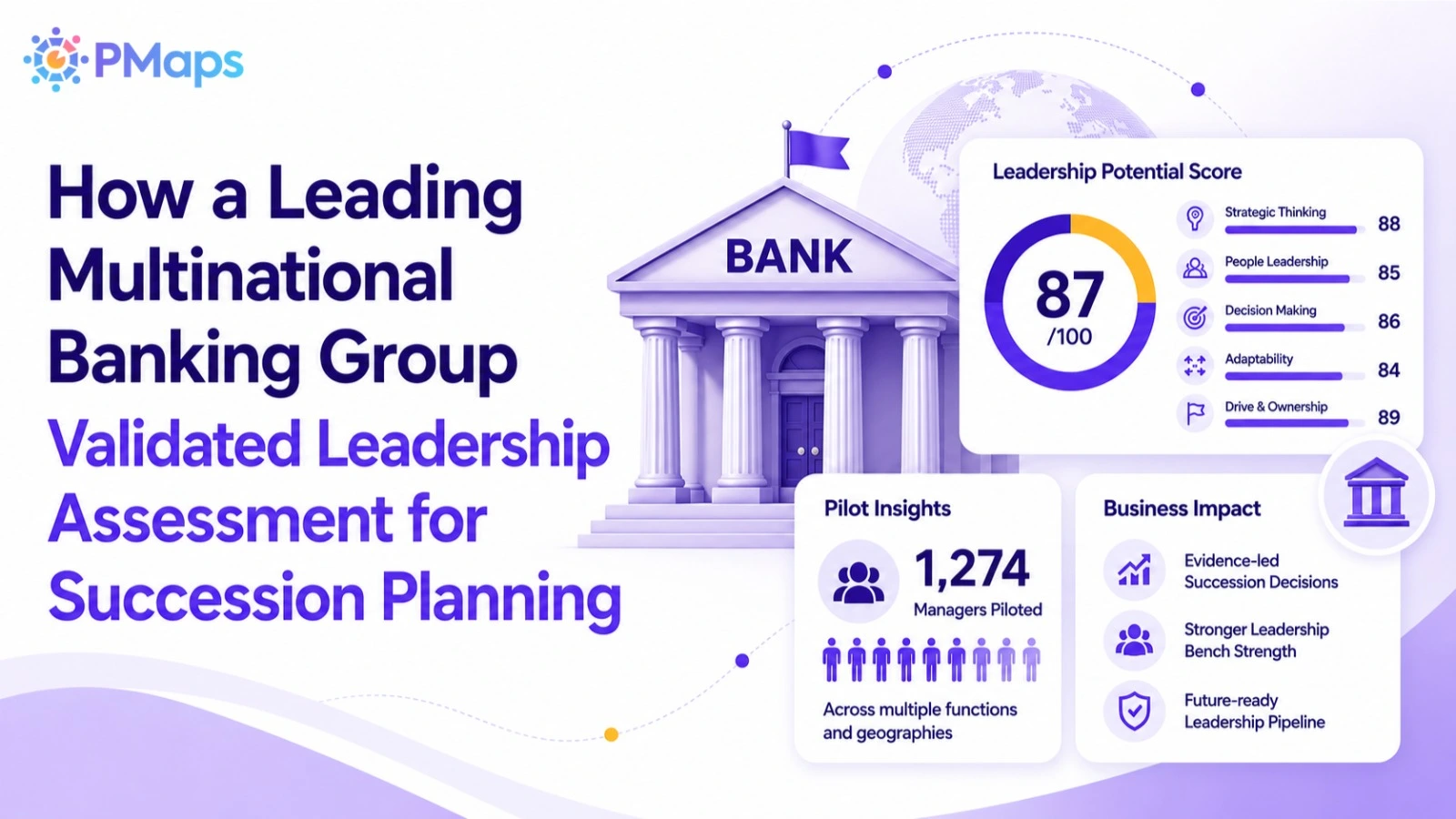
Every leadership assessment vendor claims their instrument is validated. This paper shows the work from a live deployment.
When a leading multinational banking group needed a defensible basis for succession and promotion decisions, the standard had to satisfy its own assessment and I/O psychology reviewers, not just its HR team. The technical dossier available on this page is the result: it documents the complete science behind the instrument how it was built, what it measures, how scores become readiness decisions, and the psychometric evidence at every step. It's written for the people who evaluate instruments for a living: assessment teams, HR centers of excellence, and I/O psychologists.
How the instrument was built
The assessment was developed with organizational psychology faculty at the Tata Institute of Social Sciences (TISS), together with PMaps content experts and industry SMEs. Every item and construct is internally developed and empirically validated no external personality trait model is used, licensed, or reported.
The paper walks through all seven development stages: competency definition workshops, item authoring at three times the final item count, independent panel content validation (CVI > 0.83 per retained item), a pilot across 1,274 managers in Banking, FMCG, and Technology, confirmatory factor analysis, level-specific norming, and a criterion study against real manager performance ratings.
The evidence, in one table
Every figure in the dossier comes from PMaps' own validation program: content validity above 0.83 per item, internal consistency of α 0.74–0.82 on trait scales, four-week test–retest reliability of 0.78, structural fit of RMSEA 0.051, and criterion validity of r = 0.34–0.41 against manager ratings all meeting or exceeding the standards psychometric reviewers expect.
What else is inside
The dossier covers the five-pillar competency architecture and its eleven sub-competencies, the values module authored to your organization's own credo, configurable cognitive modules, the six-step item design method, the bottom-up scoring model, and the conjunctive gating rule that decides High Potential versus Emerging Potential against level-specific norm groups. It closes with fairness and bias controls at four stages of development, data privacy practices (DPDP, GDPR, ISO 27001, SOC 2 aligned), and the honest limitations of any single assessment including why it should never be the sole basis for a promotion.
If your evaluation goes deeper than the dossier, the full technical output item-level statistics, factor loadings, scale intercorrelations, and norm tables is available under NDA, with a walkthrough by the team that built the instrument.
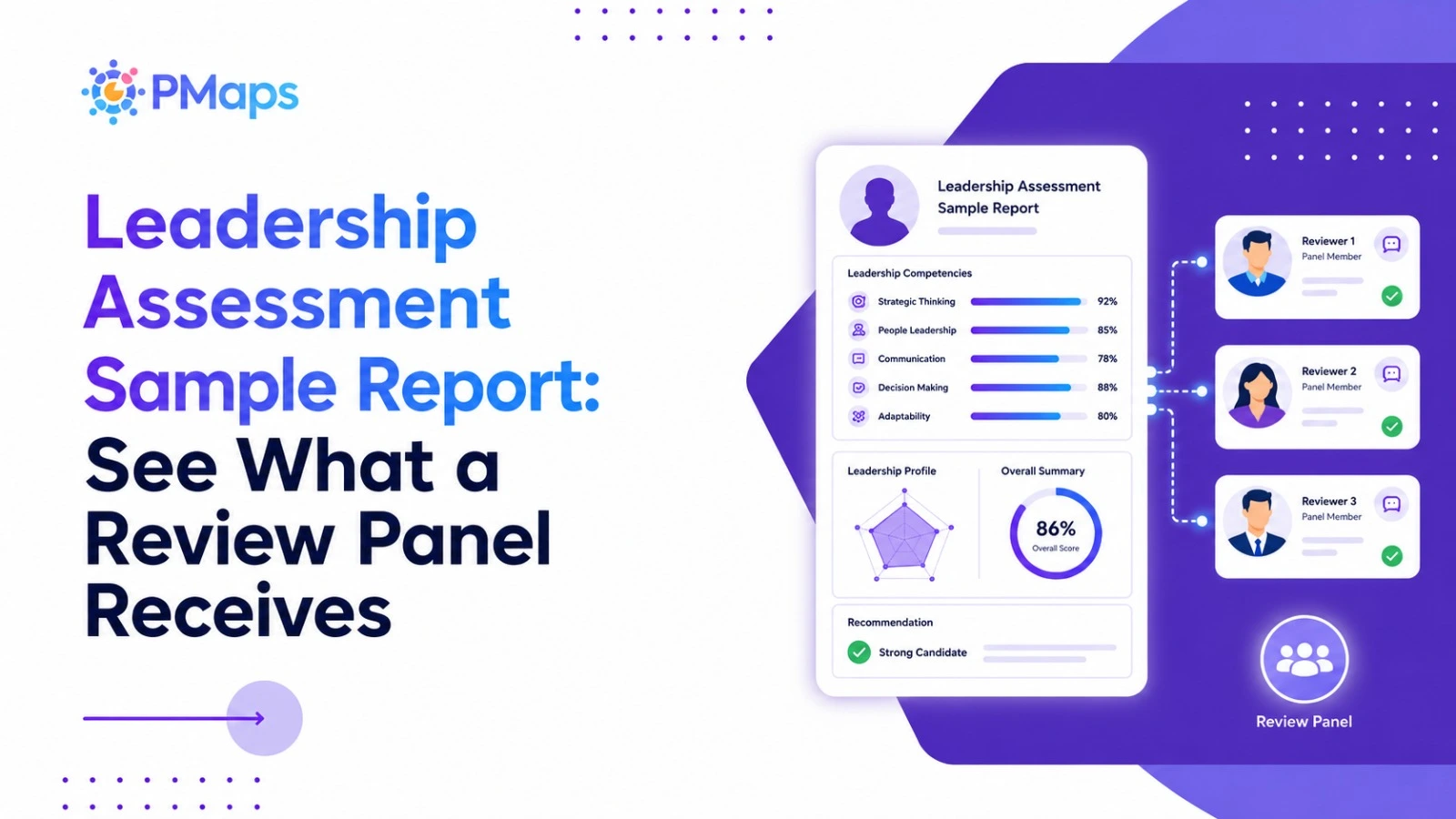
Download the paper using the form, see what the output looks like in a real report, or book a demo to see the instrument on your own roles.