.webp)
.webp)


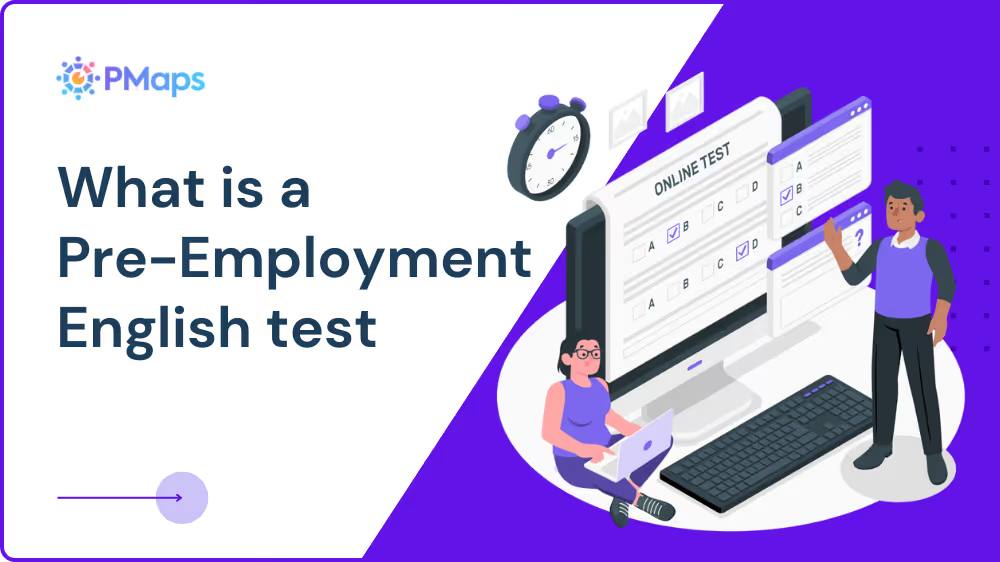
Effective communication is crucial for workplace success, making language proficiency an essential hiring criterion. Hiring the right candidate in today’s globalized business environment requires more than just technical skills.
A Pre-Employment English Test helps employers assess candidates’ English language proficiency, ensuring they possess the necessary communication skills for the role. Whether in customer service, technical support, or executive leadership, English proficiency testing can significantly impact productivity and workplace collaboration.
In this blog, we explore what a Pre-Employment English Test is, why it matters, and how organizations can implement it effectively.
Why Is a Pre-Employment English Test Crucial?
A Pre-Employment English Test helps employers avoid such pitfalls by ensuring that new hires can effectively communicate in a professional setting. Here’s why these tests are critical for modern workplaces:
1. Enhancing Workplace Communication
Miscommunication is one of the leading causes of delays, inefficiencies, and workplace errors. A well-structured English language proficiency test ensures that employees can understand instructions accurately, respond to emails clearly, and communicate effectively with team members, clients, and stakeholders.
2. Reducing Hiring Risks
Hiring candidates with poor language skills can lead to increased training costs, decreased productivity due to miscommunication, and higher attrition rates as employees fail to meet job expectations.
3. Improving Customer Experience
In customer-facing roles, English proficiency is a game-changer. A language assessment ensures professional and polite interactions with customers, clear and prompt query resolution, and stronger brand reputation.
4. Standardizing Hiring Decisions
A structured English language testing system eliminates bias by providing objective, data-driven results, ensuring fair evaluations for all candidates, and streamlining hiring processes with standardized benchmarks.
What Are the Four Important Language Skills in the Workplace?
A Pre-Employment English Test measures a candidate’s ability to read, write, speak, and understand English in a professional setting.
- Reading Comprehension – Evaluates the candidate’s ability to interpret workplace-related documents, emails, and instructions.
- Writing Proficiency – Tests grammar, vocabulary, sentence structure, and clarity in professional communication.
- Listening Skills – Measures the ability to understand conversations, client interactions, and business discussions.
- Speaking Ability – Assesses pronunciation, fluency, articulation, and the ability to express ideas clearly.
Which Roles Require Language Proficiency Tests?
1. Customer Support & Call Center Representatives
Customer-facing professionals are the voice of a company. Representatives must actively listen and respond with clarity to customer inquiries, speak professionally and confidently, and write grammatically correct emails and chat responses.
2. Sales & Business Development Professionals
Strong language skills enable sales professionals to deliver engaging sales pitches, adapt their communication style based on client interactions, and write professional proposals and contracts.
3. HR & Management Professionals
HR professionals and managers must conduct clear structured interviews, explain company policies clearly, and handle sensitive workplace discussions with professionalism.
4. IT & Technical Professionals
English proficiency helps technical professionals write clear technical reports, communicate effectively in cross-functional team discussions, and understand client requirements without misinterpretation.
5. Finance & Legal Professionals
In finance and legal roles, professionals must draft and review contracts with accuracy, communicate compliance policies clearly, and present financial data effectively.
What Are the Different Levels of Language Proficiency?
The Common European Framework of Reference for Languages (CEFR) classifies language proficiency into six levels: A1 (Beginner), A2 (Elementary), B1 (Intermediate), B2 (Upper Intermediate), C1 (Advanced), and C2 (Proficient).
How to Test Language Proficiency?
1. Online Language Testing Platforms
Many organizations rely on AI-powered language assessment platforms. PMaps Assessments offers customized AI-driven English proficiency tests that provide real-world, job-specific scenarios to evaluate candidates accurately.
2. Customized Role-Specific Assessments
Companies can create tailored assessments based on the specific language demands of the job role, including Business English Proficiency, Technical English, and Customer Interaction English.
3. Speaking and Listening Evaluations
Companies can assess spoken English skills through live video interviews, AI-driven voice assessments, and role-based conversation tests.
4. Writing & Email Communication Assessments
Testing written communication ensures candidates can express ideas concisely, maintain professional tone, and avoid miscommunication.
Choosing the Right Pre-employment English Test
Selecting the right voice and accent assessment depends on your industry, job role, and communication requirements. AI-powered tools like PMaps Voice & Accent Assessment provide objective insights, helping businesses hire professionals who communicate with confidence and professionalism.
Conclusion
Strong communication skills are essential for workplace success, and pre-employment tests help ensure candidates meet the required language standards. With AI-driven assessments, evaluating spoken clarity, fluency, and comprehension is now more accurate and efficient.
Interested in seeing how it works? Lets connect on a quick call at 8591320212 to know more about PMaps language assessment or email us at assessment@pmaps.in to find the talent assessment solution you need.
Add a voice and accent round online test to your hiring pipeline to objectively evaluate how candidates communicate.