.webp)
.webp)


The short answer
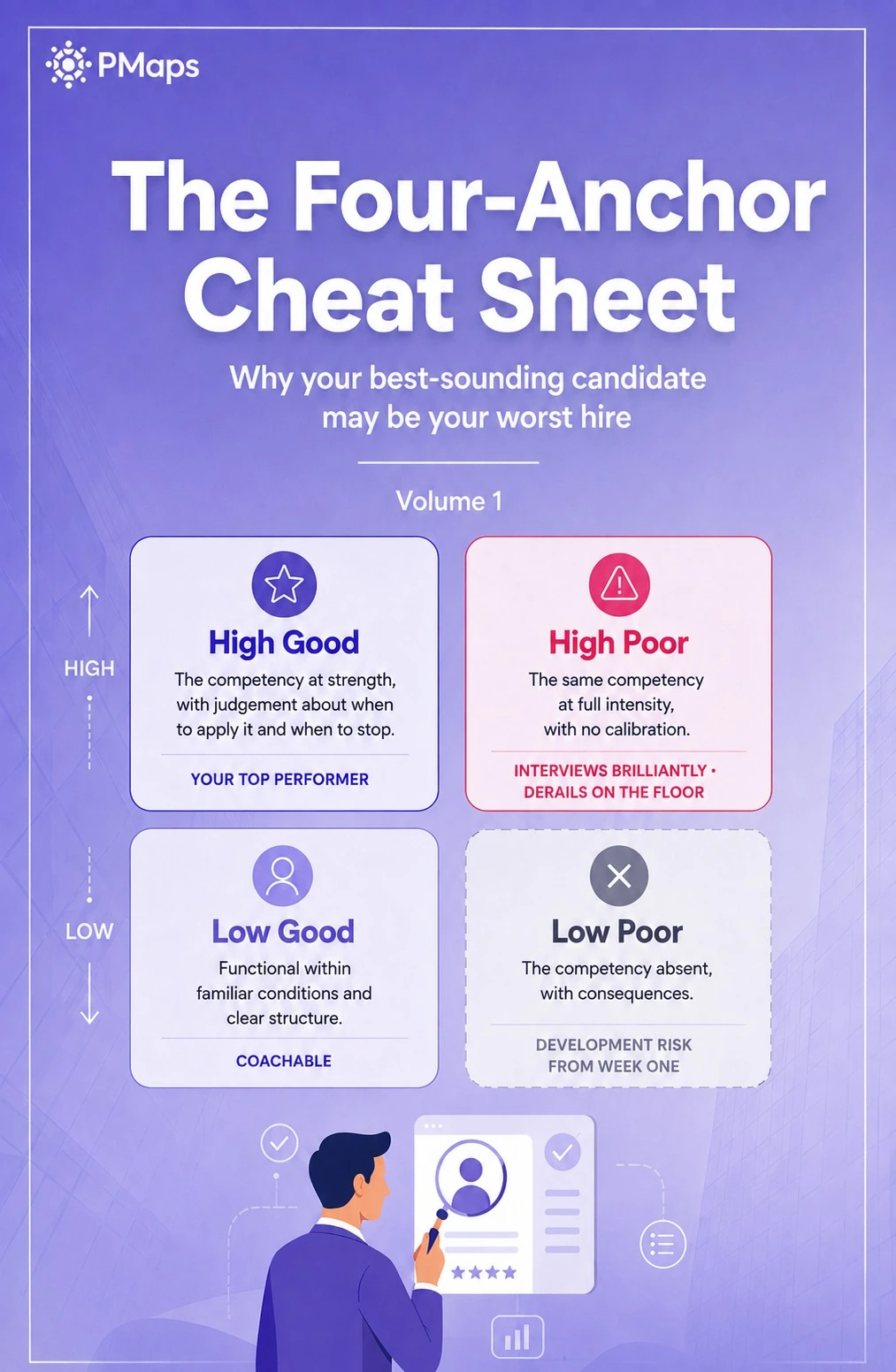
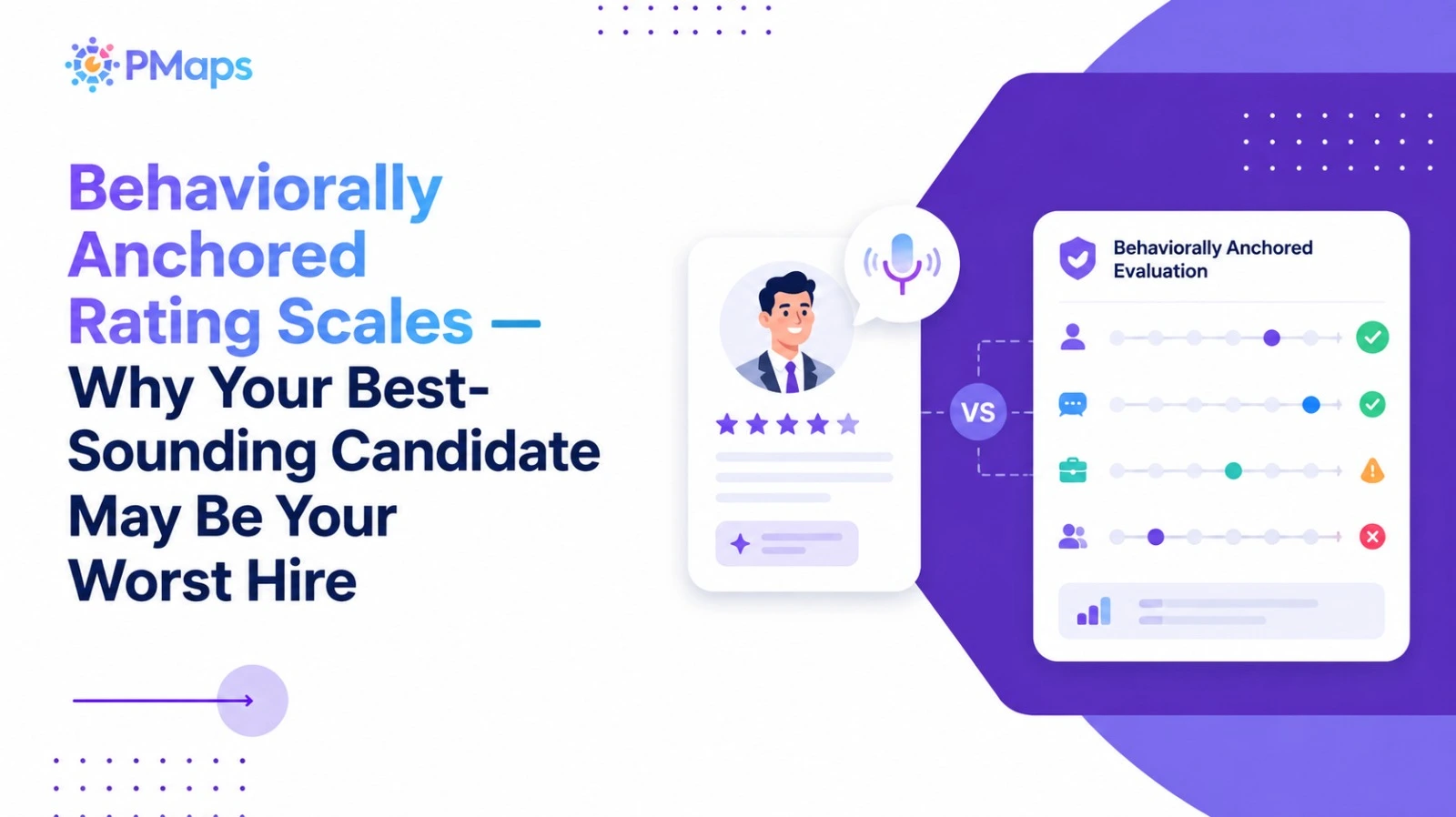
What is a behaviorally anchored rating scale? It scores a competency against written descriptions of actual behavior rather than a numeric scale. PMaps uses four anchors per competency at each proficiency level — High Good, High Poor, Low Good, Low Poor which separates a competency applied with calibration from the same competency applied without it.
The problem with a single scale
Most assessments rate a competency from poor to excellent on one line. That line has nowhere to put the candidate who is strong in a way that causes problems so it scores them highest.
Worked example: customer orientation
HIGH GOOD — Shows genuine positive regard and listens openly to understand customer requirements, initially treating their intent as honest while adjusting to relevant evidence. Responds promptly, stays composed through criticism, follows service and regulatory requirements, and advocates a workable response with diplomatic attention to the customer's needs.
HIGH POOR — Engages with very personal warmth, accepts claims despite contrary cues, and suppresses legitimate prompt responses to preserve composure. Repeats a preferred solution forcefully with limited room for customer information or negotiation so immediate cooperation is gained while professional boundaries, timely resolution, and regulatory obligations suffer.
Both are high on customer orientation. One belongs on your escalation queue. The other generates compliance exposure while sounding excellent in an interview.
Worked example: accountability
HIGH GOOD — Treats assigned duties as a priority, accepts personal responsibility for decisions, mistakes and final results, and follows obligations even when convenience conflicts. Organises essential information, focuses objectively through ambiguity, adjusts to a viable route, and persists until accurate work is completed by the deadline.
HIGH POOR — Treats every duty and rule as absolute, accepts responsibility but avoids permitted judgement, and continues even when an obligation's intended purpose or exception is clear. Repeatedly reorganises and checks minor details while persisting with a failing approach producing usable work, but delaying deadlines and adjacent tasks.
Why this matters more in 2026
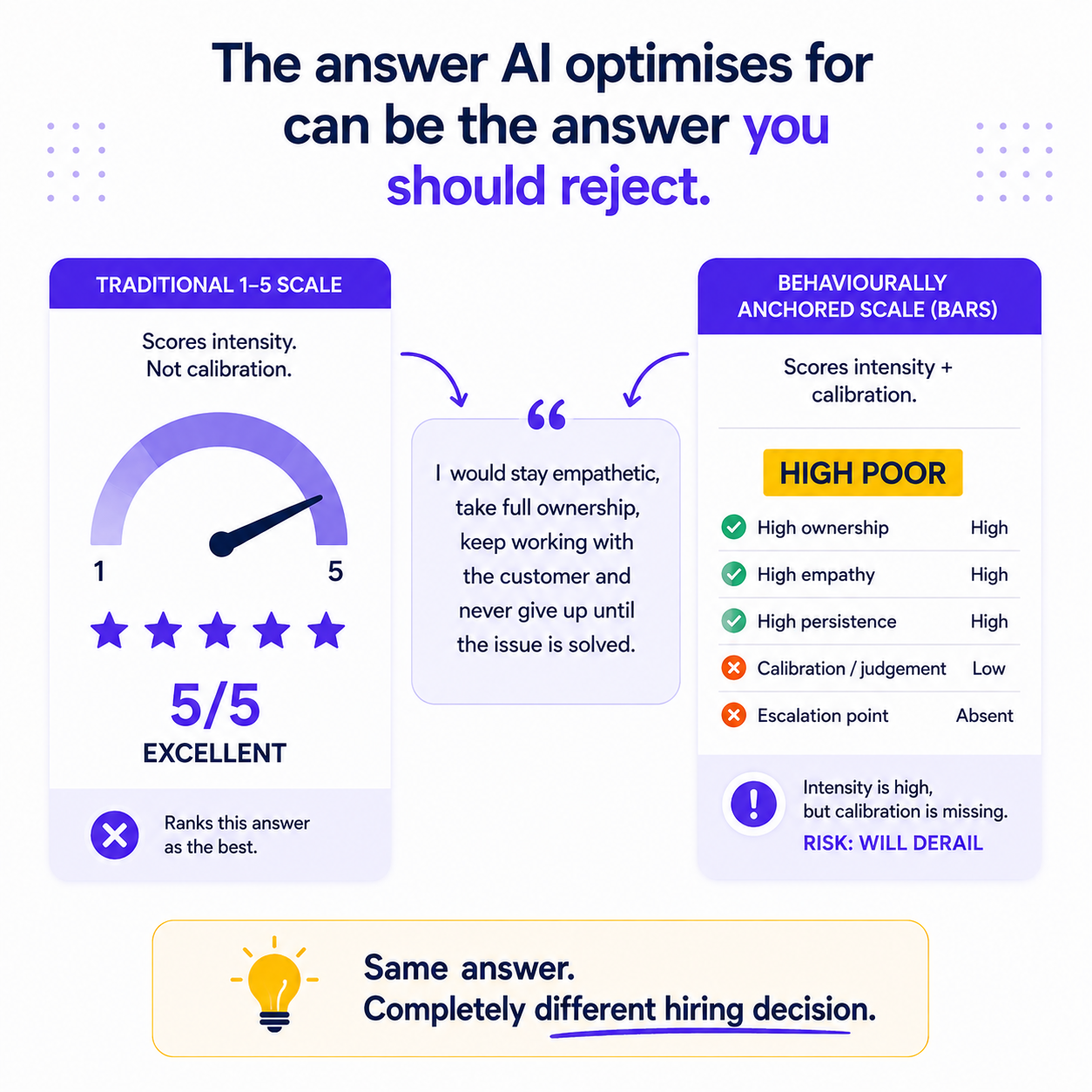
Ask any AI assistant how to handle an escalating customer. It maximises every virtue at once total empathy, total ownership, unlimited persistence, no trade-offs, no escalation point. That is not a High Good answer. It is a textbook High Poor answer, because maximum intensity with zero calibration is exactly what High Poor is defined as. A single-scale scorer does not merely miss the AI-assisted answer. It ranks first.
How PMaps applies it
73 competencies, 15 factors, 255 live roles at four seniority levels. You receive a profile rather than a number which competencies sit High Good, which sit High Poor, and where the risk is.
What this looks like for a real role
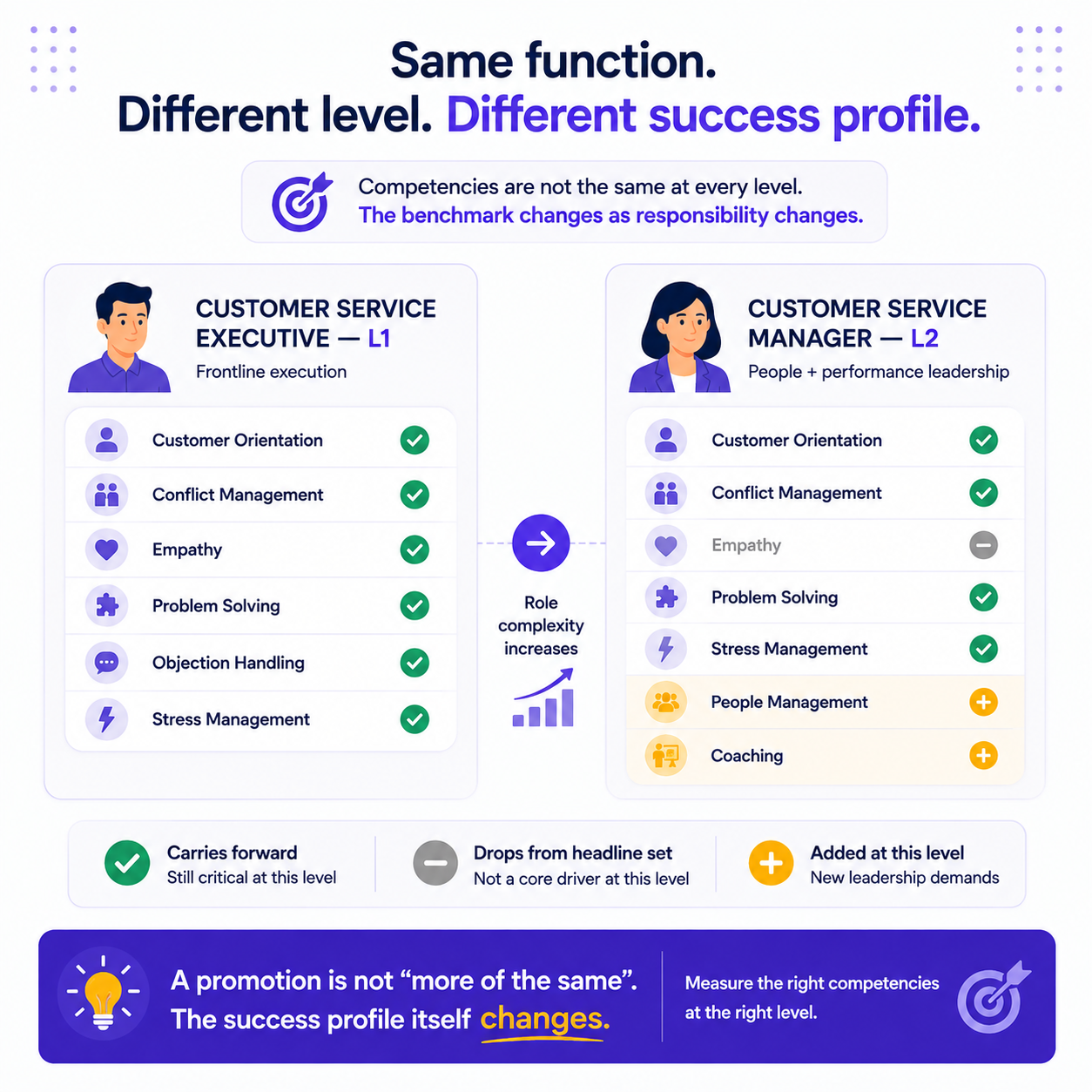
Every role in the PMaps ontology carries its own competency set at its own proficiency level. A Customer Service Executive at L1 is measured on customer orientation, conflict management, empathy, problem solving, objection handling, and stress management all at PL1. A Customer Service Manager at L2 drops empathy from the headline set and picks up people management and coaching. Not the same six competencies for every role, and not the same proficiency bar at every level.
Reading a profile what to do next
📥 Download: The Sales & Customer Service Hiring Decision Cheat Sheet
Four pages covering eight roles across both functions the full competency ladder at every seniority level, plus interview playbooks for the two highest-volume hires with good-answer and poor-answer patterns and a decision rule for each.
Download the cheat sheet → · See it on your own role → ssawant@pmaps.in