.webp)
.webp)


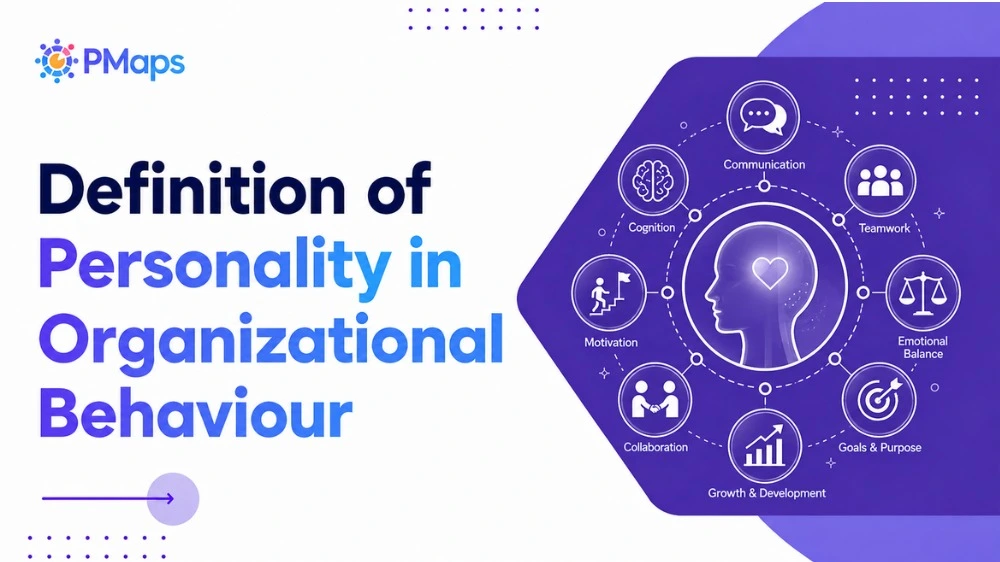
What is personality in organizational behavior? It is the stable, unique pattern of thoughts, emotions, and actions that shapes how an individual behaves at work, influencing how they communicate, make decisions, handle pressure, and function within a team.
When was the last time you noticed how different employees react to the same situation in entirely different ways? Some thrive under pressure, while others struggle. Some bring creativity, while others prefer structure. These differences can be traced back to personality, a crucial element in organizational behaviour.
Personality in organizational behaviour refers to the unique and stable patterns of thoughts, emotions, and behaviors that shape how individuals interact in the workplace. It influences communication, decision-making, teamwork, and leadership effectiveness.
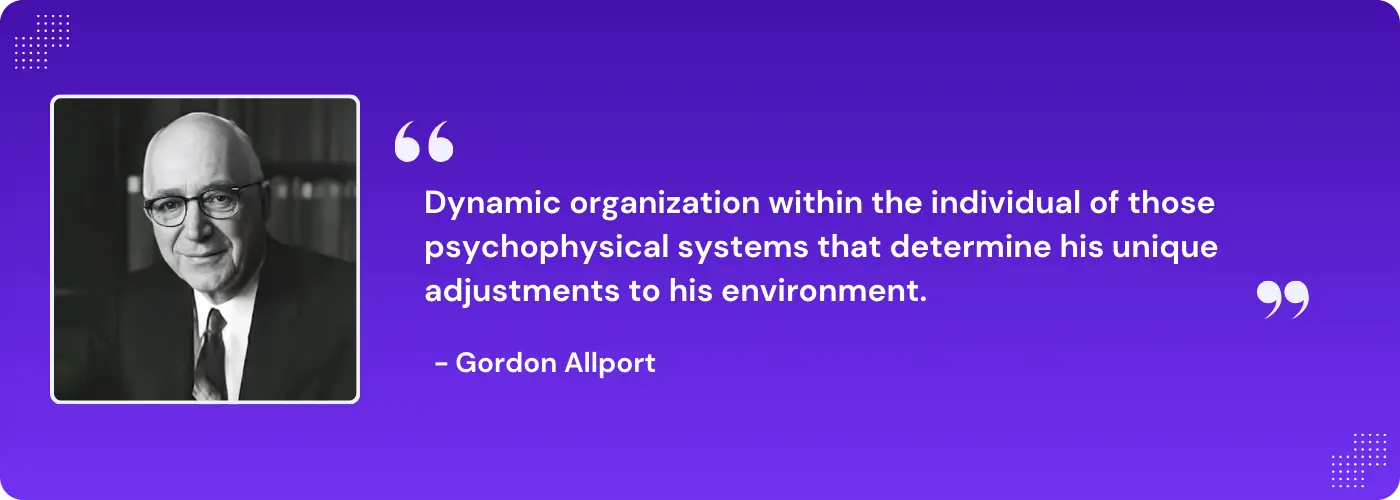
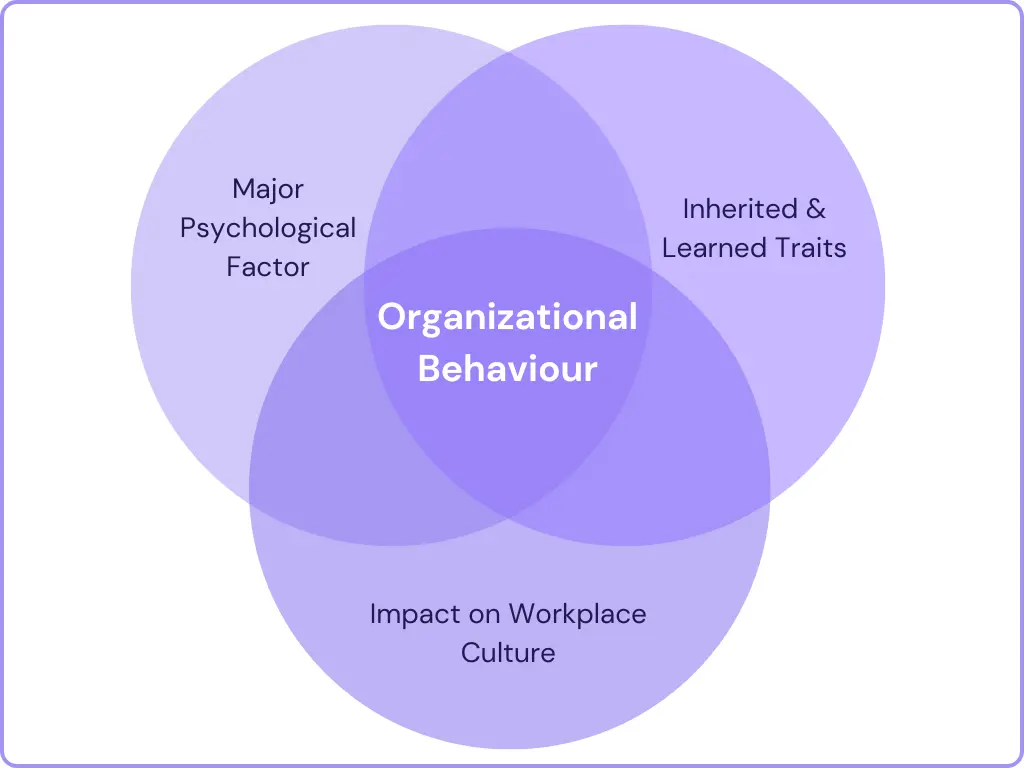
The above definition of personality given by Gordon means personality is not just a set of traits—it's an evolving system that determines how individuals respond to workplace challenges and opportunities. Several factors influencing personality in organizational behavior fall into three broad areas:
- Major Psychological Factor: Personality significantly impacts an individual's workplace behavior, influencing decision-making, adaptability, and leadership potential.
- Inherited & Learned Traits: While genetics play a role, experiences, upbringing, and professional exposure shape personality over time.
- Impact on Workplace Culture: Culture of the workplace influences how a person interacts, assumes responsibility, perceives authority, and executes plans in the team.
Understanding personality is essential for HR leaders and decision-makers. It is a key factor in recruitment, performance management, and employee engagement. A study published in the Journal of Organizational Behavior highlights that personality traits significantly impact job performance, collaboration, and leadership effectiveness.
Since personality influences how employees work and interact, organizations that assess and align roles with personality traits can build more effective teams and improve workplace culture.
Importance of Personality in Organizational Behaviour
Personality is a defining factor in shaping workplace interactions, leadership effectiveness, and team dynamics. It influences how employees communicate, handle stress, and contribute to organizational goals. HR professionals who understand personality in organizational behaviour can foster a more engaged and productive workforce.
Different personalities bring different strengths and challenges to the workplace. Some individuals naturally lead, while others excel in structured, detail-oriented tasks. Recognizing these differences allows HR teams to optimize team structures, delegate responsibilities effectively, and enhance workplace harmony.
Here's why personality plays a crucial role in organizational behaviour:
- Impacts Team Dynamics: Different personalities affect communication styles, collaboration, and conflict resolution. A diverse mix of personalities can boost creativity, but poor alignment may lead to misunderstandings and friction.
- Influences Leadership Styles: A leader's personality determines their management approach, affecting motivation, engagement, and team morale. Adaptable, empathetic leaders tend to foster a positive work culture.
- Affects Employee Satisfaction & Retention: Employees placed in roles that align with their personality traits experience higher job satisfaction and lower stress. According to Gallup, companies with high employee engagement see a 21% increase in profitability.
- Enhances Decision-Making & Problem-Solving: Personality influences risk tolerance, adaptability, and problem-solving styles. Organizations benefit from teams with diverse personalities that balance innovation with structured thinking.
- Shapes Workplace Culture: A company's culture is driven by the collective personalities of its workforce. Understanding personality types helps HR create policies that align with employee strengths and workplace values.
Types of Personality in Organizational Behaviour
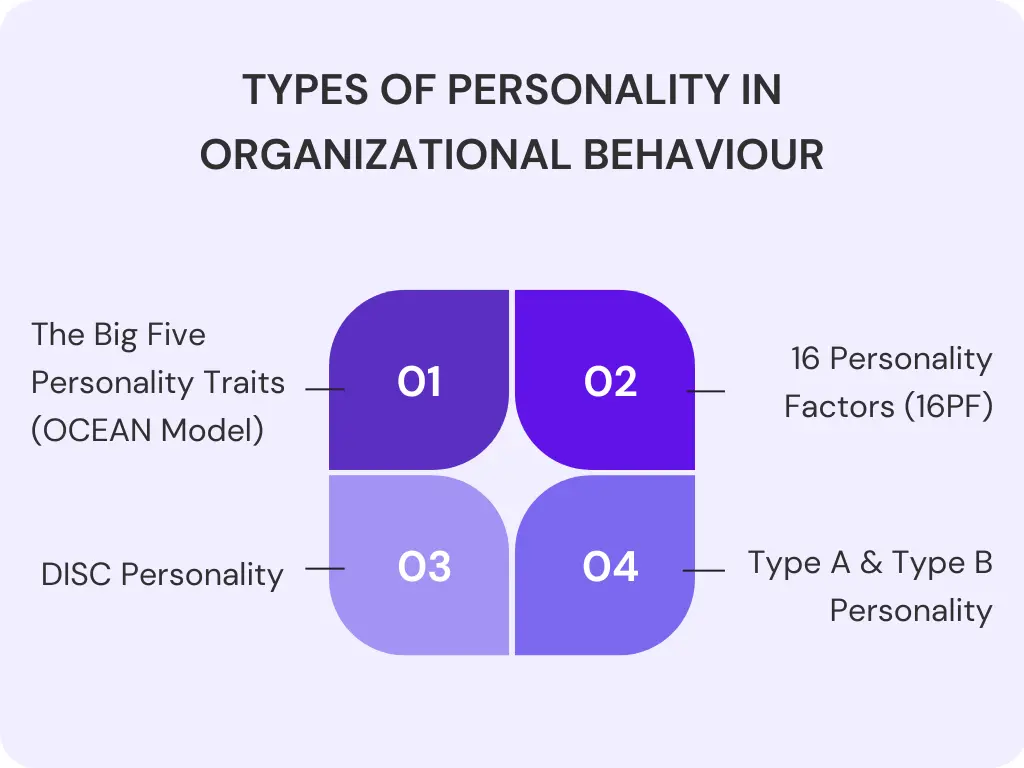
To explain the types of personality in organizational behavior, HR teams typically turn to four well-established psychological models. Understanding personality types is essential for HR professionals as it helps in shaping recruitment strategies, performance management, and team collaboration. Various psychological models categorize personality, each offering insights into how individuals behave in a workplace setting. Recognizing these types allows organizations to leverage strengths and create balanced teams.
Want to save this for later? A type of personality in organizational behavior PDF summary makes it easy to share these models with your team.
These theories of personality in organizational behavior each offer a different lens for understanding employee behavior. Here are some of the key personality models used in organizational behaviour:
The Big Five Personality Traits (OCEAN Model): It is widely accepted model categorizes personality into five core dimensions:
- Openness: Creativity, adaptability, and willingness to embrace change.
- Conscientiousness: Organization, dependability, and goal orientation.
- Extraversion: Sociability, assertiveness, and energy levels.
- Agreeableness: Cooperativeness, empathy, and teamwork.
- Neuroticism: Emotional stability vs. stress-proneness. Employees with high conscientiousness often excel in structured roles, while extraverts thrive in client-facing positions.
Want to see where your team stands on these five dimensions? PMaps' Big 5 Personality Test gives you objective, data-backed scores you can act on.
16 Personality Factors (16PF) by Raymond Cattell: It is a research-backed personality assessment model providing deeper insights into individual behavior.
- It evaluates 16 primary traits, including warmth, reasoning, emotional stability, dominance, and self-control.
- It offers a comprehensive understanding of strengths, challenges, and work preferences.
PMaps' 16PF Personality Test brings this research-backed framework into a practical format HR teams can use for hiring and development decisions.
Type A and Type B Personality Theory: It is influenced by stress response, work pace, and competitiveness.
- Type A: Competitive, ambitious, and goal-driven—often excelling in high-pressure roles.
- Type B: Relaxed, patient, and collaborative—thriving in supportive and creative environments.
For a quick primer before diving into the models below, check out our guide on Understanding four types of personality.
DISC Personality Model: It classifies employees into four behavioral traits:
- Dominance (D): Results-driven, assertive, and strong-willed.
- Influence (I): Persuasive, sociable, and people-oriented.
- Steadiness (S): Cooperative, patient, and dependable.
- Conscientiousness (C): Analytical, detail-focused, and methodical.
Curious which of these four styles shows up most in your team? PMaps' DISC Personality Test helps you find out quickly and reliably.
.webp)
What are the 4 Components of Personality?
Personality is shaped by multiple psychological and behavioral factors that define how individuals think, feel, and act in different situations. In an organizational setting, these components influence work style, decision-making, and team interactions.
The four primary components of personality include:
- Traits: Enduring characteristics that dictate behavioral patterns, such as extroversion, conscientiousness, or openness.
- Values: Core beliefs and principles that guide decision-making and ethical behavior in the workplace.
- Self-Concept: An individual's perception of themselves, their strengths, and their professional identity.
- Emotional Patterns: Typical emotional responses to stress, feedback, and workplace interactions.
These components interact dynamically, shaping how employees adapt to organizational culture, collaborate with teams, and respond to challenges. Recognizing these elements helps you craft your talent management strategies, ensuring employees are placed in roles that align with their intrinsic motivations and strengths.
Implications of Personality in Organizational Behaviour
Personality of each employee counts, as it adds up to shaping workplace culture as well as performance, leadership effectiveness, and team dynamics. Organizations that recognize and assess personality traits can create strategies that enhance productivity, employee satisfaction, and overall business success.
Recognizing the factors affecting personality in organizational behavior helps HR teams design more targeted engagement and retention strategies.
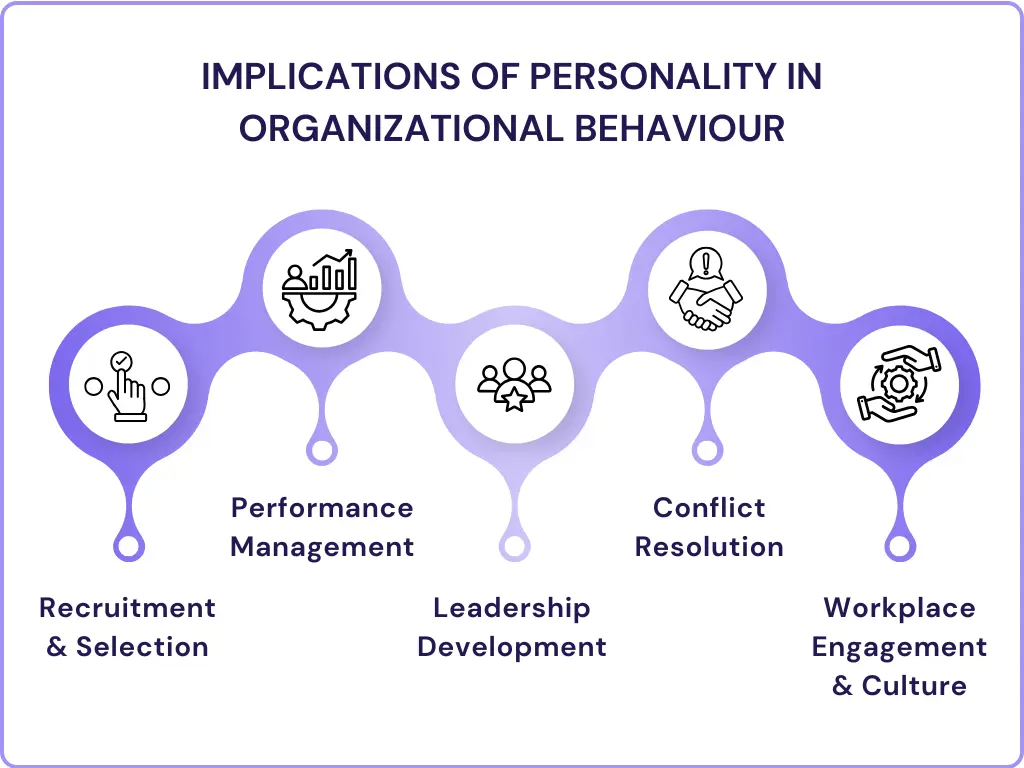
Here's how personality impacts key areas in organizational behaviour:
- Recruitment & Selection: Hiring employees whose personalities align with the company culture improves retention and job satisfaction. Personality assessments help identify candidates who are naturally suited for specific roles.
- Performance Management: Understanding personality traits allows managers to provide personalized feedback, motivation strategies, and development plans, improving overall employee performance.
- Leadership Development: Leaders with high emotional intelligence and adaptable personalities foster stronger team engagement and trust. Identifying leadership potential through personality traits enhances succession planning.
- Conflict Resolution: Recognizing different personality types helps HR professionals mediate workplace conflicts effectively, fostering better communication and collaboration.
- Workplace Engagement & Culture: A balanced mix of personalities strengthens team synergy, promotes innovation, and creates an inclusive work environment where employees thrive.
Not sure where to start? A well-validated personality test at the recruitment stage gives you an objective signal before you even schedule an interview. Even linkedIn reports that companies using personality assessments in hiring see a 30% boost in employee retention, highlighting the value of cultural fit.
Conclusion
Skills can be taught, but personality defines how employees lead, collaborate, and thrive. The right personality fit strengthens culture, boosts engagement, and enhances team dynamics. A misalignment, however, can disrupt even the best strategies. Move beyond intuition—use science-backed personality insights to build a workforce that truly fits.
Ready to see it in action? Try PMaps' Workplace Personality Test to uncover the traits shaping how your team performs, communicates, and grows. Contact us at assessment@pmaps.in or call 8591320212 to get started.

.avif)

.avif)