.webp)
.webp)


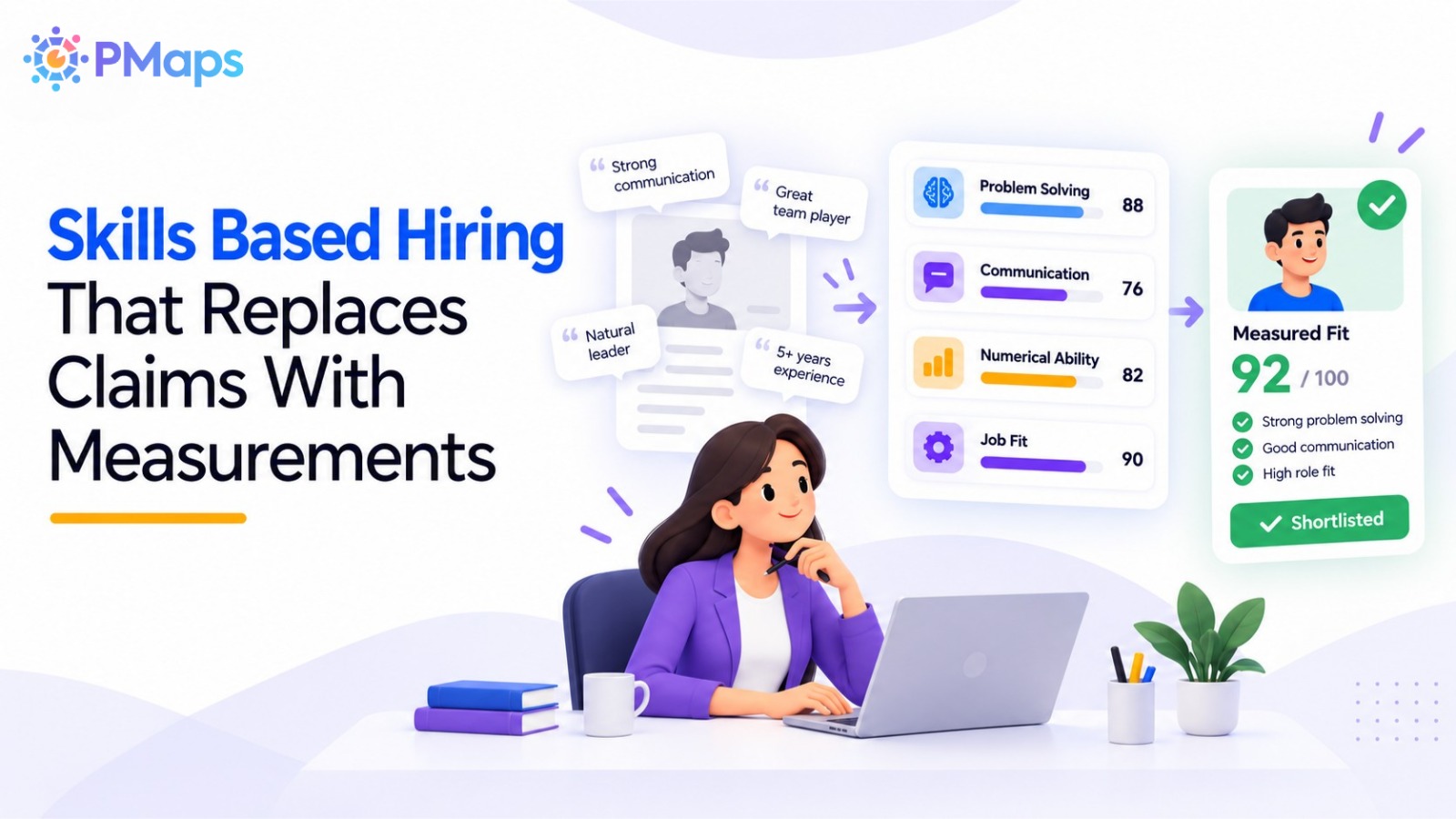
Skills based hiring is an approach in which an employer decides who advances using evidence of what a candidate can do, rather than the credentials and claims on their application. This guide is written for CHROs, heads of talent acquisition and hiring leaders at Indian enterprises screening at volume. It covers why resume-led screening lost accuracy over the last two years, how to tell a claim from a measurement, and how to audit your own funnel for the difference this week.
The timing is not incidental. RefAssured's The State of Candidate Fraud, published on 17 September 2026 from 646 respondents in the United States, found that 74% of jobseekers had used generative AI to write or edit a resume and 88% had tailored one using keywords from the job description. In the same study, 61% of HR and hiring managers had seen candidates list skills they did not have, while only 4% had encountered identity fraud.
What is skills based hiring?
Skills based hiring is the practice of selecting candidates on demonstrated ability rather than on proxies for it. Degrees, job titles, years of experience and self-rated proficiency are proxies. A scored work sample, a structured assessment or a timed exercise is evidence. The distinction decides whether a screening decision rests on something the candidate showed or something they asserted.
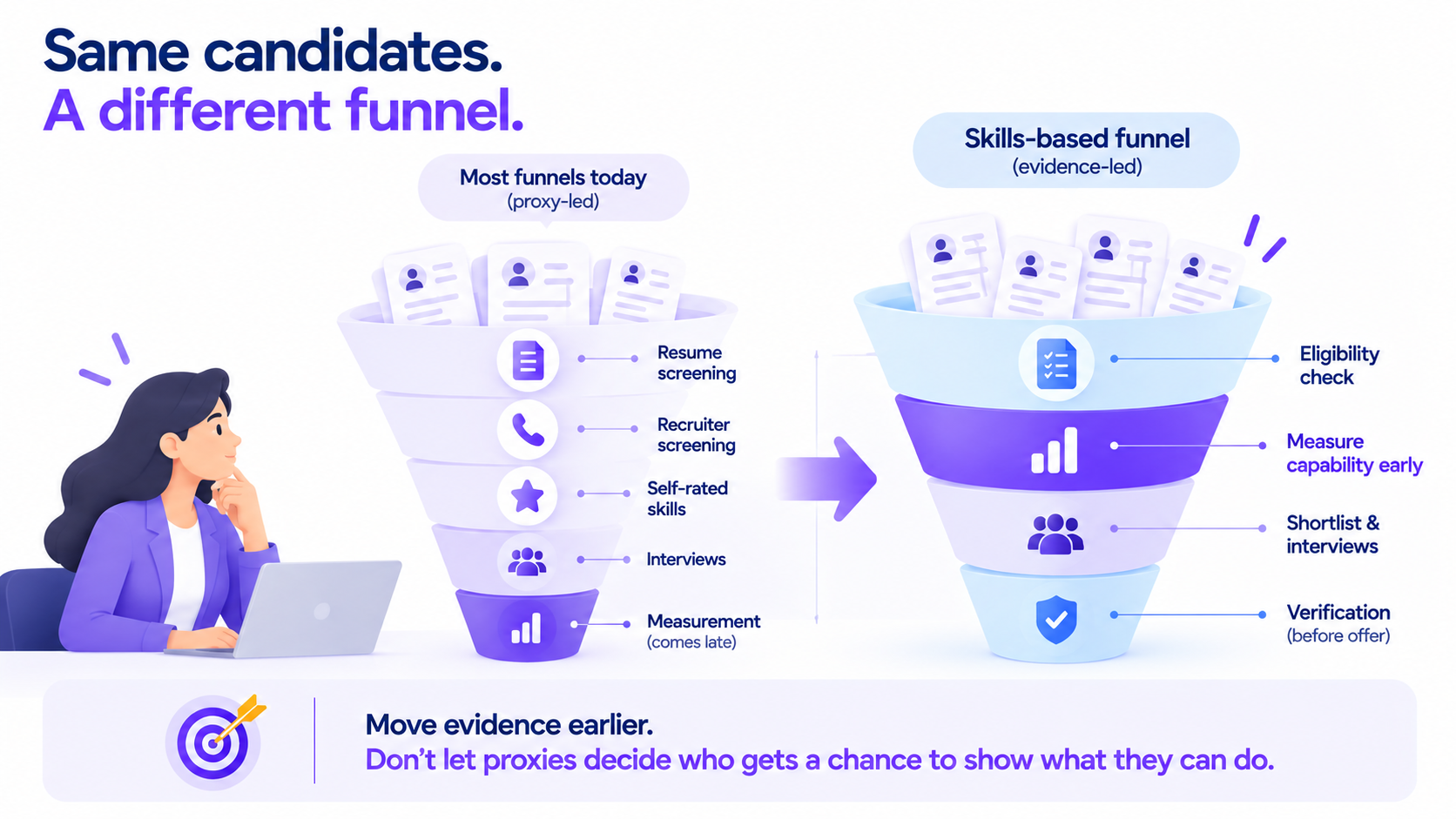
In practice most enterprise funnels are hybrids, and the hybrid is the problem: one or two measured signals sit late in the process, after several rounds of proxy-based filtering have already removed most of the pipeline. The measurement then validates a shortlist that a proxy produced, which is a much weaker use of it.
Why has AI weakened resume-based screening?
Generative AI collapsed the cost of producing a convincing application without changing the cost of producing a real skill. Writing a strong resume for a job you cannot do once took effort, and that effort acted as an unintended filter. With 74% of candidates now using AI on their resume, that filter is gone and most funnels never replaced it.
This is worth separating from a question about candidate honesty. Someone using the best available tool to present themselves well is behaving rationally, and the practice is now close to universal. The failure is structural: a process that treated the effort of writing a good application as a signal about the candidate's capability was always relying on a proxy, and that proxy has been automated away.
The visible symptoms point the wrong way. Application volume rises, completion rates improve, time-to-screen falls. Every dashboard metric looks better while accuracy falls, because nothing in a recruiting system reports the predictive validity of its own filters.
What is the difference between a claim and a measurement?
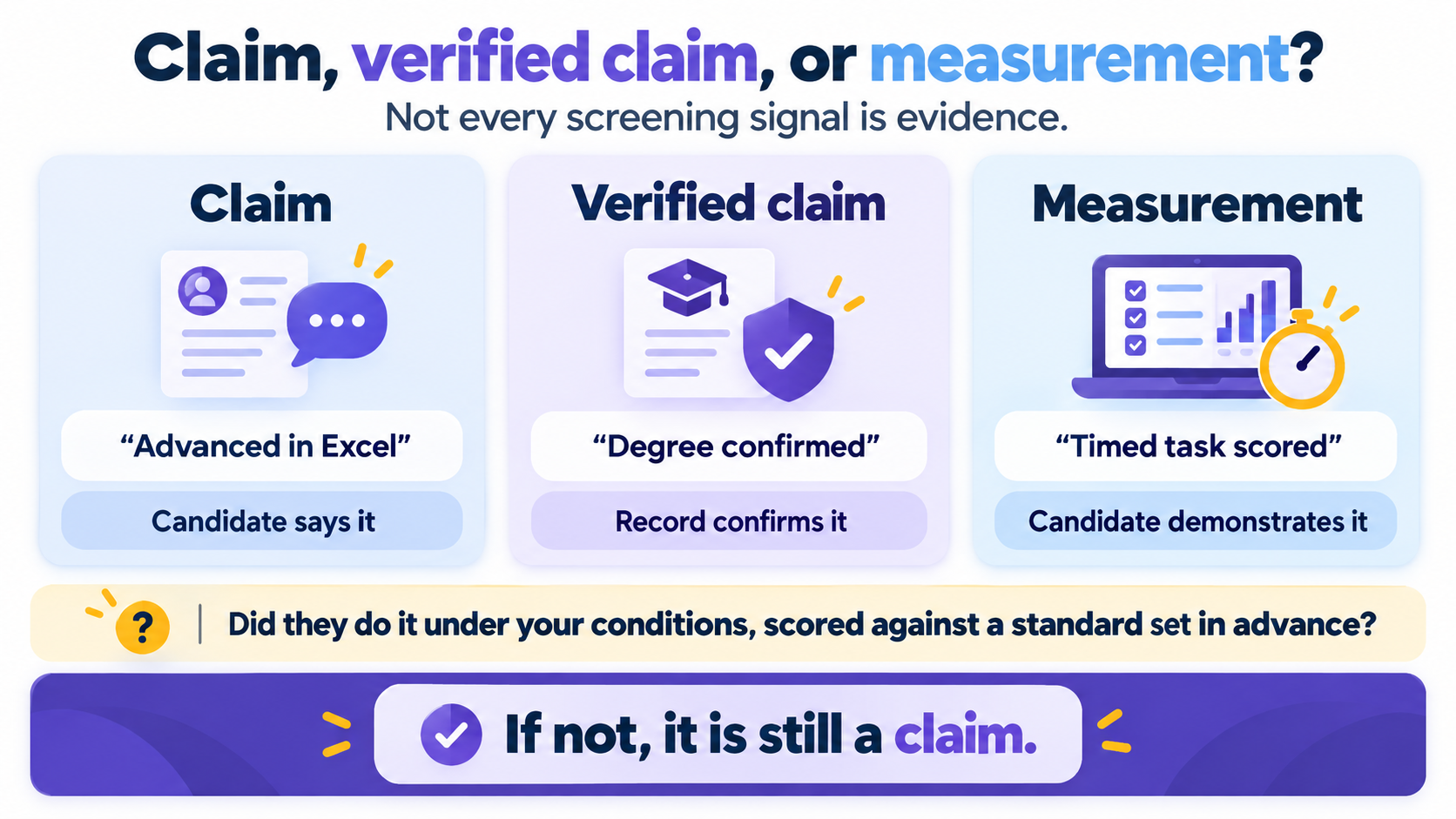
A claim is something a candidate asserts, which you accept, discount or check against a third-party record. A measurement is something a candidate does under conditions you set, scored against a standard you defined in advance. Verification can confirm a claim; it cannot convert one into a measurement, because the underlying evidence never existed.
The practical test is one question: did this person do something, under our conditions, scored against a standard we set before we met them? A resume line fails it. A self-rated skills grid fails it. A verified degree passes a different test it is a checked claim, more reliable than an unchecked one, but still silent on current capability.
Records cover identity, employment dates, education and criminal history. They do not cover judgment under ambiguity, whether someone can de-escalate an angry customer, or whether they can hold a structure in mind while a client changes the brief. Those decide performance in most roles, and no registry exists for any of them.
How do you audit a hiring funnel for claims versus measurements?
Take one open role, list every input used before the final interview, and mark each one C for claim or M for measurement using the single test above. Count the ratio and note where each M sits in the sequence. Most teams find one measurement, sometimes none, and find it positioned after their most expensive human hours.
The audit takes about an hour and needs nothing bought. Work from the actual process rather than the documented one the resume screen, the recruiter phone screen, any self-rated skills grid, the portfolio review, referrals, the background check and any test already in use.
Two findings recur. The first is that the C column is far longer than anyone expected. The second is more actionable: where a measurement does exist, it usually sits at stage four or five, which means claims decided who was allowed to reach the only stage carrying real evidence. Moving that measurement earlier, and deleting the claim it duplicates, is a sequencing change rather than a purchase.
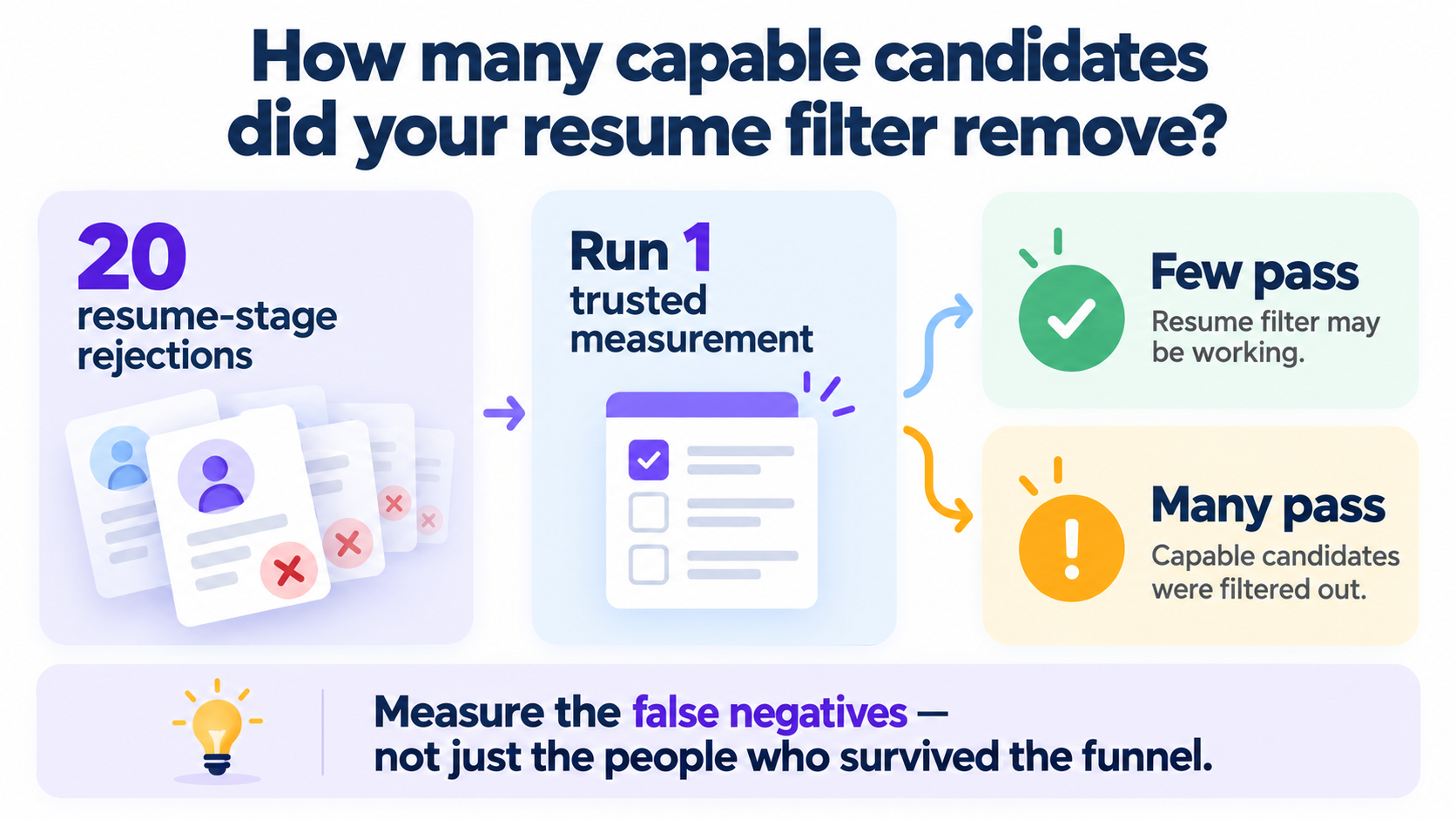
A useful follow-on: take twenty candidates rejected at the resume stage last quarter and run them through the one measurement you trust. If a meaningful number clears the bar, the claim-based filter is rejecting capable people and the cost can be quantified. Teams running pre-employment tests for job fitment already hold the scores this test needs.
Which signals should be measured rather than claimed?
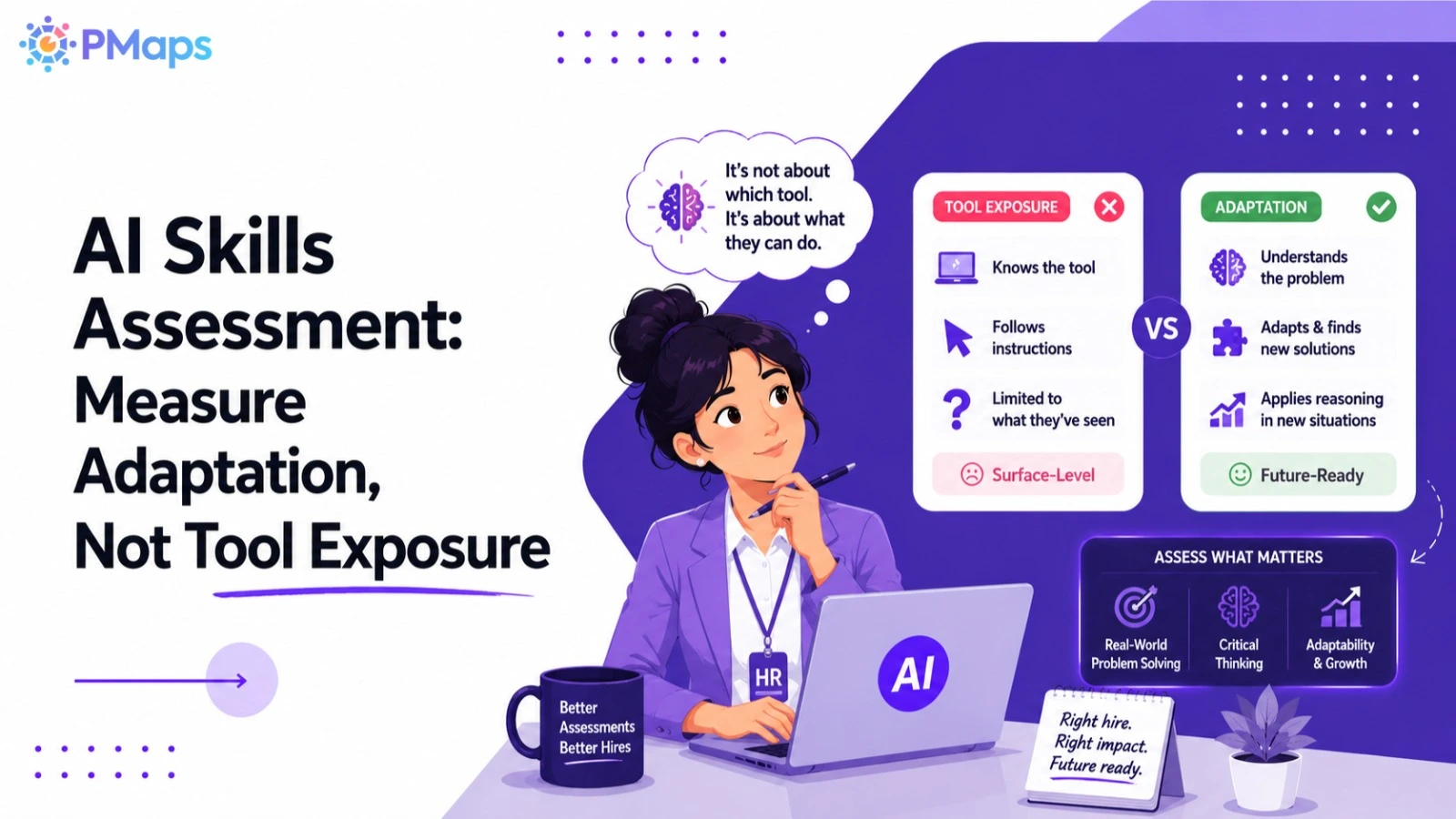
Measure the one or two attributes that decide performance and that an application cannot evidence. For most volume roles that means cognitive ability, role-specific judgment, and the behavioral traits that predict whether someone stays past month three. Eligibility facts such as location, notice period and qualifications need a form and a record check, not an instrument.
The discipline is restraint. A screening stage that measures eight things measures none of them well, and it raises drop-off at exactly the point in the funnel where drop-off is most expensive. Pick the attributes where the gap between what a candidate can claim and what they can demonstrate is widest.
For customer-facing and frontline roles, language and communication are usually the largest such gap easy to assert on an application, quickly evident in a structured voice assessment. This is where an AI voice interviewer for hiring changes the economics, because a spoken interaction is a measurement and a self-rated language score is a claim.
A score is also only interpretable against the right comparison group. Reading results against validated role benchmarks answers whether a score is good for this role, rather than good in general which is the question a hiring manager actually needs settled.
How is skills based hiring different from background verification?
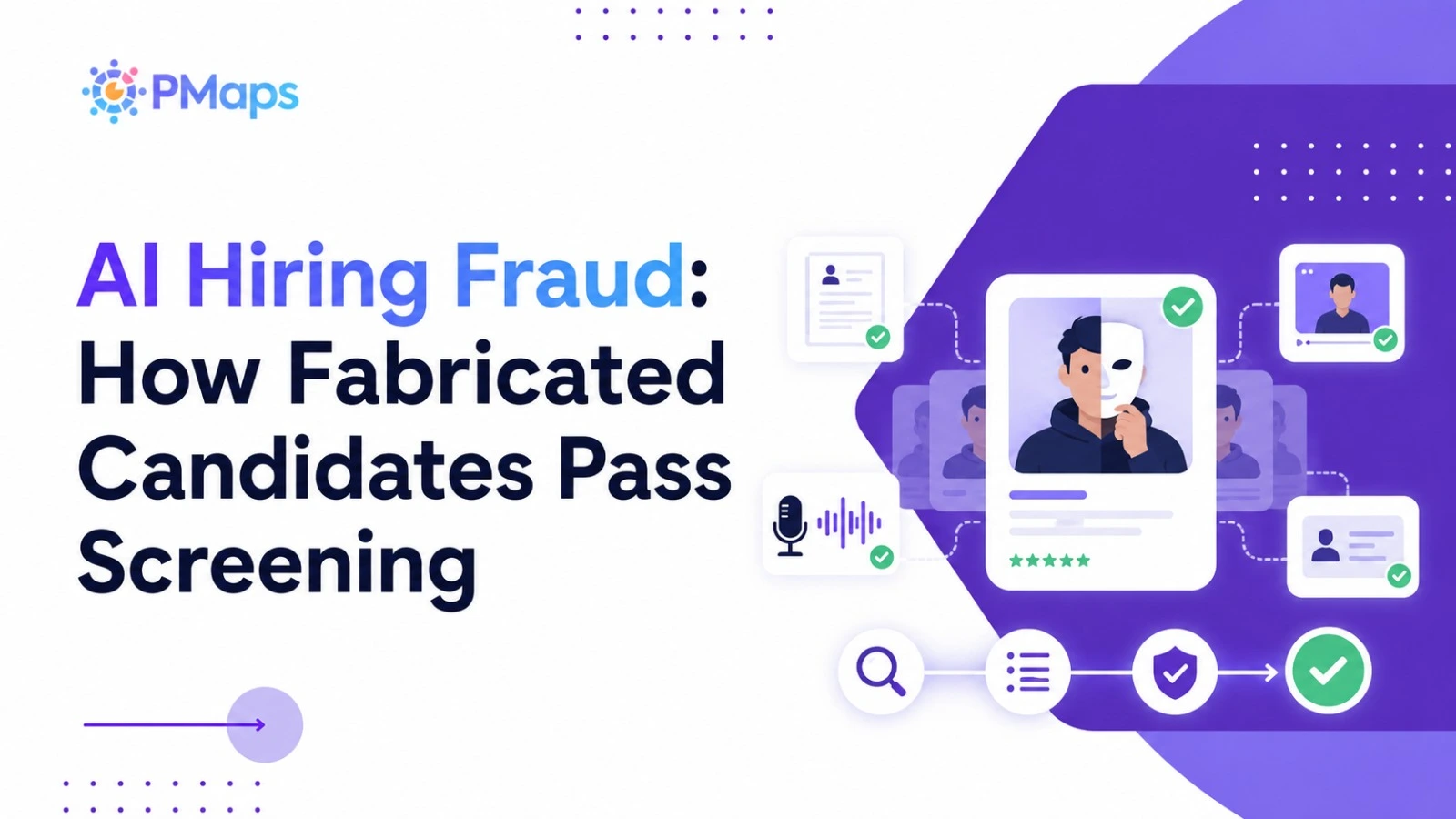
Background verification confirms what a candidate has done: identity, employment dates, education, records. Skills based hiring establishes what they can do now. Both belong in a hiring process and neither substitutes for the other. In the RefAssured study, 4% of HR managers met identity fraud while 61% saw false skill claims verification addresses the smaller problem.
That gap is the clearest argument for treating the two as separate investments. A verification program run well returns a resume you can trust the facts of. It does not tell you whether the person can do the job, and it was never designed to. When the dominant failure mode is inflated capability claims rather than impersonation, adding verification depth leaves most of the exposure untouched.
Sequencing matters too. Verification runs late, on candidates about to receive an offer, because it costs money per check. Measurement belongs early, because its value is deciding who advances. Two tools, two positions in the funnel, and confusing them is how organizations end up well verified and badly hired.
Does skills based hiring reduce hiring bias?
Structured measurement reduces bias relative to an unstructured screen, because every candidate answers the same instrument scored against a standard set in advance. It does not remove bias, and no assessment should be sold as doing so. Instrument design, benchmark construction and how scores get used all remain sources of it.
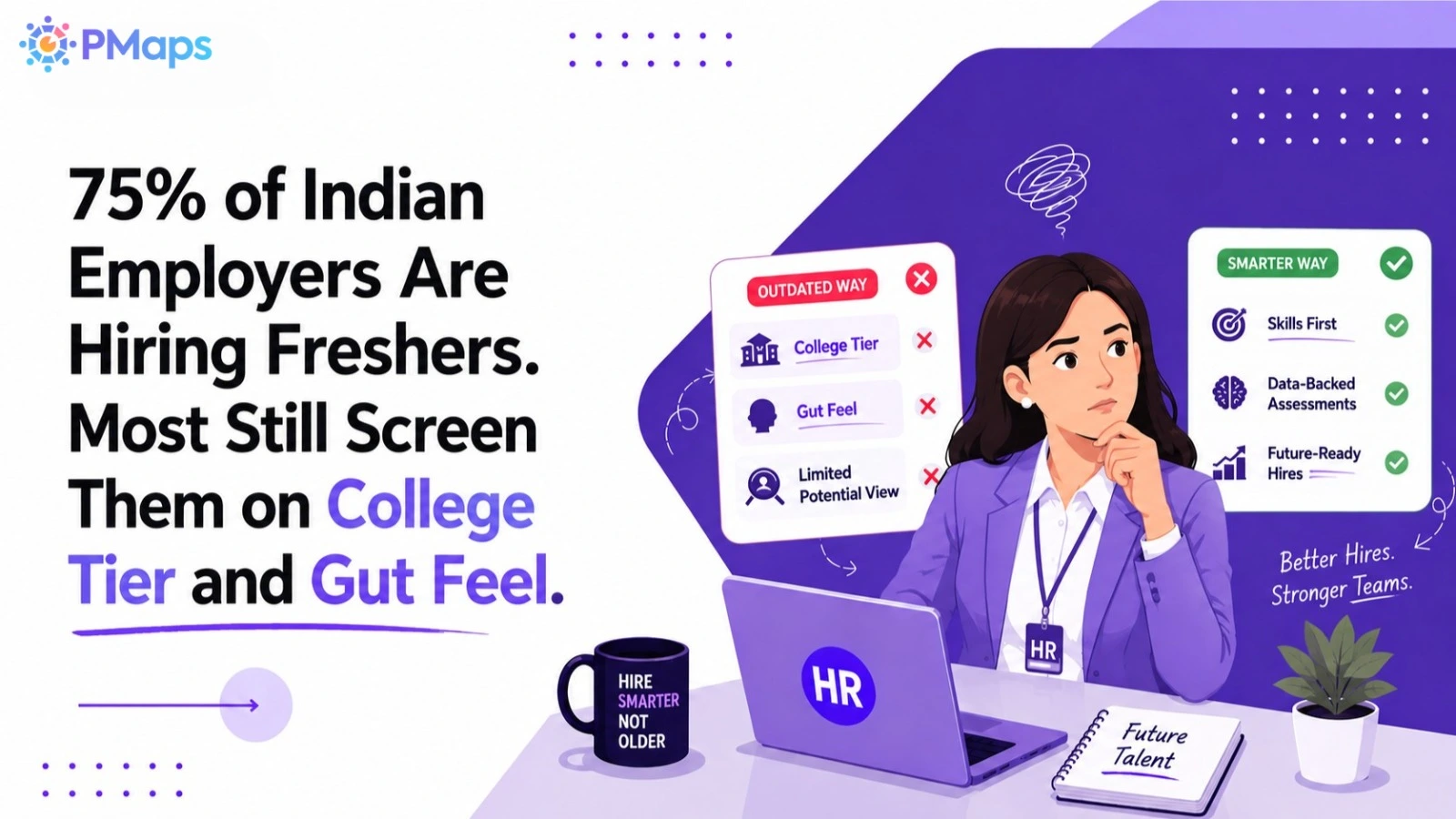
The specific improvement is narrower than most claims about it. Replacing a resume screen with a scored assessment removes a set of signals that correlate with background rather than capability institution prestige, name, address, the polish of the writing, gaps in employment. That is a real reduction, and it is measurable.
What it does not do is produce a neutral process. A benchmark built from the performance of an unrepresentative group will encode that group's characteristics. Multilingual delivery matters here for the same reason: assessing an Indian frontline candidate only in English measures English alongside the attribute intended, and PMaps delivers assessments in 8+ Indian languages for exactly that reason.
Where to start
Run the claim-versus-measurement audit on one role, then re-score twenty rejections against the single measurement you trust most. That is an afternoon of work and it tells you, from your own data, how much of your screening rests on evidence.
For the measurement layer underneath it, explore how PMaps builds competency-based assessments and reads them against validated role benchmarks or book a demo on the one role where the resume and the performance have come furthest apart.