.webp)
.webp)

What is AI proctoring for online testing? And how it use artificial intelligence to monitor and secure online examinations? Can it really replace or assist traditional in-person invigilation? Absolutely, yes. These systems use tools such as machine learning, computer vision, and behavioral analytics to verify student identity and detect suspicious activity in real time.
AI remote proctoring is helping online assessments grow rapidly, enabling organizations to test people wherever they are. To keep things fair, these systems use webcams, microphones, and screen tracking for secure monitoring. HolonIQ reports that digital assessments have increased by over 43%, which means more organizations are turning to AI proctoring.
Want a closer look at how secure remote proctoring works in practice? Download the PMaps Secure report to understand the technology, monitoring layers, and real use cases.
How AI Remote Proctoring Works
AI remote proctoring uses a step-by-step process that begins before the exam and ends after it. These systems verify the candidate's identity, assess the testing environment, monitor for unusual behavior during the exam, and generate reports. Each step helps keep the exam fair and reduces the need for manual supervision.
Step 1: Candidate Identity Verification
Before the exam, AI proctoring checks the candidate's identity to stop impersonation. The system matches the test taker with official identity records.
- Face recognition checks that the candidate matches their registered facial data.
- ID verification compares the uploaded government ID with the candidate's profile.
Step 2: Environment Scan
AI remote proctoring checks the area around the candidate before the exam. This helps prevent outside help or hidden devices.
Step 3: AI Monitoring During Exam
When the exam starts, AI remote proctoring watches the candidate in several ways. The system records events and looks for suspicious activity.
- Video proctoring uses the webcam to watch the candidate's movements.
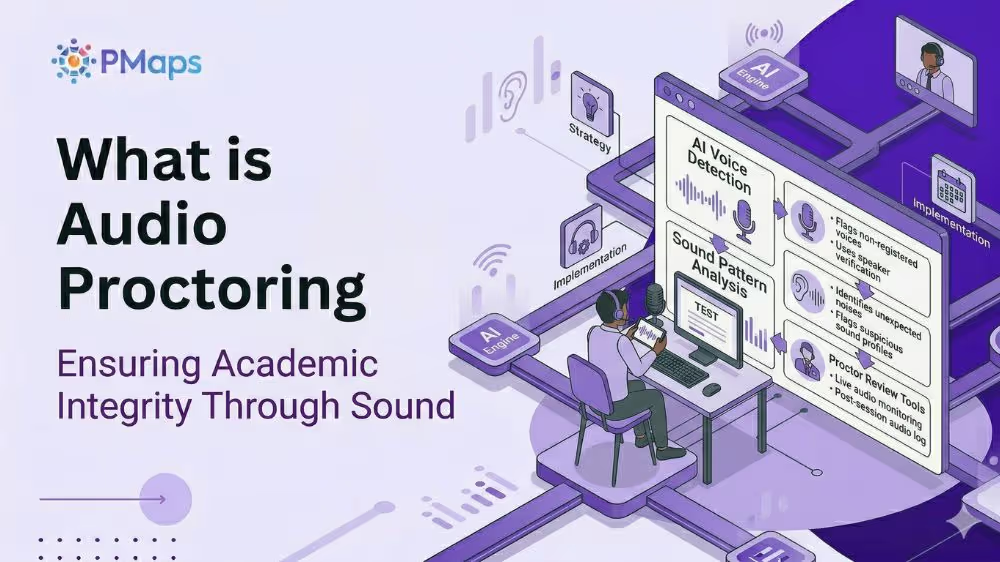
- Audio proctoring listens for voices and other unusual background noises.
- Screen monitoring limits what the candidate can do on their computer by locking the screen and browser.
Step 4: Suspicious Behavior Detection
AI proctoring analyzes candidate behaviour patterns during the exam. The system detects unusual actions that may indicate rule violations.
- Gaze tracking can spot if the candidate looks away from the screen too often.
- Multi-face detection can detect whether more than one person is present in the camera's field of view.
- The system can spot unauthorized device use by noticing changes in devices or IP addresses.
Step 5: Automated Flagging and Reporting
After the exam, AI remote proctoring creates detailed reports. These help schools or organizations review incidents and ensure the exam process remains fair.
- AI generates reports highlighting any flagged events during the exam.
- If needed, a human reviewer can check suspicious cases.
Benefits of AI Proctoring in Online Assessment
AI remote proctoring helps keep exams fair and secure, even when many people take them online. Organizations can use these systems to monitor tests without adding extra work for staff. With automated monitoring and behavior analysis, AI proctoring provides steady supervision, makes exams more accessible, and creates a safe testing environment.
- Scalable Online Exam Monitoring: AI remote proctoring systems monitor thousands of candidates simultaneously across multiple locations without additional human supervision.
- Reduced Human Intervention: AI proctoring automates monitoring tasks, reducing reliance on human invigilators while maintaining consistent supervision during remote assessments.
- Enhanced Exam Security: AI-based proctoring detects suspicious behaviour through gaze tracking, screen monitoring, and multi-face detection during exams.
- Cost Efficiency: Organizations reduce infrastructure and staffing costs associated with physical exam centers through AI remote proctoring.
- Flexibility for Candidates: Candidates complete online assessments from any location while AI proctoring maintains monitoring standards.
Challenges of AI Based Remote Proctoring
AI-based remote proctoring helps improve exam monitoring, but organizations still need to consider operational and technical issues. These systems rely on strong infrastructure, stable networks, and accurate monitoring. Because of this, institutions review these challenges before using AI proctoring for large online exams.
- Scalability: When many exams occur simultaneously, AI remote proctoring systems must perform reliably while monitoring multiple candidates simultaneously.
- Cost Effectiveness: While AI proctoring can save money over time, organizations need to plan for upfront costs like setup, licensing, and infrastructure.
- 24/7 Availability: To monitor exams around the clock and across different time zones, AI proctoring systems need reliable infrastructure and steady technical support.
- Integrity: Schools and organizations need to ensure AI proctoring systems are fair and produce consistent results, regardless of where or how the test is taken.
- Internet Connectivity Issues: Poor internet connections can disrupt monitoring or make AI proctoring less stable during online exams.
- False Positives: Sometimes, AI proctoring might mistakenly mark normal student behavior as suspicious during exams.
- Additional Technical Needs: Students need the right devices, webcams, microphones, and secure browsers to take exams with AI remote proctoring.
Top AI Proctoring Solution
When evaluating AI-based remote proctoring platforms, organizations typically compare them on monitoring accuracy, clear reporting, and the candidate's experience. These solutions vary in how much they automate, their analytics features, and how well they scale for large organizations. Here are some widely used AI remote proctoring tools for secure online assessments.
- PMaps Secure offers AI-based remote proctoring with behavioral analytics, visual psychometric tests, automated monitoring, and detailed integrity reports, making it useful for hiring assessments.
- Ekalavya is an AI proctoring platform made for educational assessments. It includes identity verification, browser monitoring, and exam integrity reports.
- HCLTech provides an enterprise-level AI remote proctoring solution that supports large-scale assessments with identity authentication and behavior monitoring.
- Proctorio is a browser-based AI proctoring platform that features video monitoring, screen recording, and automated detection of suspicious behavior.
Conclusion
AI-based remote proctoring has changed how organizations conduct secure online assessments. It helps protect exam integrity by using automated monitoring, behavior analysis, and clear reporting. As remote testing grows, AI proctoring will continue to play a key role in delivering reliable assessments. If your organization is planning secure digital exams, consider using AI proctoring tools that offer both monitoring and candidate analytics. For expert advice on assessment security, reach out at 8591320212 or assessment@pmaps.in.
PMaps' ai voice assistant for hiring conducts conversational, structured screening calls at scale and delivers scored results hiring teams can act on.