.webp)
.webp)


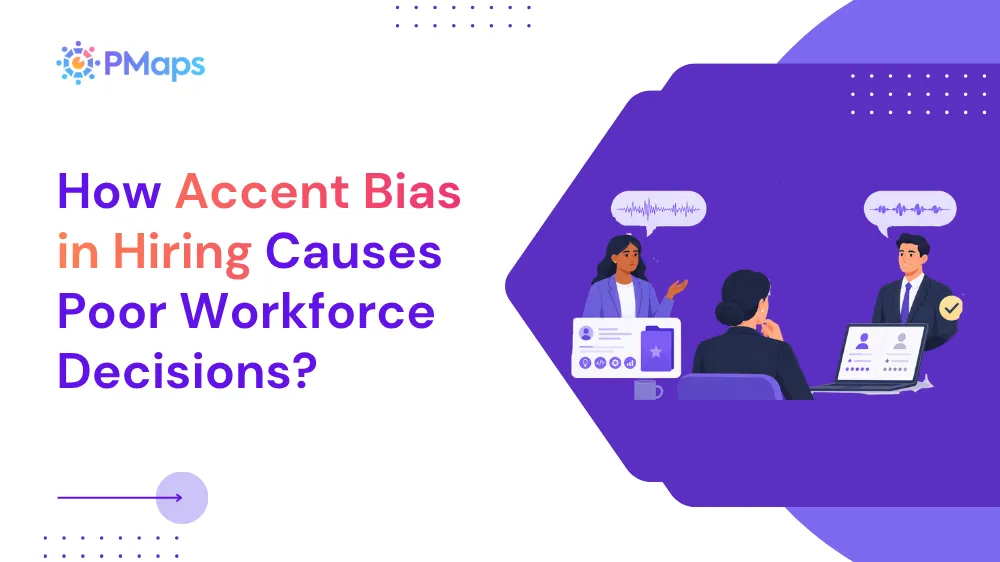
A candidate’s accent can shape interviews before skills are fully assessed. What is accent bias, and how does it affect hiring? It is an unfair judgment based on speech, rather than competence, job evidence, or role outcomes. Accent bias in hiring leads to poor decisions by replacing evidence with speech preference.
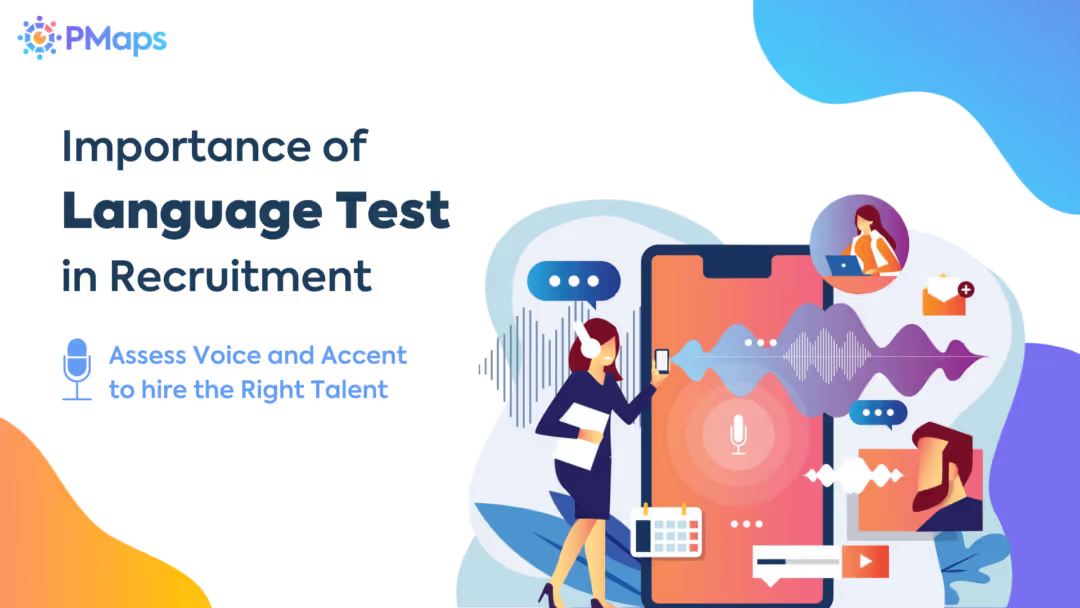
Accent matters in GCC, BFSI, Retail, SaaS support, and some Healthcare roles. Voice and Accent Tests and AI Voice Interview dashboards measure clarity, fluency, listening, and fit. What is the bias against people with accents? Recruiters may read unfamiliar speech as a sign of low intelligence; the Sutton Trust reports that 29% faced accent-related criticism.
Does Misattributing Competence Through Accent Cost You Your Best Candidates?
Accent bias misattributes competence when sound becomes a shortcut for skill. Misattributing competence means recruiters judge ability through accent familiarity. A candidate may explain a process clearly. The interviewer may still rate them lower if their speech sounds regional, foreign, or socially unfamiliar. A meta-analysis on ResearchGate of 139 effect sizes found that candidates with a standard accent were rated as more hireable. The same review reported a d = 0.47 bias against non-standard accents, with stronger effects in high-communication jobs.
Example: A customer support applicant gives the correct escalation steps. The recruiter marks them “not polished.” The real concern was accent comfort, not service ability.
Still using accent as a proxy for ability? Read on ‘What is competency assessment?’ to see how structured hiring reveals role readiness beyond speech style.
Does the "Fluency Effect" Make Interviewers Mistake Accent for Inability?
The fluency effect makes easy-to-process speech feel more credible. The fluency effect happens when listeners trust information that feels easier to process. In hiring, familiar accents can sound more confident. Unfamiliar accents can require more effort to listen to. That effort may be mistaken for poor communication. Test Partnership reports that candidates with non-standard accents receive lower interview ratings, even when their skills and experience are similar. The article also notes that this disadvantage can approach a standardized effect size of 0.5.
Example: A BPO applicant speaks clearly but with a regional rhythm. The interviewer feels mild strain and rates communication lower. A BPO assessment for voice and accent would separate clarity from accent.
Does Stereotyping "Otherness" Through Accent Quietly Exclude Your Strongest Applicants?
Accent bias stereotypes otherness by treating unfamiliar speech as a marker of social distance. Stereotyping otherness means the candidate sounds “not like us.” The judgment may seem like a cultural fit. It often reflects similarity attraction rather than role fit. This is common in leadership, sales, client service, and voice hiring. The Social Mobility Commission states that accent is not directly linked to work outputs. It also notes that accent bias can affect not only hiring but also promotion.
Example: A recruiter hears a strong non-native accent during a SaaS support interview. They assume low client comfort. The candidate’s ticket simulation shows strong empathy, accuracy, and process discipline.
Does Ignoring Technical Ability in Favor of Accent Lead to Weaker Teams?
Accent bias ignores technical ability when voice receives more weight than job skill. In many roles, technical ability predicts job success more than accent. A collections executive needs negotiation discipline. A service desk analyst needs troubleshooting logic. A sales agent needs to handle objections and ensure CRM accuracy. Combination communication tests can help balance assessment across both criteria.
Example: A candidate fails a verbal interview due to discomfort with their accent. Their role simulation shows high accuracy and strong customer recovery skills. The hiring team loses evidence by relying on opinion.
How Does Intersectional Disadvantage Make Accent Bias Worse?
Intersectional disadvantage compounds accent bias through class, gender, ethnicity, and nationality. Accent rarely acts alone. It can signal region, caste, ethnicity, race, education, or class. The risk rises when hiring panels use broad labels like “professional,” “global,” or “client-ready” without defined scoring. EEOC guidance states that national origin discrimination includes treatment based on ethnicity or accent. Title VII also covers hiring, firing, pay, assignments, promotions, and training decisions. The same guidance says national origin discrimination can overlap with race, color, or religion. It also gives examples of linguistic traits associated with national origin groups.
What is an example of accent bias?
Accent bias occurs when a capable candidate is rejected for sound rather than skill. Let’s say you are an interviewer or employer reviewing an individual for a voice process. Maybe they are answering all correctly, and maybe your panel likes the ‘empathy’, but then suddenly one of your managers says our clients may “struggle with her accent,” on the sole basis of their judgment, with no evidence. This statement, consciously or unconsciously, leads to a decision of rejection among the panel members; this is what we call an accent bias.
What are the consequences for organizations?
Accent bias creates measurable risks in hiring, legal, and performance areas. For employers, accent discrimination is not only a fairness issue. It can reduce talent supply, weaken customer teams, and create brand risk. The cost appears later as training waste, attrition, and poor role fit.
- Talent Loss: Skilled candidates exit before evidence is tested.
- Homogeneous Teams: Similar speech becomes a false cultural fit.
- Lowered Performance: Voice preference replaces job capability.
- Legal Risk: Accent bias can overlap with national origin.
- Brand Damage: Candidates publicly share poor hiring experiences.
- Training Waste: Weak hires enter roles through speech comfort.
- Diversity Loss: Regional and multilingual candidates stay underrepresented.
How Can Companies Mitigate Accent Bias?
Companies reduce accent bias by standardizing evidence before interviews. Mitigation starts with role scorecards. Define what communication means for the job. Then test each skill separately. Recruiters should not collapse clarity, empathy, listening, fluency, and accent into one score.
- AI Voice Screening: Use fixed prompts, scored rubrics, and audit trails.
- Psychometric Tests: Assess patience, ownership, resilience, and service mindset.
- Structured Interviews: Ask identical questions with anchored rating scales.
- Work Simulations: Test calls, tickets, chats, and escalation steps.
- Voice and Accent Assessment: Measure clarity, fluency, pronunciation, and neutrality.
- Analytics Dashboards: Compare panel ratings with assessment evidence.
- Recruiter Briefing: Share accent-bias reminders before voice interviews.
Conclusion
Accent bias in hiring causes poor hiring decisions by confusing sound with competence. It harms qualified candidates and weakens workforce quality. Senior HR teams need structured voice screening, fair communication tests, psychometric evidence, and analytics-led review. PMaps helps teams assess voice, communication, behavior, and job readiness without relying on interviewer preference. We believe accent bias in hiring should be managed through evidence, not instinct. Reach out to us at 8591320212 or assessment@pmaps.in to monitor and mitigate hiring biases.