.webp)
.webp)


Personality tests help hiring teams predict how candidates will perform, collaborate, and fit and not just confirm they hold the right credentials. Used correctly, they add a layer of insight on CV or unstructured interview reliably surfaces.
For a foundational look at what a workplace personality test means in an organizational context, it covers the full definition and application scope.
As organizational psychologist Ben Schwencke puts it: “When hiring managers understand a candidate’s motivations, work style, and behavioral tendencies, they are better placed to determine how well that person will fit into the role and the team. This insight simply isn’t available from a CV or a short interview.” The research agrees: organizations using validated personality data alongside structured interviews consistently report lower early attrition and more accurate performance predictions.
What is an Employment Personality Test?
An employment personality test is a standardized psychometric tool that measures a candidate’s behavioral traits, motivations, and interpersonal style, helping predict how they will behave in specific work situations.
These tools now span a wide range of formats from long-form trait questionnaires to short adaptive instruments. A complete breakdown of types of personality tests for hiring helps map each format to the hiring decision it serves best.
What is an adaptive employee personality test? Adaptive personality tests adjust question delivery based on a candidate’s earlier responses, reducing test length while maintaining scoring precision. Rather than presenting every item to every candidate, adaptive algorithms identify the items most informative for each individual, making them faster to complete and harder to coach for than fixed-format tests.
Across industries, personality data now plays a measurable role in hiring outcomes: 67% of large organizations use some form of personality assessment in their selection process, and Conscientiousness, one of the core Big Five dimensions shows predictive validity of roughly 0.23 for job performance across occupations, consistent across decades of meta-analytic research.
What Personality Traits Matter Most for Different Roles?
There is no universal personality profile that works across all jobs. The value of personality assessments comes from matching the traits being measured to the actual requirements of the specific role. The Big 5 personality traits, the (OCEAN) provide the most validated, research-backed trait map for this kind of matching.
Role-personality matching only works when the competency framework behind the assessment reflects what the job actually demands and not a regular set of “desirable” traits that a hiring manager prefers. This specificity is what separates a useful assessment from one that produces impressive-looking reports with no predictive power.
Why Use Personality Tests in Recruitment?
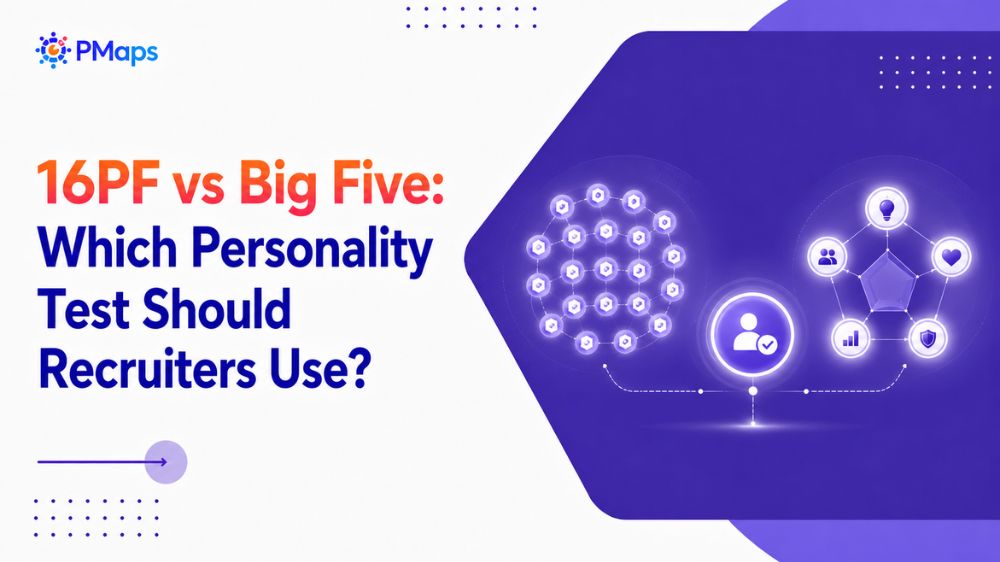
Personality data shows what resumes and interviews routinely miss. A structured Big 5 personality test or the granular 16 PF personality test can each surface trait-level intelligence that structured interviews rarely reach — and do so consistently across every candidate, not just the ones who interview well.
- Reduces early attrition — hiring for behavioral fit, not just skill, consistently lowers 90-day dropout rates
- Removes first-impression bias — trait scores give recruiters data-based comparison points that override halo effects
- Improves workforce diversity — standardized scoring surfaces qualified candidates regardless of communication style or background
- Flags mismatches before they cost money — a bad hire at entry level costs over $15,000; personality data catches misfit early
- Generates interview anchors — low Conscientiousness or high Neuroticism scores give interviewers specific probing questions
- Predicts long-cycle fit — traits like Openness and Emotional Stability track better with 12-month retention than any resume signal
How to Use Personality Assessments Effectively?
Effective use of personality assessments is less about the tool and more about the workflow built around it. Each step below reflects a pattern from real hiring deployments where personality data moved outcomes rather than just filling a report nobody read.
- Define the trait profile before opening applications. A BPO client running 3,000 hires per month set Communication and Emotional Stability benchmarks first, then filtered by score. Result: 70% fewer manual screening calls, early attrition dropped 25%.
- Use the assessment mid-funnel, not as a final gate. A banking client added Sales Aptitude and Behavioral tests after an initial application filter. The combination — not personality alone — reached 82% accuracy in predicting top-quartile field sales performance.
- Pair the Disc Personality Test with cognitive and role-specific tests for team-facing roles. A healthcare staffing client used a blended assessment pipeline and cut total screening time from 5 days to 4 hours per batch.
- Train hiring managers on interpreting reports before deployment. Personality traits exist on a spectrum — a recruiter without training will misread borderline scores and make binary decisions the data never warranted.
- Feed results into interview design, not just shortlisting. A pharma client used personality scores to generate role-specific interview question sets per candidate, onboarding 600 hires 40% faster than the prior cycle.
Still reading DISC as a fixed label? Explore Understanding DISC Personality to see how communication-style data supports better team placement.
Pros and Cons of Personality Tests in Hiring
Personality tests can add structure to hiring, but they are not equal in scientific strength. Some predict workplace behavior better than others. Some work better for coaching than selection. The table below compares advantages, risks, and proper HR use cases before personality scores influence decisions.
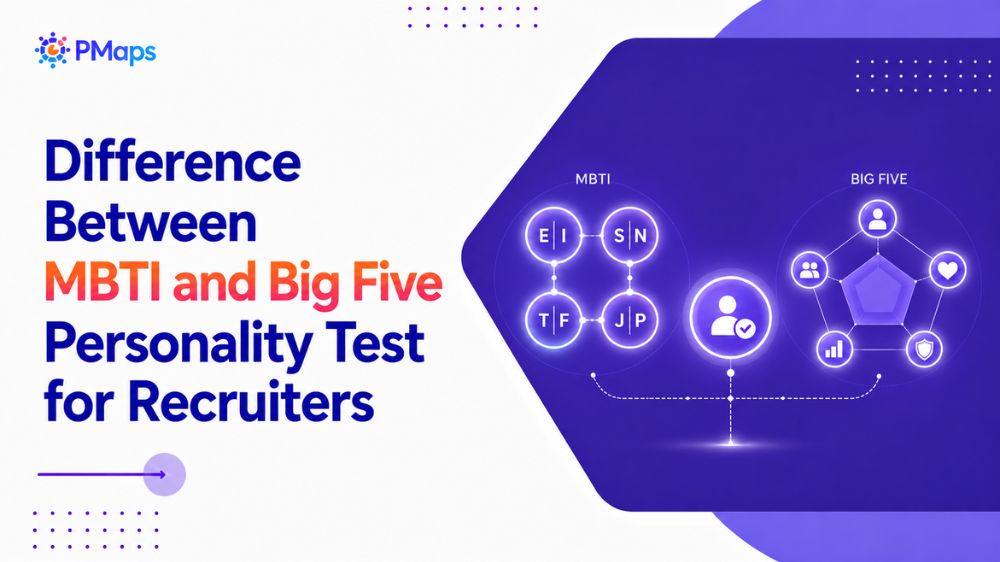
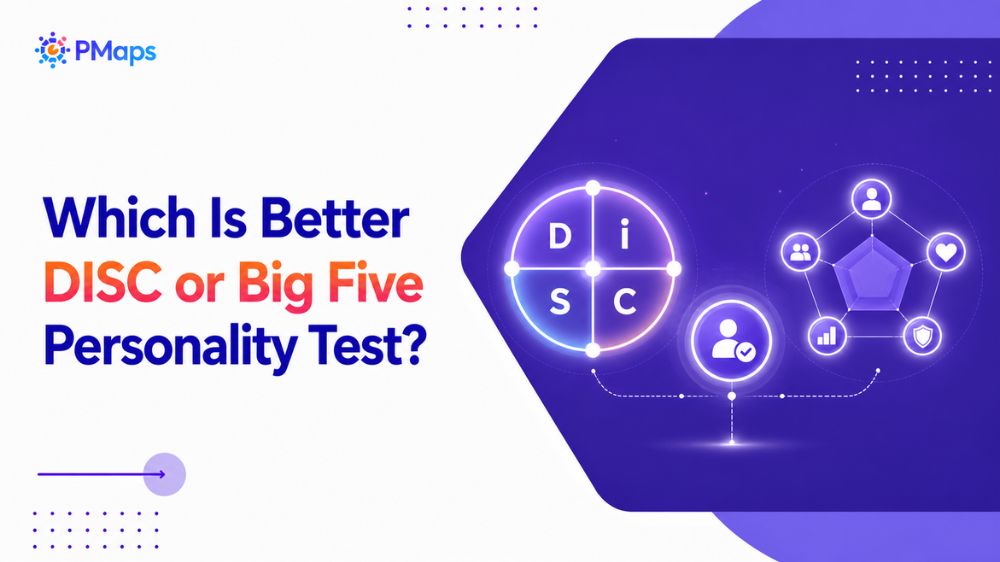
See Big 5 Vs DISC for how the two most common frameworks compare on validity, depth, and recruiter usability before committing to one over the other.
Best Practices for Using Personality Tests
Best practices for personality testing in recruitment go beyond choosing a validated tool. The test itself matters less than the process built around it how it is positioned in the funnel, how results reach decision-makers, and how candidates are treated throughout determines whether the assessment improves or disrupts the hiring experience.
- Align the tool with company values — configure or choose assessments that weight the traits your culture actually rewards
- Use assessments as inputs, not verdicts — personality data should raise questions, not close them
- Maintain candidate transparency — tell candidates what is being measured, why, and how results will be used
- Focus on role-relevant traits — not every OCEAN dimension matters equally for every position
- Provide feedback where possible — candidates who receive results trust the process more and rate the employer brand higher
- Audit for bias regularly — run adverse impact checks across demographic groups at least annually
How you handle the limitations of personality testing matters as much as how you use the strengths. The two H3s below address the most common failure points: results that get misread and insights that never translate into action.
How to Navigate Personality Test Disadvantages?
Disadvantages in personality testing trace back to design gaps, training gaps, or both. Tools like the 16 PF perso nality questionnaire offer granular facet-level scoring that makes bias auditing easier than flat trait-level tools — but they require higher recruiter training to use well.
- Use proctored, browser-locked formats to neutralize coaching effects and fake-good answering
- Randomize item order so candidates cannot predict scoring direction from question sequencing
- Never use personality as the sole filter — pair it with cognitive ability data and a structured interview
- Run a bias audit before full deployment: score the tool against a diverse pilot group before going live
- Train every recruiter who reads reports — not just the HR lead who configured the assessment
How to Use Personality Test Insights?
Personality assessment insights only help when HR teams connect them to the right decision point. A score used for hiring should not be read the same way as a score used for coaching, team placement, or leadership development. The table below shows where each framework fits best.
- Use low Conscientiousness scores to design structured onboarding plans, not to automatically reject candidates
- Match high Openness candidates to roles requiring ambiguity tolerance, not to high-compliance process roles
- Use Agreeableness scores to inform team composition: too much or too little creates friction either way
- Share summarized insights with hiring managers in plain language, not raw percentile outputs
- Revisit candidate reports during 90-day reviews to see if initial trait signals played out as predicted
Looking for validated platforms? Compare the leading options on Top Personality Test Platforms to find the right fit for your hiring volume and role complexity.
4 Alternatives to Personality Testing for Screening Candidates
Personality testing is one input among several. When role requirements, compliance constraints, or candidate volume make personality tools unsuitable as a primary filter, these four alternatives each offer validated, structured ways to assess candidates at scale without relying on trait questionnaires alone.
- Cognitive ability tests — measure reasoning speed, numerical, verbal, and logical accuracy. Cognitive tests have higher predictive validity than personality tools alone and cover 15–25 minutes per candidate. When paired with personality data, they form the strongest combined predictor of job performance in the research literature.
- Situational Judgment Tests (SJTs) — present realistic workplace scenarios with multiple-choice responses. SJTs assess decision-making, prioritization, and ethical reasoning without asking candidates to self-report personality traits directly. They work especially well for leadership and client-facing roles where judgment under pressure is central.
- Structured competency interviews — use standardized questions scored against pre-defined behavioral anchors. The structure eliminates free-form interviewer bias while still surfacing real-world behavioral evidence. Structured interviews have roughly double the predictive validity of unstructured ones across most occupations.
- Work sample tests — ask candidates to complete a realistic task from the actual role: write a client email, analyze a data set, handle a mock call. Work samples have some of the highest face validity of any assessment method, and candidates consistently rate them as fair because the link between the test and the job is obvious.
Conclusion
Personality tests work when they’re designed into a hiring process, not dropped into one. The organizations that see real improvement in hiring quality use personality data to guide interviews, anchor onboarding plans, and flag early attrition risk — not to produce a report that sits in a folder unopened. The question for your team is whether your current personality testing setup is doing any of that, or just adding a step.
If you want to know what a well-integrated personality assessment process looks like for your roles, call 8591320212 or write to ssawant@pmaps.in we’ll walk you through it.