.webp)
.webp)



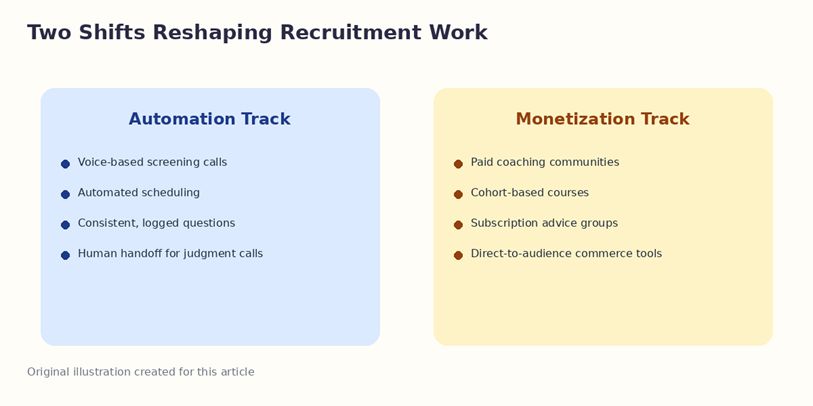
Recruitment is quietly turning into two different stories at once. AI voice agents are eating up the repetitive parts of hiring, things like screening calls and availability checks, so recruiters get more time for the calls that actually need a human brain behind them. Meanwhile, a decent chunk of recruiters and HR consultants are building side businesses off the same expertise, selling courses, community access, and coaching directly to job seekers. Neither trend is really new on its own. What's interesting is how connected they are once you look closely.
The Resume Is Just the Starting Point Now
Hiring used to run on a pretty simple script. Post a job, collect resumes, screen manually, schedule interviews, repeat. That script doesn't hold up anymore. Talent teams are buried in applications, candidates ghost interviews at a rate that would've seemed absurd five years back, and there's a growing gap between what a resume says and what someone can actually do on the job.
I've talked to a fair number of hiring managers this past year, and there's a pattern worth mentioning. Almost nobody says “we can't find candidates.” What they say is closer to “we can't get through the ones we already have, not fast enough, not fairly enough.” That's a different problem, and it's where most of the real innovation in recruitment is actually happening. Not sourcing. Processing.
Two things are driving that shift. Automation is quietly absorbing the repetitive parts of the job. And, somewhat separately, recruiters and HR folks are building income streams around that same skill set, often entirely outside their employer.
Why This Shift Accelerated Now
Some of it comes down to sheer volume. A single job post on a major board can pull in hundreds of applications within days, and a good number of those are now written or polished with AI help, which makes them look eerily similar to each other. Telling real fit apart from a well-formatted application takes actual effort now, not just a quick skim.
Candidate expectations shifted too. People applying for jobs want a response in days, not weeks, and they want the process to feel efficient rather than bureaucratic. A slow, manual screen doesn't just cost a recruiter time. It costs good candidates, who take another offer while they're still waiting to hear back.
Where Voice AI Actually Fits Into Hiring
Phone screens eat more time than people admit, and they're also one of the least consistent parts of hiring. Put two recruiters on the same fifty candidates and they'll ask different follow-ups, spend different amounts of time per call, and come away with slightly different impressions. Neither one is doing a bad job. Manual screening just doesn't scale evenly, no matter how good the recruiter is.
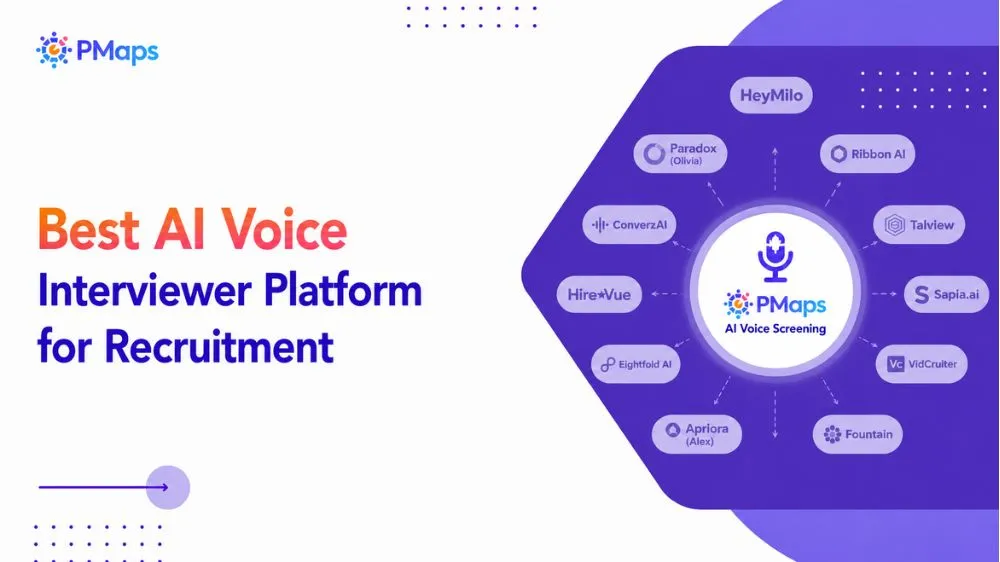
That's the gap voice AI has quietly filled. Instead of a recruiter making fifty near-identical calls to check availability, salary range, and basic qualifications, a voice agent can take that first pass. Same questions every time, consistent logging, and a flag for anything that actually needs a human. Murf's voice agent is a decent example of where this category has ended up: it holds real multi-turn phone conversations, pulls context mid-call from a CRM or scheduler, and hands off to a person the second the conversation stops being a script and starts needing judgment.
What surprised me a little, honestly, is how much this reshapes a recruiter's actual day. Screening, the part that used to eat entire mornings, now often happens before a human ever picks up the phone. That's not the recruiter getting replaced. It's their time getting redirected somewhere more useful.

The Human Layer Doesn't Disappear, It Just Moves
Worth being blunt here. Voice AI is genuinely good at structured, repeatable conversations. It is not good at picking up on hesitation in someone's voice when they're weighing a counteroffer, and it has no business making a culture-fit call on its own.
In teams that get this right, human attention shifts later in the funnel, to the point where it actually matters. Instead of burning the first hour of the day confirming availability, recruiters spend that hour on the handful of people who made it through screening and need a real conversation. That's a better use of a good recruiter's time than it's ever been, honestly.
The Business Model Behind the Recruiter
Here's the part people don't talk about enough. The same shift changing how recruiters screen candidates is also changing how they make a living off that same skill.
More independent recruiters, interview coaches, and HR consultants aren't just sitting inside a company's TA team anymore. A lot of them are building paid communities, cohort-based courses on interview prep or resume writing, subscription groups where job seekers or early-career HR people pay directly for access and advice. It's not some fringe thing, either. Coaching and community-building are shaping up to be genuinely realistic side business options for anyone who already has real hiring expertise. There's no product to manufacture and no inventory to hold, just knowledge that's already sitting there, unused after five o'clock.
This matters for talent acquisition leaders too, not just solo consultants. Plenty of internal recruiters are building a public reputation on the side, through content, communities, or coaching, running parallel to their actual job. Knowing what that side of the industry looks like isn't optional anymore. It's part of understanding your own talent pool and what your best people might already be building outside working hours.
Bringing It Together: What a Modern Hiring Stack Looks Like
If you're building or rethinking a hiring process this year, a few things are worth keeping in mind.
● Automate what's repeatable, not what requires judgment. Voice AI and structured assessments are consistent by design. Save human time for the decisions that actually need it.
● Pay attention to the handoff, not just the automation. The real test of an AI-assisted process isn't how many calls it can make. It's how cleanly it passes a candidate to a person when the conversation needs one.
● Don't drop the assessment layer. Voice and video screening show you how someone communicates. Structured, science-backed assessments still matter for aptitude, personality fit, and role-specific skills, which is exactly why platforms built around psychometrics and predictive analytics haven't gone anywhere.
● Notice how your own people think about income. Recruiters and HR professionals increasingly have options beyond one employer, and the platforms that let them monetize expertise directly are part of the same broader shift reshaping hiring itself.
A Few Mistakes Worth Avoiding
Some patterns show up again and again in teams that get this wrong. The big one is treating automation like a replacement for the whole funnel instead of just the early, repetitive stages. Candidates notice the difference between a process that respects their time and one that just removes a human from every step. The second one tends to hurt your employer brand more than people expect.
The other mistake, just as common, is skipping structured measurement altogether. A friendly voice on the phone is not the same as a validated read on someone's aptitude or fit. They're complementary. Not interchangeable, no matter how good the voice sounds.
Final Thoughts
None of this is really about replacing recruiters, whatever the headlines say. It's about recruiters spending their time differently: automating the parts of the job that were always mechanical anyway, and building something new around the parts that were always genuinely theirs. Teams that figure out how to blend both tend to end up with faster pipelines and recruiters who actually stick around, which, at the end of the day, is the whole point.