.webp)
.webp)


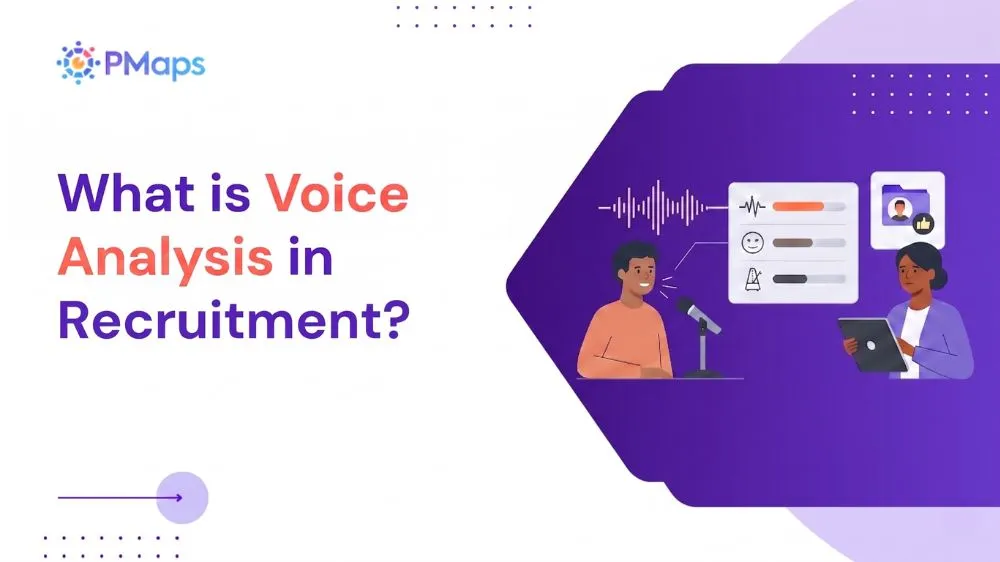
Voice analysis is the structured study of measurable vocal and language signals. It reviews pitch, tone, pace, fluency, pronunciation, pauses, clarity, and emotional cues. In hiring, these signals help recruiters assess spoken communication with less manual variation.
An AI voice interviewer converts audio into candidate data through speech signals, language patterns, scoring rules, and benchmarked role indicators.
Another term for voice analysis is ‘speech analysis’. The method draws from computational linguistics, acoustic phonetics, and machine learning. In HR, it supports structured screening for roles where voice quality, listening, empathy, and response discipline matter.
Key Applications of Voice Analysis
Voice analysis works wherever spoken responses need consistent evaluation. Voice analysis is not limited to hiring teams. Enterprises use it across talent acquisition, support, healthcare, security, and research. Spoken data then becomes comparable evidence at scale.
Voice Analysis Use Cases Across Industries:
- Recruitment and talent assessment: Automated interviews assess language, clarity, and role fit.
- Customer experience: Contact centers review tone, sentiment, compliance, and agent performance.
- Healthcare and mental health: Vocal markers may support screening for selected clinical indicators.
- Identity verification: Speaker recognition systems compare users against stored voiceprints.
- Market research: Brands review vocal sentiment in focus groups and recorded sessions.
In recruitment, voice analysis focuses on how candidates communicate under structured conditions. This helps BPO hiring teams compare applicants in sales, collections, service desk, and customer success roles. These use cases explain why HR teams now ask how the scoring engine works.
How AI Voice Analysis Works?
AI voice analysis turns a spoken answer into a structured candidate score. AI voice analysis works through a controlled scoring pipeline. Each step changes speech into structured evidence. Recruiters can review, compare, and combine it with other assessments later.
Voice Analysis Scoring Pipeline:
- Audio capture: The candidate records an answer through a browser, phone, or app.
- Signal processing: The system reduces noise and creates a cleaner digital waveform.
- Feature extraction: The model reads pitch, pace, pauses, energy, and articulation.
- Language processing: The system transcribes speech and reviews vocabulary, relevance, and fluency.
- Scoring and reporting: The model compares outputs with role benchmarks and competency rules.
Proctoring adds trust to remote voice analysis. PMaps-style AI-enabled proctoring can add identity checks, behaviour monitoring, and fraud alerts during remote screening. This is useful for high-volume hiring where remote attempts are common.
The final result combines what the candidate said with how the answer was delivered. This gives recruiters a broader communication profile than a manual phone screen. The scoring process becomes more useful when recruiters can see clear business gains.
Benefits of Voice Analysis for Recruiters
Voice analytics in hiring process contributes to improved speed, consistency, and evidence quality in communication-heavy hiring. It helps recruiters screen large applicant pools without asking every candidate to join a live call. It reduces variation caused by interviewer mood, fatigue, or accent familiarity.
Voice Analysis Benefits for Hiring Teams:
Voice analysis can support employee-facing decisions. Engagement tools, pulse surveys, and feedback systems help HR teams read work experience signals beyond hiring. Recruiters then need to compare available tools against role, volume, and governance needs.
Top 5 AI Voice Analysis Platforms for Hiring
AI voice analysis platforms differ by use case, scoring depth, and hiring workflow fit. The voice analysis platform market is now more segmented. Some tools focus on interviews. Some serve contact centers. Some combine assessment science with AI scoring for hiring teams globally.
For employers, the better choice depends on the hiring context. For instance, BPO recruiters may need accent neutrality, pronunciation, call discipline, and fraud checks. Sales recruiters may need persuasion, clarity, confidence, and objection handling indicators.
PMaps is relevant when teams need voice analysis within a broader talent assessment stack. It combines voice and accent testing, AI interviews, aptitude testing, psychometrics, skills tests, and decision-ready reporting. Tool selection should always include governance checks before rollout.
Challenges and Limitations of Voice Analysis
Voice analysis must be managed with fairness, consent, and clear scope. Recruitment voice analysis needs governance from the first pilot. HR leaders must check bias, consent, explainability, language scope, and communication-only limits. These checks should happen before any hiring decision is made.
Voice Analysis Risks HR Leaders Should Review:
- Bias risk: Models may treat accents unfairly when training data lacks diversity.
- Consent risk: Candidates must know when their voice is recorded and assessed.
- Explainability risk: Recruiters need clear reasons behind score changes.
- Language scope risk: Some systems work better in English than regional languages.
- Assessment scope risk: Voice signals cannot measure domain knowledge alone.
- Overuse risk: A voice score should not become the full hiring decision.
Best practice is simple. Use voice analysis as one structured input within a wider assessment framework. Pair it with cognitive tests, role simulations, psychometric tests, and human review. This balanced use gives HR teams a clearer route to practical adoption.
Conclusion
Voice analysis gives recruiters clear evidence of how candidates communicate. It works best when paired with skills tests, psychometric assessments, AI interviews, and human judgment. For BPO, sales, support, and multilingual hiring, this means quicker screening and more consistent shortlists.
PMaps brings these signals together in one hiring workflow. Your team can review communication, role fit, cognitive ability, behaviour, and hiring risk without switching between tools. Talk to PMaps to see how AI voice analysis can support your next high-volume hiring drive. Call us for voice analysis pilots at 8591320212 or drop a mail ssawant@pmaps.in.

.webp)