.webp)
.webp)


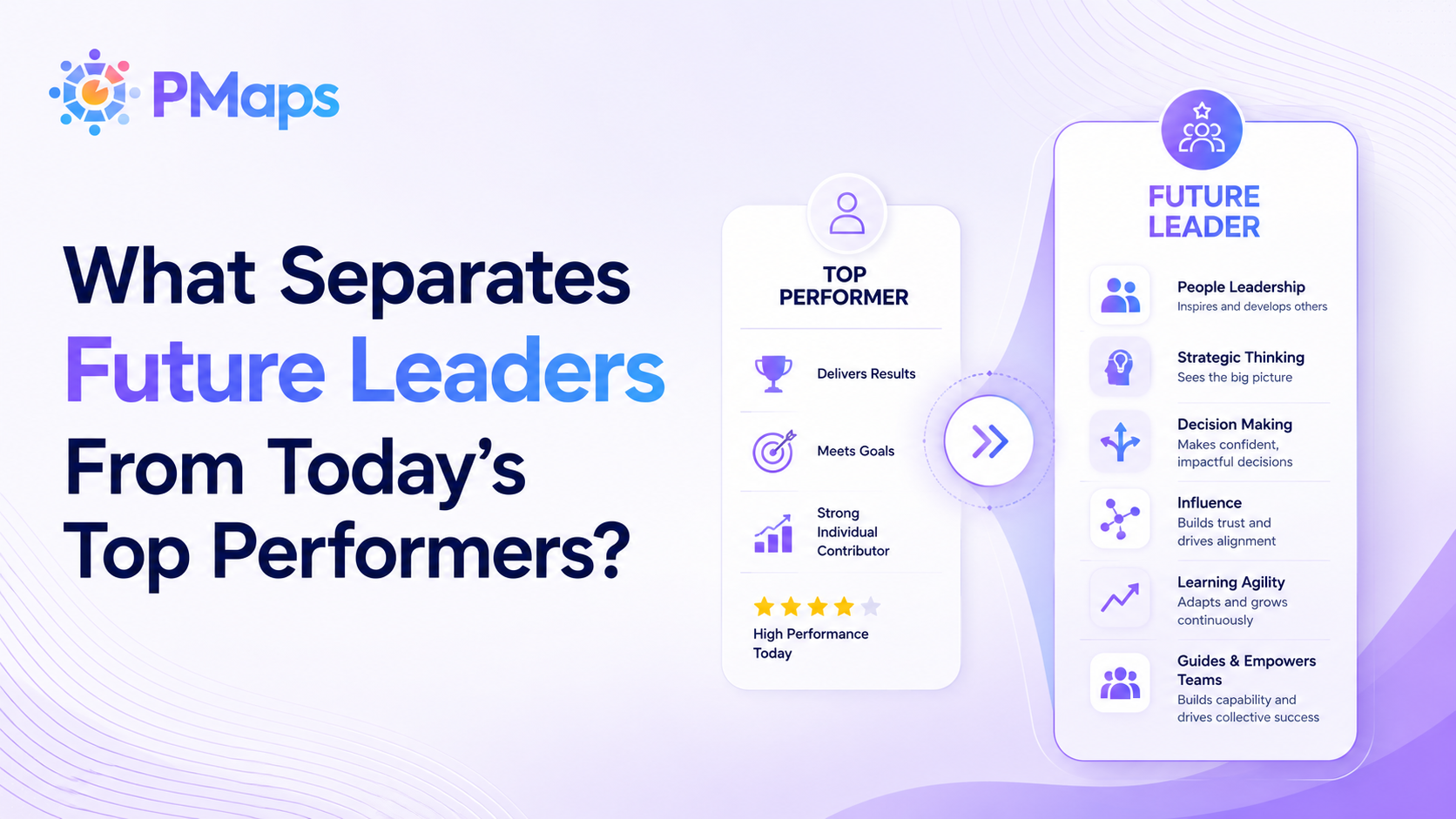
The best engineer on the team becomes the engineering manager. The top salesperson gets the regional lead role. It feels like the obvious call — reward the strongest performer with the bigger job. And it’s one of the most common ways organizations lose both a great contributor and a functioning team at the same time.
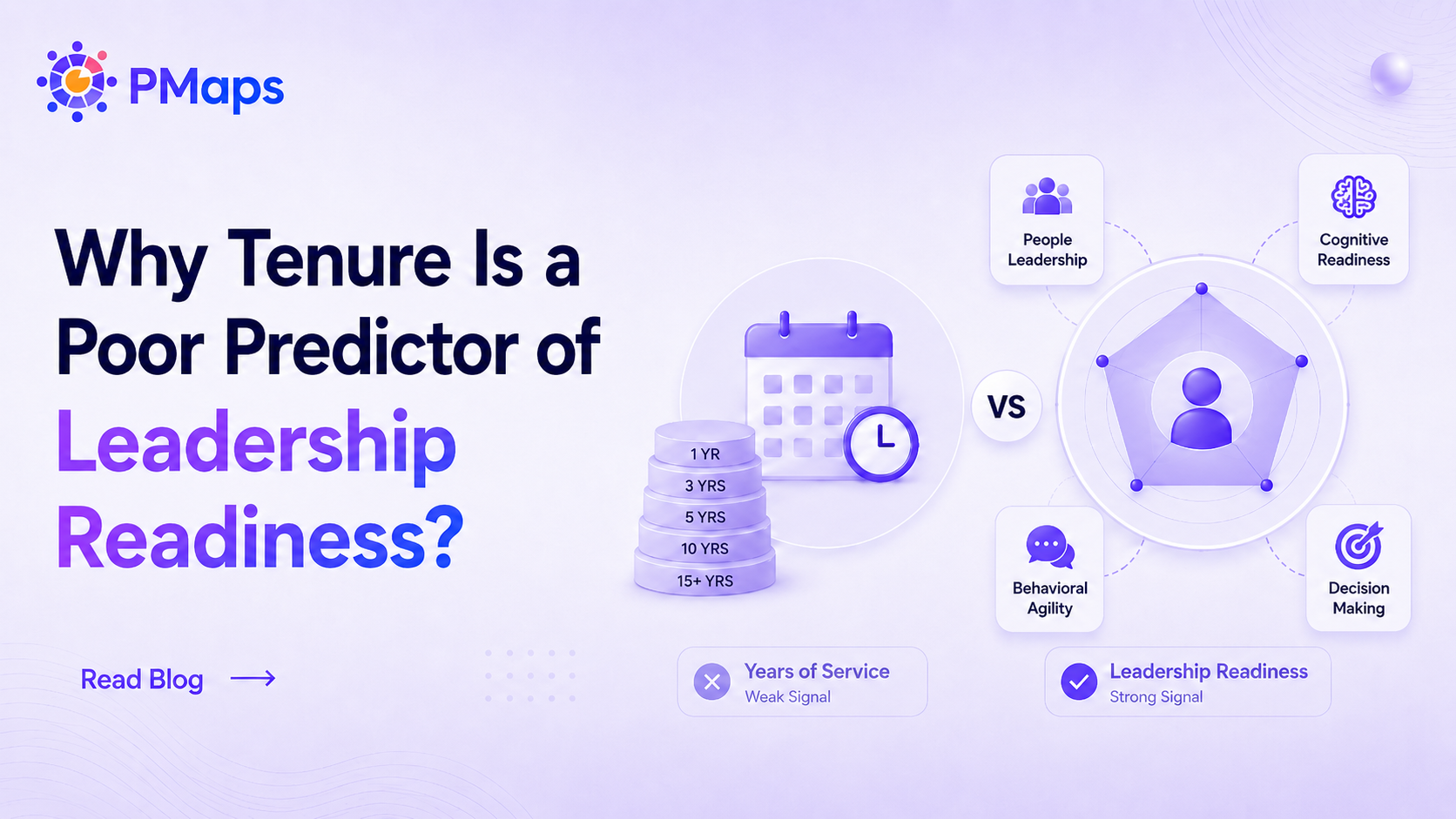
The reason is simple: the behavioral competencies that make someone an exceptional individual contributor are not the same competencies that make someone an effective leader. Some overlap. Many don’t. And a few that barely mattered in the IC role suddenly decide everything in the leadership one.
Before you promote your star performer, ask yourself: are you measuring the right indicator? Our leadership assessment helps you find out.
Individual excellence and leadership are different skill sets
An individual contributor is rewarded for personal output — depth, speed, accuracy, ownership of their own work. A leader is rewarded for output through other people — alignment, delegation, conflict resolution, the ability to make a group more than the sum of its parts.
That shift changes which behaviors carry weight:
- Collaboration moves from “nice to have” to load-bearing. An IC can be brilliant and slightly difficult. A leader who can’t collaborate fractures everything downstream.
- Conflict management goes from rarely tested to constantly tested. ICs avoid conflict; leaders are paid to walk into it.
- People management didn’t exist in the IC role and is now half the job.
- Self-confidence and accountability stop being personal traits and become things a whole team reads and mirrors.
This is why “promote the best performer” so often misfires. You’re selecting on the competencies that mattered yesterday for a role defined by different ones.
The 13 behavioral competencies of leadership
A robust leadership competency framework scores the traits that actually distinguish capable contributors from people who can lead, align, and scale teams. PMaps’ Leadership Behavioral Assessment measures thirteen:
- Self Management — composure and regulation under pressure
- Sociability — ease of building working relationships
- Empathetic Outlook — reading and responding to others’ states
- Collaboration Skills — working with, not just alongside
- Conflict Management — resolving friction without avoiding it
- Problem Solving — structured thinking toward decisions
- Open-mindedness — taking in perspectives that aren’t your own
- Trusting Others — delegating without smothering
- People Management — developing and directing a team
- Accountability — owning outcomes, including bad ones
- Self Confidence — decisiveness a team can lean on
- Achievement Orientation — drive toward results
- Work Ethics — the integrity layer underneath all of it
Notice how many of these are interpersonal. A strong IC can succeed while scoring low on Collaboration, People Management, Trusting Others, and Conflict Management. A leader cannot. That’s the gap a behavioral assessment is built to surface before the promotion, not after.
Why behavior alone isn’t enough — and why cognition completes the picture
Behavior shows how a leader operates with people. It doesn’t show how they handle complexity. That’s why the strongest leadership reads pair behavioral competencies with cognitive ability — reasoning, problem solving, verbal comprehension, and accuracy under load. Behavior tells you whether a team will follow them; cognition tells you whether they’ll make the right call when it’s hard. Strong leaders need both, and a good assessment scores them together into a single profile.
What the data shows: collaboration is the dividing line
When a high-growth consumer-fintech lender benchmarked 78 senior leaders across these competencies, the patterns separating ready leaders from development cases were strikingly consistent.
- 57% qualified as role-fit; 43% were flagged for development against the benchmark.
- The single clearest weak spot for the development group was Collaboration Skills — exactly the kind of competency that’s invisible in individual performance reviews but decisive in a leadership role.
- The fit group’s standout edge was on the cognitive side: cleaner reasoning under time pressure.
- The behaviors even showed up in how each group took the assessment — fit leaders completed 99% of it versus 86% for the development group, and finished faster. Engagement that mirrored their readiness.
The lesson isn’t “collaboration is the only thing that matters.” It’s that the competencies separating leaders from contributors are measurable, repeatable, and rarely the ones a résumé or a performance ranking will reveal.
Measure the right competencies before you promote
If you’re building a leadership pipeline:
- Map the role, not the person. Define which of the thirteen competencies this leadership role actually depends on most. A frontline team lead and a function head don’t need the same profile.
- Assess behavior and cognition together. A single blended read avoids over-indexing on likeability or on raw intelligence alone.
- Treat low scores as a development map. A not-yet-ready leader with a clear collaboration gap is a coaching plan, not a rejection.
Done well, this turns “we think she’d be a good manager” into “here’s exactly where she’s ready and where she needs support” — which is a far safer basis for a promotion.
Know which of your people can actually lead. PMaps measures all 13 leadership behavioral competencies plus cognitive ability, benchmarked to the role. Reach our team at 8591320212 or assessment@pmaps.in to build a competency framework for your leadership bench.