.webp)
.webp)



Sales performance rarely comes down to product knowledge alone. The teams that consistently outperform targets share a cluster of behavioural competencies that predict success across markets, roles, and industries. Understanding and assessing these competencies at the point of hire is what separates high-performing sales teams from those that rely on luck and attrition to find their top performers.
The 5 Cs of sales success are not a checklist — they are an integrated competency model. Each C reinforces the others, and a deficit in any one of them creates a ceiling on how far a salesperson can go, regardless of how strong they are in the remaining four.
Why Sales Competencies Matter More Than CVs
A strong CV tells you where someone has sold, not whether they can sell. Past quotas may reflect territory luck, product strength, or market timing as much as individual skill. Competency-based assessment gets behind the resume — evaluating the underlying behaviours that predict future performance across any sales environment.
Research from the Harvard Business Review found that structured competency-based hiring in sales roles improved first-year performance by 26% versus hiring on CV alone. The 5 Cs give that structure: a repeatable framework for evaluating the attributes that consistently drive revenue.
The 5 Cs of Sales Success
Communication
Sales communication is not simply speaking clearly — it is the ability to listen actively, adapt tone and message to the buyer, and translate product value into language that resonates with each specific prospect. High-performing salespeople communicate in the customer’s vocabulary, not the company’s jargon. They ask more than they tell, especially early in the sales conversation. Communication skills predict performance in every sales role and are the most easily assessed through structured voice or video screening.
Communication is the most objectively measurable of the 5 Cs. Learn how Conversational AI enables structured, scalable assessment of sales communication quality before any human interviewer is involved.
Confidence
Confidence in sales is not arrogance — it is the settled conviction that the solution you are offering genuinely serves the prospect. It shows up in how salespeople handle objections (curious, not defensive), how they behave after rejection (resilient, not withdrawn), and how they navigate difficult buyer conversations (steady, not reactive). Confidence determines whether a salesperson can hold a high-value frame under pressure — which ultimately determines deal outcomes in competitive markets.
Customer Focus
Customer-focused salespeople win because they are genuinely interested in the buyer’s situation rather than just the transaction. They ask better discovery questions, notice signals that less attentive reps miss, and build the kind of relationship that creates repeat business and referrals long after the initial deal. Customer focus is assessed through behavioural event questioning — asking for specific examples of how candidates have adapted their approach for different buyer types or resolved customer problems under pressure.
Closing
Closing is the competency most commonly mistaken for aggression, but the best closers are not pushers — they are readers. They recognise buying signals, create urgency without manufacturing it, and ask for commitment at the right moment. Closing skill is directly correlated with conviction in the value being offered: salespeople who have not mastered their own belief in the product struggle to create belief in the buyer. Closing is assessed through role-play scenarios and structured behavioural interviews that put candidates under realistic pressure.
Consistency
The most common reason high-potential salespeople underperform is inconsistency — strong weeks followed by dead weeks, energetic early quarters followed by mid-year drift. Consistency is a function of self-management, pipeline discipline, and intrinsic motivation rather than external pressure. Behavioural patterns in how candidates describe their weekly work rhythms, pipeline management habits, and recovery from slow periods reveal it clearly.
How to Assess the 5 Cs in Hiring
Each of the 5 Cs requires a different assessment method. No single interview question covers all five, and no resume tells you enough about any of them.
- Communication — assessed best through structured spoken screening where verbal clarity, listening, and adaptability are visible in real time
- Confidence — assessed through objection-handling scenarios and high-pressure behavioural questions that create genuine discomfort and reveal how candidates respond
- Customer Focus — assessed through behavioural event interviews asking for specific examples of customer-first decisions, especially when they conflicted with short-term commercial interest
- Closing — assessed through simulated closing scenarios and direct questions about how candidates identify the right moment to ask for commitment
- Consistency — assessed through detailed exploration of weekly work structure, pipeline management practices, and how candidates have sustained performance through slow periods
How PMaps assesses the 5 Cs. PMaps Sales Assessment evaluates Communication, Confidence, Customer Focus, Closing aptitude, and Consistency through psychometric, situational judgement, and verbal screening tools. The output is a competency-ranked shortlist of candidates scored against the 5 Cs benchmarks you define for your sales role.
Common Gaps the 5 Cs Framework Reveals
Most sales hiring gaps cluster around two of the five: closing and consistency. Candidates can often present well on communication and confidence in an interview but struggle with closing (avoiding pressure) or consistency (lacking pipeline discipline). The 5 Cs framework forces these gaps into the open before hire, not after a missed quarter.
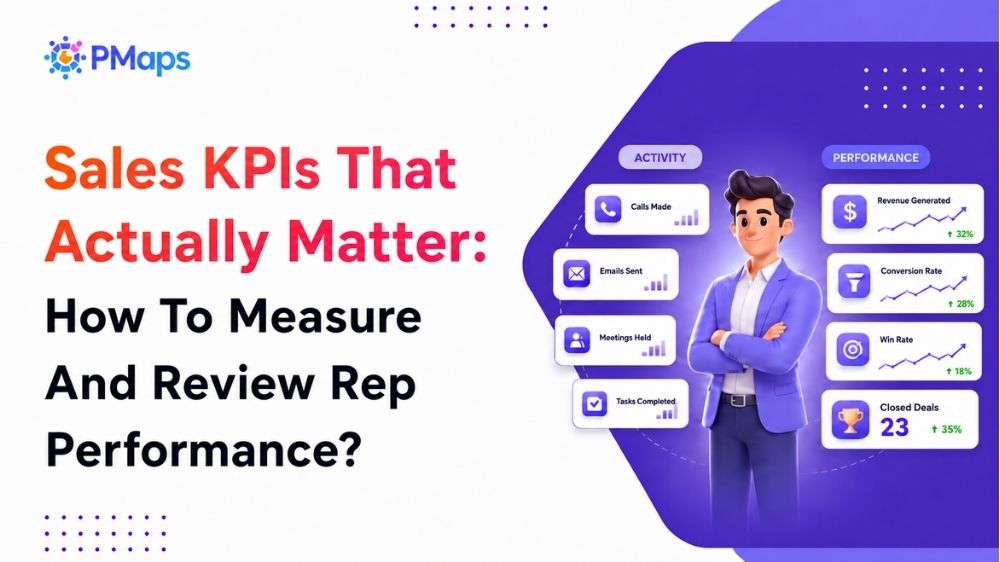
To understand what performance data reveals about which C gaps matter most, read our breakdown of Sales KPIs that Actually Matter — and how leading indicators differ from lagging ones in predicting sales team performance.
Closing Words
The 5 Cs are not a hiring formula — they are a decision framework. A candidate can be strong in four and weak in one and still be worth hiring, depending on which C is missing and what the role genuinely demands. The value of the model is not in rigid scoring but in structured thinking: it replaces gut-feel hiring with a set of questions that consistently get at what actually predicts sales performance. Which C is the non-negotiable for your specific market?
Ready to build a sales team that scores on all five? Write to ssawant@pmaps.in or call +91 8591320212.