.webp)
.webp)


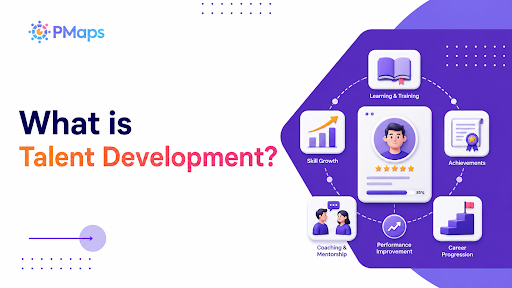
Talent development means the structured process organizations use to build employee skills, knowledge, and behavioral capability. This includes training, mentoring, career planning, and coaching across every level of the workforce. Employees who see investment in their growth report higher engagement, satisfaction, and retention. Talent development also reduces reliance on costly external hiring, especially in skill-scarce roles like BPO and BFSI.
Want to know which employees are ready for growth? Try a PMaps talent assessment before your next development cycle starts.
What Is the Role of Talent Development?
Talent development connects individual employee growth to organizational goals. It builds skills needed for current performance and prepares people for expanded responsibilities ahead.
• Closes skill gaps between current ability and role requirements
• Builds a pipeline of ready internal candidates for promotion
• Strengthens engagement by showing employees a visible growth path
• Supports succession planning for leadership and critical roles
• Improves retention by removing common reasons employees leave
Talent development sets the direction. The next section breaks down what it actually consists of.
What Are the Components of Talent Development?
Talent development rests on four connected components: learning, skill-building, professional growth, and personality development. Each targets a different layer of employee capability.
Learning Development
Learning development covers structured training, including workshops, certifications, e-learning, and on-the-job instruction. It keeps employees current with tools, compliance requirements, and industry practices tied to their roles.
• Formal courses and certifications
• On-the-job coaching and shadowing
• E-learning modules for flexible pacing
What is the 70-20-10 rule in L&D?
The 70-20-10 rule states that 70% of learning happens on the job, 20% through mentoring, and 10% through formal training.
Skill Development
Skill development builds specific technical and functional abilities employees need for their tasks. This spans coding, data analysis, communication, and process-specific skills, validated through structured practice.
• Technical skill certifications
• Simulation-based practice
• Skill-gap assessments to track progress
What are the 5 stages of skill development?
The five stages are novice, advanced beginner, competent, proficient, and expert. Employees move through each stage with practice, feedback, and coaching.
Professional Development
Professional development builds workplace behaviors and career-readiness skills, including communication, time management, decision-making, and leadership. It prepares employees for responsibilities beyond their current technical role.
• Leadership and management training
• Networking and mentorship programs
• Structured career planning conversations
What are the 5 P's of professional development?
The 5 P's are purpose, passion, people, performance, and progress. Together, they guide employees toward focused, sustained career growth.
Personality Development
Personality development strengthens traits like emotional intelligence, adaptability, and interpersonal confidence. It shapes how employees communicate, handle conflict, and collaborate with teams.
• Emotional intelligence coaching
• Communication and confidence-building workshops
• Behavioral feedback and self-awareness tools
What are the 5 pillars of personality development?
The five pillars are self-awareness, confidence, communication, empathy, and adaptability. These pillars shape how employees perform under pressure.
Each component builds a different layer of capability. Together, they determine what talent development delivers for the business.
What Are the Benefits of Developing Talent?
Talent development benefits employers through stronger performance and lower attrition. It benefits employees through visible growth and clearer career direction.
Table
Knowing the difference helps HR teams pick the right tools for each function. That leads directly to the tools talent development itself relies on.
Talent Development Tools and Approaches
Talent development uses a mix of assessment, training, and technology tools. These tools identify skill gaps, track progress, and personalize learning paths for employees.
• Psychometric and skill-gap assessments
• AI-based learning management systems
• Mentorship and coaching platforms
• Performance analytics dashboards
• Internal mobility and career elevation tools
Platforms such as PMaps pair skill-gap analysis with AI resilience assessment, helping HR teams target upskilling and promotion decisions with data. [Internal Link Anchor: Career Elevation Assessments]
With the right tools identified, the next step is putting a program together.
How to Start a Talent Development Program?
Starting a talent development program begins with assessing current employee skills against role requirements. HR teams then set goals and build a structured plan.
• Run a skill-gap assessment across roles
• Define clear development goals per employee
• Select training and coaching methods
• Track progress with measurable milestones
• Review outcomes and adjust the program quarterly
A phased rollout, supported by [Internal Link Anchor: Skill-Gap Analysis Tools], keeps the program measurable from day one.
Conclusion
Talent development turns individual growth into organizational strength. Companies that invest in structured learning, skill-building, and coaching see stronger retention and readier leadership pipelines. Curious how AI-based skill-gap assessments could shape your next development cycle? PMaps helps HR teams build data-backed talent development programs across industries and roles. Give us a call at 8591320212 or write to us at ssawant@pmaps.in.