.webp)
.webp)


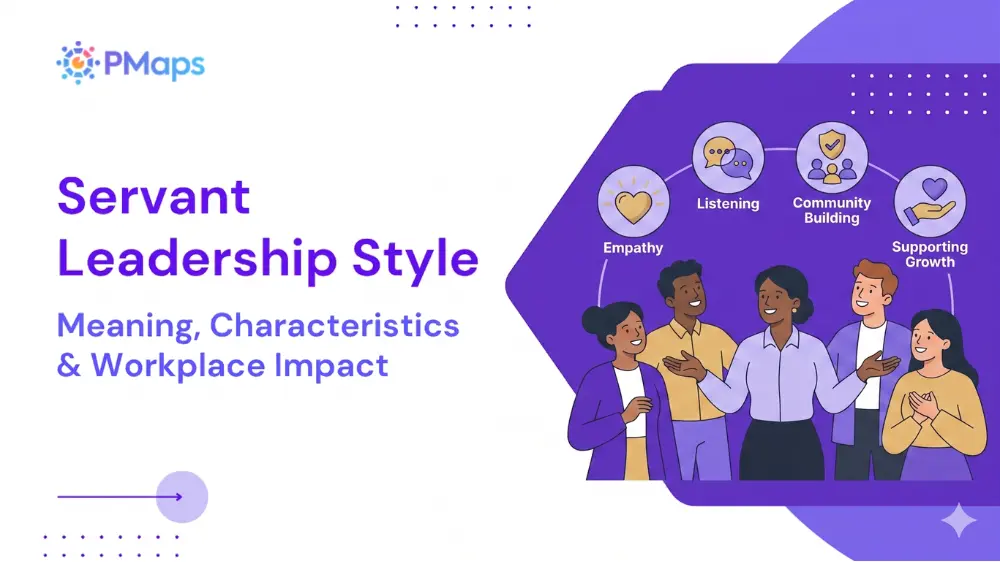
Servant leadership is a way of leading that puts the growth, well-being, and empowerment of employees, customers, and the community before the leader’s own interests. Robert K. Greenleaf introduced this idea in his 1970 essay "The Servant as Leader." Unlike other leadership styles that use a top-down approach, servant leadership shifts the focus to serving employees and stakeholders. A 2021 study by Hoch et al. found that servant leadership can boost employee performance by 12%.
What Is Servant Leadership? The Meaning Behind the Philosophy
Servant leadership is a style where leaders focus on helping employees grow, stay healthy, and do their best work. This approach reflects a humble leadership style where leaders prioritize team success over personal authority. Many HR, healthcare, and technology organizations use this approach to improve engagement, keep employees longer, and increase productivity over time. In short, servant leadership shifts the focus from authority to serving others.
As time went on, more researchers supported servant leadership and began measuring it more systematically. Ehrhart (2004) said it also means leaders have an ethical duty to both employees and the larger community. Liden et al. (2008) developed a list of nine main behaviors that show what effective servant leadership looks like in real situations.
9 Servant Leadership Characteristics That Define the Style
Servant leadership characteristics define how empathy in leadership and employee growth and development translate into daily actions. Organizations assess these behaviors to predict leadership effectiveness, employee engagement, and employee growth and development outcomes across roles.
- Listening First: Servant leaders build trust by listening. They make sure to understand employee concerns before making decisions, which helps avoid confusion and ensure clarity.
- Empathy in Leadership: Empathy in leadership builds trust, improves retention, and strengthens workplace relationships.
- Healing: Leaders help their teams recover from setbacks. They offer support while also holding people accountable, which keeps performance steady.
- Awareness: Leaders who are aware of their actions understand how they affect others. Being self-aware helps them avoid bias and keep the team working well together.
- Persuasion Over Authority: Servant leaders use persuasion instead of relying on their position. They encourage open conversations, which helps others accept decisions and take ownership.
- Conceptual Thinking: Leaders with this skill focus on the long term. They make choices that support the organization’s future and help employees grow.
- Foresight: Leaders with foresight can spot future challenges. They use what they’ve learned before to make planning less uncertain.
- Stewardship: Leaders show stewardship by taking responsibility for the organization’s purpose. They focus on long-term value and ensure everyone stays accountable.
- Commitment to Employee Growth: Leaders who are committed to growth focus on developing their people. They invest in mentoring, skill-building, and clear advancement paths, sometimes using tools like a Leadership Test.
Servant Leadership in the Workplace: How Different Industries Apply It
Servant leadership in the workplace leads to higher job satisfaction, lower turnover, and stronger organizational citizenship. Organizations adopt this people-first leadership approach to improve engagement, decision quality, and long-term performance consistency.
Servant Leadership in HR and People Management
In HR, servant leadership helps employees feel that they are treated fairly. Clear processes and regular communication help build trust throughout an employee’s time at the company. HR teams often use this approach along with the Participative Leadership Style to encourage better teamwork and shared decision-making.
Servant Leadership in Healthcare
In healthcare, servant leadership benefits both employees and patients. Research shows that nurses are more satisfied and care quality improves when leaders use this style. Leaders’ actions directly affect how engaged staff feel and how consistently care is delivered in clinics and hospitals.
Servant Leadership in Tech and Product Teams
Servant leadership fits well with agile methods used by technology teams. For example, Scrum Masters often put servant leadership principles into practice. Leaders encourage team members to work independently, build their skills, and collaborate. Teams may also use the Democratic Leadership Style when planning projects.
Servant Leadership in the Public Sector
In public-sector organizations, servant leadership helps improve service quality. Employees often follow their leaders’ example when working with the public. This approach leads to more consistent service and helps build public trust in government and other institutions.
Servant Leadership vs Other Leadership Styles
Servant leadership stands out from other styles because it puts people first, uses a unique decision-making approach, and leads to different outcomes. Each approach fits different organizations, based on how experienced the team is, what the business wants to achieve, and what leaders aim for.
Servant leadership helps employees grow and stay engaged by offering steady support and development. Other leadership styles focus on adding structure, moving quickly, or adapting to different situations. HR leaders usually mix these styles to balance performance, culture, and results for the organization.
Limitations of Servant Leadership: When It May Not Work
Despite its benefits, servant leadership style may not suit every business context. Its effectiveness depends on factors such as the team's maturity, the urgency of decisions, and the culture's support. Some situations call for quicker, more directive leadership instead of a collaborative approach.
- It can slow down decision-making in fast-changing environments where quick responses and fast execution are needed.
- Too much support from leaders can make employees overly dependent and reduce their sense of accountability and ownership.
- Building trust with this style takes more time, which can delay noticeable results from leadership.
- In cultures where people expect leaders to give clear directions, servant leadership may face resistance.
- May reduce efficiency in crisis situations requiring centralized control and immediate decisions
- In high-risk situations that need fast decisions, the Autocratic Leadership Style is often more effective than servant leadership.
- People-first leadership may reduce urgency in environments requiring strict control and speed.
How to Identify and Assess Servant Leadership in Your Organization
You can measure servant leadership traits by collecting structured behavioral data. Organizations use these measurements to make sure their leaders support employee development. Today’s assessment tools often combine psychometrics, performance data, and feedback to identify servant leadership potential across different roles.
- Try using validated frameworks such as SL-7 to measure key servant leadership behaviors.
- Keep track of visible actions, like how often leaders listen and how they support mentoring efforts.
- Look at how often peers recognize leaders and how open leaders are to feedback from their teams as signs of effective leadership.
- Combine psychometric tests, AI interviews, and analytics dashboards to evaluate leadership.
- Match leadership traits to specific job needs by using analytics dashboards.
- Consider using a Leadership Test to maintain consistency and standardization in leadership evaluations.
Conclusion
Servant leadership style represents a practical shift toward people-first leadership and sustainable workforce capability. This approach moves leaders from focusing on authority to taking responsibility. Companies that use this model create a stronger, more sustainable workforce. To see if your leaders are ready, try using structured assessment tools. If you’d like to learn more, call us at 8591320212 or email assessment@pmaps.in.