.webp)
.webp)


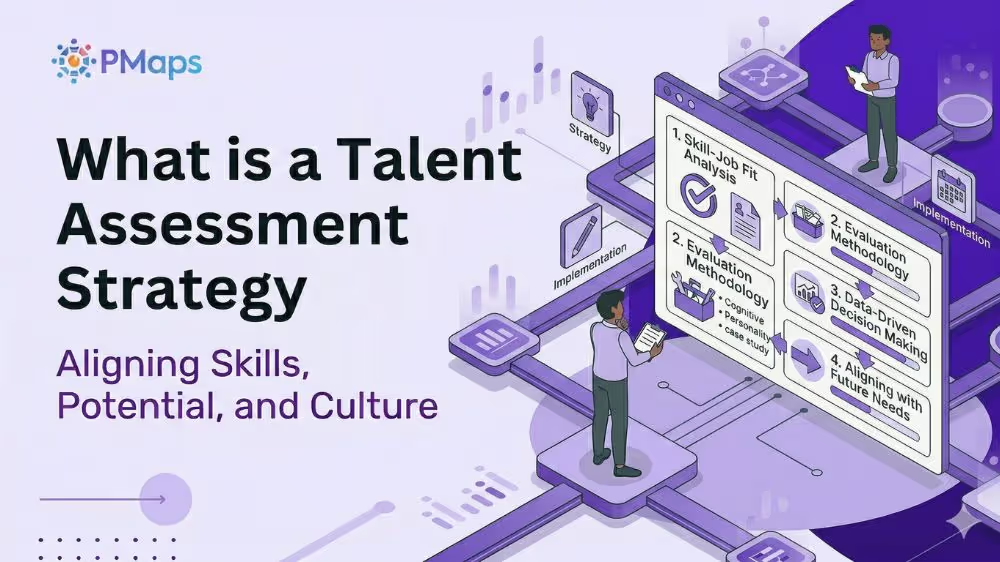
Using a talent assessment strategy in hiring helps companies make better decisions by objectively evaluating skills and cultural fit. In fact, 74% of companies use skills assessments to improve hiring quality (SHRM). Structured assessments can reduce bias, support stronger decisions, and help build high-performing teams.
What Is a Talent Assessment Strategy?
A talent assessment strategy is a clear plan for evaluating candidates’ skills, abilities, and how well they fit the company’s culture during the hiring process. This approach helps organizations make more accurate hiring decisions, maintain consistent evaluations, and support fair choices across roles and teams.
Components of a Talent Assessment Strategy
A good talent assessment strategy brings together clear competency frameworks, proven tools, smooth evaluation processes, and data-driven insights. This helps make fair, consistent, and effective hiring decisions at every stage of the recruitment process.
- Definition of Competencies: Establishes behavioral, cognitive, and technical capabilities required for roles, ensuring assessment outcomes align with performance expectations and organizational culture.
- Selection of Tools: Involves selecting reliable assessments, such as cognitive tests, personality profiles, and job simulations, tailored to role-specific skills and hiring goals.
- Integration: Embeds assessments seamlessly within the recruitment process, enabling efficient screening, structured evaluation, and reduced bias across hiring workflows.
- Data-Driven Decision Making: Uses assessment analytics to compare candidates objectively, forecast performance, and support better workforce planning and hiring accuracy.
Steps of a Talent Assessment Strategy
To build a strong talent assessment strategy, start by setting clear recruitment goals. Choose the best tools for your needs, make sure assessments fit smoothly into your process, and use data to guide hiring and improve over time.
1. Define Your Recruitment Goals and Requirements
Setting clear recruitment goals helps you measure the right skills during assessments. When you define role expectations, performance standards, and what aligns with your company culture, you build a solid, reliable talent assessment process.
- Identify essential competencies for the role.
- Separate must-have and nice-to-have skills.
- Align hiring needs with business priorities.
- Document expectations for performance and behavior.
2. Choose the Right Assessment Tools
Choosing the right assessment tools helps you accurately measure job-related skills, cognitive abilities, and behavioral traits. This makes your hiring process more consistent, objective, and tailored to each role at every stage.
- Pick tools that have been tested and match the skills needed for the job.
- Include a mix of tests that check thinking skills, behavior, and job-specific abilities.
- Make sure the tools you use are fair and reliable.
- Select assessments that work smoothly with your applicant tracking system.
3. Integrate Assessments into the Recruitment Process
Using assessments in your recruitment process helps you consistently evaluate every candidate. Adding these tools at the right points makes hiring more efficient, reduces bias, and helps you follow a data-driven approach to finding talent.
- Add assessments early in the process to help identify qualified candidates.
- Make sure your assessments align with each interview stage to keep the process clear and organized.
- Train your hiring teams to understand and use assessment results.
- Use your applicant tracking system or other HR technology to automate these steps.
4. Analyze Results and Make Data-Driven Decisions
Reviewing assessment results lets hiring teams compare candidates fairly, spot top talent, and better predict job performance. Using data helps teams make stronger decisions and find people who fit the company’s needs.
- Check each candidate’s scores to see if they meet the required benchmarks.
- Look at analytics dashboards to spot trends in candidate performance.
- Make sure assessment results match what you see in interviews.
- Write down your findings to help with final hiring decisions.
5. Continuously Refine and Optimize the Assessment Strategy
Ongoing refinement ensures your talent assessment strategy remains effective, predictive, and aligned with evolving business needs. Regular reviews help improve accuracy, enhance candidate experience, and maintain assessment relevance across all roles.
- Collect feedback from hiring managers regularly.
- Track predictive validity through post-hire performance.
- Update assessments to align with evolving job demands.
- Replace low-impact tools with more accurate alternatives.
Common Mistakes to Avoid in Talent Assessment Strategy
Even well-designed talent assessment strategies fail when key elements are overlooked. Common mistakes such as over-reliance on a single tool, misalignment of assessments with job needs, or neglect of candidate experience can reduce accuracy and weaken hiring outcomes. Avoiding these pitfalls ensures stronger, more consistent recruitment decisions.
1. Overemphasis on One Assessment Tool
Using only one assessment tool can make evaluations less accurate and may lead to missed information when making decisions. To get a complete picture, it’s important to use several methods to assess skills, behavior, communication, and readiness for the role.
- Consider adding AI voice-screening tools to assess spoken communication skills.
- Combine both standardized and customized talent assessments for a more balanced approach.
- You can also use AI video interviews to see how candidates respond in different situations.
2. Lack of Alignment with Job Requirements
Assessments are less effective when they do not align with actual job expectations. When there is a mismatch, it can result in inaccurate evaluations, hiring the wrong candidates, and less reliable results from your assessment process.
- Take time to carefully analyze the job before choosing assessment tools.
- Make sure the skills and qualities you need are directly linked to what you measure in your assessments.
- Review and update your assessments whenever job roles change.
3. Ignoring Candidate Experience
If you overlook the candidate experience, your employer brand may suffer, and fewer candidates may finish the process. A positive assessment journey helps candidates stay engaged, feel treated fairly, and improves your overall hiring strategy.
- Make sure your assessments are brief, focused, and simple to complete.
- Let candidates know what to expect and when they will hear from you.
- Give candidates feedback or let them know the outcome after the evaluation.
Benefits of a Talent Assessment Strategy
A strong talent assessment strategy helps companies hire more accurately, keep teams stable, and give candidates a better experience. When organizations use proven assessments and data, they can build better teams and make decisions that support long-term growth.
1. Improved Hiring Decisions: Using structured assessments helps recruiters pick candidates who do better at work. Companies that use skills assessments see a 24% improvement in quality of hire (LinkedIn Talent Insights).
2. Increased Retention and Reduced Turnover: Matching people to the right jobs leads to a better fit. Companies that use pre-employment assessments report up to 39% lower turnover (SHRM), showing the long-term benefits of assessment-based hiring.
3. Enhanced Candidate Experience: When assessments are clear and relevant, candidates are more engaged. In fact, 78% of candidates prefer assessment-based hiring for its fairness and clarity (Talent Board), which also improves how people see your employer brand.
4. Better Workforce Planning: Assessment data helps HR teams predict skill needs, spot gaps, and plan future hiring. 64% of organizations use assessment analytics for workforce planning (Deloitte Human Capital Trends).
Conclusion
A solid talent assessment strategy helps organizations hire the right people, lower turnover, and prepare for the future. When HR teams use structured assessments and data, they can make better decisions. If you want to improve your assessment process, reach out to PMaps at 8591320212 or assessment@pmaps.in for expert help.