.webp)
.webp)


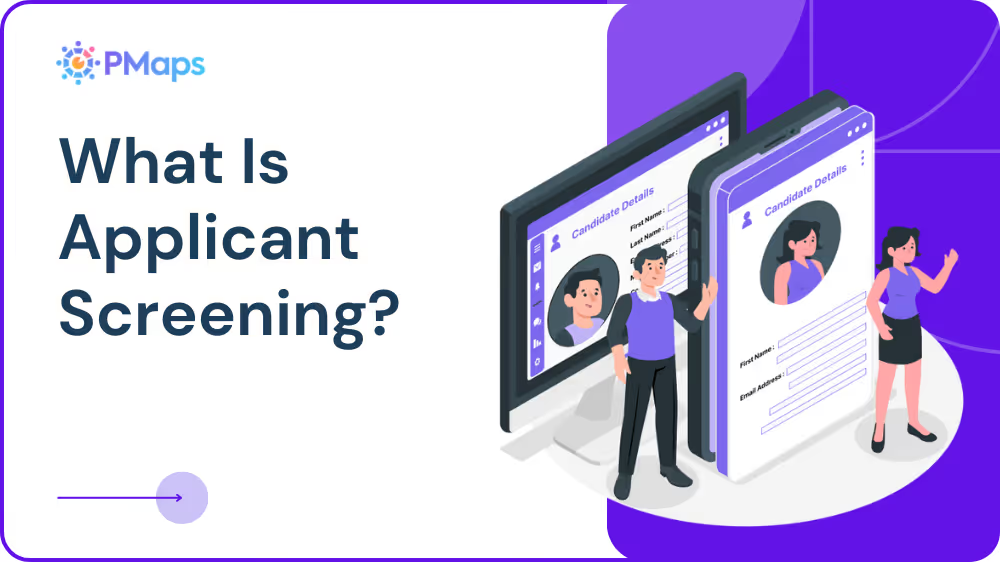
Applicant screening is the process of evaluating candidates after they apply for a role to determine who advances to the next stage of the hiring process. It sits between the application and the interview, and its purpose is to reduce a large applicant pool to a manageable shortlist of candidates who meet the role's minimum requirements and show indicators of genuine suitability. How an organization conducts this stage—and what it evaluates—has significant downstream effects on hiring quality, speed, and cost.
What Applicant Screening Includes
Screening takes different forms depending on the organization, the role, and the volume of applications involved. The most common approaches include:
- Resume review: Evaluating submitted resumes or applications against defined criteria such as experience level, specific qualifications, or required skills. This is often the first filter and is increasingly automated through ATS keyword matching.
- Pre-employment assessments: Structured tests that evaluate cognitive ability, domain knowledge, personality traits, or job-specific skills before any interview takes place. These produce consistent, comparable data across all applicants.
- Telephonic or voice screening: A structured phone interaction—whether conducted by a recruiter or an AI voice system—that evaluates communication quality, basic role fit, and candidate interest. For roles where verbal communication is a core requirement, this stage is particularly important.
- Background and reference checks: Verification of employment history, credentials, and other factual claims made during the application process.
Why the Screening Stage Matters
The screening stage is where most hiring pipelines either gain or lose efficiency. A well-designed screening process identifies strong candidates early, filters out clearly unsuitable ones without wasting interview time, and produces a shortlist that hiring managers trust. A poorly designed process does the opposite: it misses strong candidates, passes unsuitable ones through, and creates inconsistency that compounds through the rest of the hiring process.
For high-volume roles—particularly in call centers, BPO, retail, and other frontline sectors—screening quality is the primary driver of hiring quality. When thousands of applications need to be processed quickly, the rigor of the screening stage determines whether the eventual hires perform, stay, and represent the organization the way the role demands.
What Effective Applicant Screening Looks Like
Effective screening is consistent, structured, and tied to criteria that actually predict job performance. It applies the same evaluation framework to every candidate, uses validated assessment tools where possible, and produces outputs—scores, rankings, or structured observations—that make the shortlisting decision faster and more defensible. It also treats the candidate's time with respect: a screening process that is unnecessarily long or confusing loses good candidates to faster-moving competitors.
PMaps' ai voice assessment automates the telephonic round, delivering structured voice scores so recruiters focus only on shortlisted candidates.