.webp)
.webp)


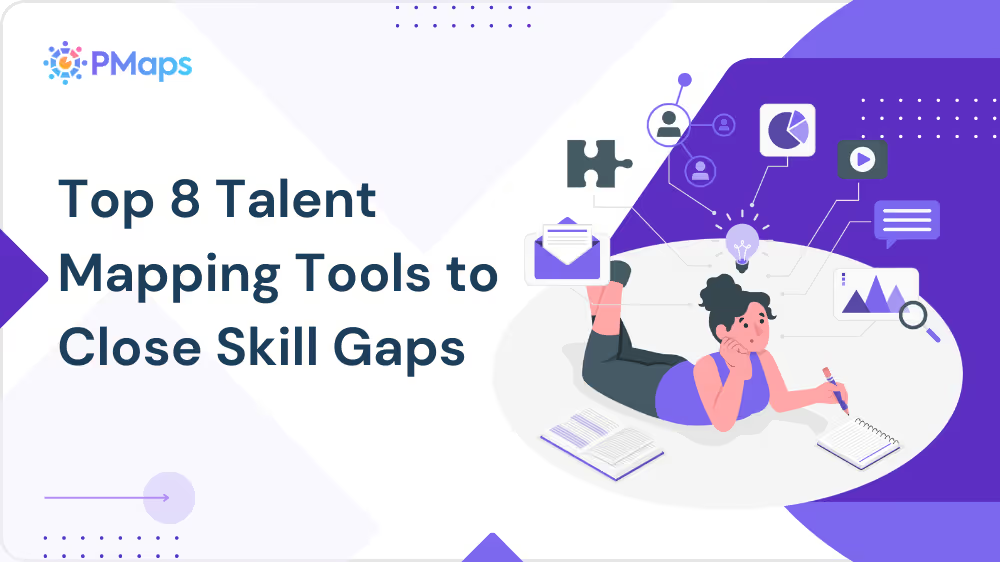
Talent mapping is basically your GPS for a talent shortage. Instead of just "hiring for now," these tools spot your skill gaps before they become crises. They turn chaotic recruitment into actual strategy, making sure you aren't just filling seats, but building a bench. With 75% of employers globally reporting talent shortages (ManpowerGroup, 2024), knowing who you have and who you're missing is no longer optional. Here’s a complete guide to help you map the talent with the best tools.
Why Talent Mapping Tools Are Critical for Your Recruitment Strategy
Talent mapping tools are essential for aligning recruitment strategies with business goals. These tools help identify skill gaps, proactively plan workforce needs, and improve sourcing and retention strategies, ultimately enhancing hiring efficiency.
- Identify skill gaps and plan for future workforce needs
- Align talent strategy with business goals
- Improve sourcing by identifying underrepresented skill sets
- Build talent pipelines and enhance employee retention
- Streamline workforce planning and budgeting
What to Look for in Talent Mapping Tools
When selecting a talent mapping tool, look for features that help visualize talent gaps, organize candidate pools, and support collaborative recruitment efforts. The tool should offer data-driven insights and market intelligence to optimize sourcing strategies.
- Data-Driven Insights: Analytics tools to visualize talent pools, skill sets, and potential gaps in your workforce, enabling data-backed decision-making.
- Market Intelligence: Integrates external data to benchmark your talent pool against industry standards, helping you stay competitive in the market.
- Candidate Pool Management: Helps organize, filter, and track candidates based on skills, location, and potential, streamlining recruitment efforts.
- AI-Powered Talent Discovery: Uses AI to identify potential candidates and hidden talent for proactive recruitment, improving the chances of finding top talent.
- Collaboration Tools: Enables teams to collaborate on candidate sourcing, skills mapping, and strategy development, ensuring alignment across departments.
Top Talent Mapping Tools to Consider
The following talent mapping tools offer unique features to help agencies and organizations streamline recruitment, close skill gaps, and enhance workforce planning. These tools are designed for data-driven talent strategies that align with business needs.
External Talent Sourcing
External talent sourcing tools help organizations identify, engage, and attract candidates from outside their current talent pool. These tools streamline candidate search, improve outreach, and ensure access to a broader talent network.
- LinkedIn Talent Solutions: Offers advanced search capabilities to find and engage passive talent across industries, with tools for personalized outreach and recruitment campaigns to build a strong talent pipeline.
- Indeed Resume Search: Provides access to a large database of resumes, helping recruiters source candidates with specific skills, qualifications, and experience. It includes filtering tools to refine candidate searches based on job needs.
- SeekOut: AI-powered talent sourcing platform that helps recruiters find diverse, qualified candidates by analyzing resumes, job boards, and social media profiles to identify the best talent for any job role.
Internal Succession Planning
Internal succession planning tools help organizations identify high-potential employees and develop them for future leadership roles. These tools enable better workforce planning and ensure a pipeline of skilled talent within the company.
- Workday: Offers tools for managing employee development, succession planning, and internal mobility, helping organizations assess current workforce potential and plan for future leadership needs.
- PMaps Post Hire Tests: Provides targeted post-hire assessments such as High Potential Tests and Managerial Tests, helping organizations identify high-potential employees, assess their growth trajectory, and develop career plans for succession planning.
- Ulrich Learning: Helps track employee performance, career aspirations, and skills development to facilitate internal succession and leadership continuity within organizations, ensuring the right people are ready for key roles.
Role Fitment Job Assessment
Role fitment assessments help evaluate candidates' expertise and proficiency levels for specific job roles. These tools ensure that candidates are a strong match for job requirements, helping reduce mis-hires and improve job fit.
- Codility: Specializes in coding assessments for tech roles, providing proficiency-based evaluations with tailored tests that assess programming skills, problem-solving, and technical expertise for software engineering roles.
- PMaps Test Library: Offers 400+ job role mappings and ready-to-deploy tests across various domains. These tests evaluate expertise and proficiency levels, helping recruiters assess candidates accurately for each specific role.
- Vervoe: Offers customizable skills tests focused on assessing practical job tasks, including role-specific assignments for evaluating expertise and proficiency levels in fields like customer service, sales, and operations.
Skills and Competency Assessment
Skills and competency assessments evaluate an individual’s cognitive abilities, role-specific skills, and fit within the company and industry. These tools offer insights into talent intelligence, helping recruiters make data-driven hiring decisions.
- PMaps AI Custom Tests: Offers AI-powered custom tests tailored to assess an individual’s abilities specific to the role, industry, and company. PMaps provides a comprehensive, customizable testing platform for precise talent evaluation.
- TestGorilla: Provides customizable skill assessments that allow recruiters to test cognitive abilities, job-specific knowledge, and competencies across various industries, enhancing the ability to evaluate a candidate's fit for the role.
- iMocha: Specializes in competency-based assessments for technical and non-technical roles, providing customized tests based on industry standards and job requirements to evaluate cognitive abilities and proficiency levels accurately.
Personality Assessment
Personality assessments help evaluate candidates' behavior, motivation, and cultural fit. These tools give recruiters valuable insights into how candidates will adapt and perform within a specific role and the company culture.
- Hogan Assessments: Offers personality tests designed to predict job performance and leadership potential, focusing on traits like emotional intelligence, decision-making, and interpersonal skills.
- PMaps Personality Tests: Offers comprehensive personality assessments based on 16PF, DISC, and the Big 5 personality traits, helping organizations evaluate behavioral tendencies, motivation, and fit for specific roles and work environments.
- Thomas International Personal Profile Analysis (PPA): Measures workplace behavior, providing insights into a candidate's strengths, weaknesses, and how they respond to various work situations, helping recruiters assess how well a candidate will fit into a role.
AI-Powered Talent Mapping Tool
AI-powered talent mapping tools use machine learning and data analysis to predict future talent needs, identify hidden candidates, and build proactive talent pipelines. These tools help organizations stay ahead in talent acquisition.
- XOR: AI-driven chatbot that automates talent sourcing, screening, and engagement, helping recruiters map talent in real time by matching job requirements with candidate profiles efficiently.
- PMaps AI Interviewing Abilities: Offers one-way and two-way video interviewing and automated voice interviewing, enabling recruiters to assess candidate communication skills, job suitability, and behavioral patterns with AI-driven insights.
- SeekOut: An AI-powered platform that helps recruiters identify and source hidden talent by analyzing diverse data sources like resumes, job boards, and social media profiles, ensuring a broad and diverse talent pool.
How to Choose the Right Talent Mapping Tool
Choosing the right talent mapping tool depends on your organization’s needs. Consider features like scalability, ease of integration, data accuracy, and AI capabilities to ensure the tool aligns with your recruitment and talent management strategy.
Match Tool to Your Hiring Strategy
The right talent mapping tool should align with your hiring strategy. Whether your focus is on high-volume recruitment or targeted skill acquisition, ensure the tool meets your specific goals and operational needs.
- Organizational size and hiring volume
- Focus on skill gap analysis vs proactive sourcing
- Desired level of integration with other tools (ATS, CRM, etc.)
Must-Have Features for Effective Talent Mapping
For effective talent mapping, prioritize tools that offer data-driven insights, customizable talent pools, system integrations, and AI-powered recommendations. These features ensure your recruitment strategy remains scalable, efficient, and aligned with business needs.
- Data-driven insights and reporting
- Customizable talent pools
- Integration with your existing systems
- AI-powered recommendations for talent acquisition
Red Flags to Watch For
Be cautious of talent mapping tools that lack essential integrations, have complicated user interfaces, or offer limited data-driven insights. These issues can hinder recruitment efficiency and make the tool less effective.
- Lack of integration with other recruiting tools
- Poor user interface or steep learning curve
- Limited data-driven insights or talent forecasting features
Conclusion
Talent mapping tools are essential for identifying skill gaps and streamlining recruitment processes. With the right tools, organizations can ensure a proactive approach to talent acquisition and retention. Explore PMaps for data-driven insights, AI-powered recommendations, and customizable talent mapping solutions to optimize your recruitment strategy.