
.webp)
.webp)



Recruiting strategies for GCCs and shared-service centres decide how work flows into India, where over 1,700 GCCs employ 1.9 million and hiring shapes delivery, quality, and capability. Global Capability Centres and shared-service centres have shifted from cost-focused offshore units handling repeatable processes to strategic extensions of headquarters that own technology, finance, analytics, customer experience, and domain-specific work.
In a decade, they became value-creation hubs driving portfolio and digital transformation initiatives. Hiring strategies for GCC must cover niche cloud, AI, data engineering, cybersecurity, domain-heavy skills, cross-cultural collaboration, time-zone overlaps, 15–20% attrition, and markets where 60% of new hires come from other GCCs.
In this blog, we will identify where the real problem lies and the appropriate methods and tactics to support GCC scale-ups in India and abroad. Talent assessment that sets a standard for quality of hire across subsectors for a brand around the globe.
Key Hiring Challenges Faced by GCCs & Shared-Service Centres
Key hiring challenges for GCCs and shared-service centres sit at the intersection of niche skills, crowded markets, and rising global expectations. These pain points explain why traditional recruitment strategies for GCCs often miss the mark, even when brands and salary budgets look strong on paper.
- Niche skill demand, shallow supply: Niche cloud, AI, data, and cybersecurity roles face intense competition in hiring skilled talent.
- High attrition and talent recycling: High attrition and hiring from rival GCCs recycle talent, weakening loyalty and long-term capability building.
- Complex roles, generic job descriptions: Complex hybrid roles are misrepresented by generic job descriptions copied from headquarters templates and portals.
- Speed pressure eroding screening quality: Urgent project timelines push quick hiring, reducing interview depth and thoughtful screening for critical roles.
- Limited use of structured and standardised assessments: Limited use of structured assessments keeps decisions subjective, globally inconsistent, and weakly linked to performance.
Foundations of a Strong Recruitment Strategy for GCCs
A strong recruitment strategy for GCCs starts well before sourcing. It rests on three basics: clarity on the GCC’s strategic role, sharp expectations from each role, and an employer value proposition that sets the centre apart from dozens of competing hubs in the same city.
- Align hiring with GCC’s strategic role: Tie every hiring decision to what the GCC is meant to own: work, complex change, or global product support. Let that mandate shape talent profiles, assessment criteria, and where you are willing to pay a premium for scarce skills.
- Define clear role expectations and career paths: Move beyond generic titles. Spell out outcomes, stakeholders, and work patterns for each role, then show how people can grow into expert or manager tracks over time. This clarity improves hiring quality and reduces early attrition.
- Build a distinct employer value proposition (EVP) for the GCC: Articulate what makes your centre different from other GCCs: work ownership, learning paths, global exposure, culture, and assessment-backed growth opportunities. Use this GCC-specific EVP consistently in outreach, interviews, and offers so candidates see a real career story, not just another job.
Recruiting Strategies for GCCs: From Sourcing to Selection
Recruitment strategies for GCCs and shared-service centres work best when each stage carries a clear job: find the right people, test real capability, and protect long-term fit. The flow below preserves that logic while using AI tools judiciously, without letting them replace human judgment
1. Sourcing: reach the right talent pools
Recruiting strategies for GCCs start with sharper sourcing, not just more sourcing. Segment channels by skill, seniority, and market.
- Separate plans for cloud, AI, data, cybersecurity, finance, and support roles.
- Balance lateral hiring from other GCCs with campuses, returnee talent, and specialist communities.
- Use a GCC-specific EVP that highlights work ownership, learning, and global exposure.
- Using RPO, EOR, and Specialist Partners
2. Screening: automated résumé parsing and voice screening
Screening should save time without diluting care. Hiring strategies for GCC can use automation to organise volume, then let humans decide.
- Apply AI-driven résumé parsing to cluster applicants by skills, tools, and domain depth.
- Use short voice-screening or IVR checks to improve communication clarity and basic motivation.
- Keep final shortlist decisions with recruiters and hiring managers, not the parsing engine.
- Use ATS + AI screening thoughtfully; avoid over-automation that frustrates candidates.
3. Skill assessment and fitment analysis
Real capability needs to be measured, not assumed. Here, structured assessments sit at the centre of recruitment strategies for GCCs.
- Use role-based tests for technical, cognitive, and behavioural skills with real-time reports.
- Flag early high-potential profiles based on combined scores, not just brand names on résumés.
- Use people analytics dashboards to estimate the risks to on-job performance and the likely ramp-up speed.
- Include culture-add or culture-fit assessments to align with DEI plans and collaboration expectations, and to assess the learning mindset.
4. Interviews: structure AI video interviews around success profiles
Interviews should test how people think and collaborate in GCC environments. AI tools can support, but not replace, trained interviewers.
- Use success profiles to design the interview flow and question themes.
- Run structured AI video interviews for the first round, focusing on communication and situational responses.
- Let experienced panels review recordings and AI indicators together before final conversations.
5. Selection: link offers to long-term role fit
Selection in GCCs and shared-service centres must balance today’s project needs with tomorrow’s charter.
- Combine skill scores, behavioural data, and work-condition fit before issuing offers.
- Screen early for comfort with shifts, travel, and time-zone overlaps.
- Share a realistic role preview, so candidates understand GCC expectations before they accept.
6. Handover to onboarding and managers
Recruitment strategies for GCCs do not end at the offer. A clean handover protects performance and retention.
- Pass talent assessment summaries and interview notes to hiring managers and HR partners.
- Shape first ninety-day plans around strengths and gaps highlighted in reports.
- Use early manager feedback to refine sourcing, screening, and assessment choices each quarter.
Hiring Strategies that Make Your GCC Workforce Future-Ready
Hiring strategies for GCC that focus only on today’s stack age quickly. To keep the GCC workforce future-ready, recruitment strategies for GCCs must balance current role demands with learning agility, cross-functional depth, and the ability to work through repeated waves of change.
- Hire for learnability, not just current tools: Assess problem solving, abstraction, and learning speed alongside cloud, AI, data, or domain skills so people can absorb new technologies without constant re-training.
- Think in terms of skills, not just roles and titles: Break work into skills such as architecture, data modelling, automation, stakeholder handling, and customer empathy. This lets talent move across teams as GCC charters shift.
- Screen for behavioural readiness for change: Use structured behavioural questions and scenario-based assessments to gauge comfort with ambiguity, shifting priorities, and cross-cultural collaboration across time zones.
- Blend external hiring with structured internal moves: Keep space for internal candidates in every hiring plan. Use existing performance and assessment data to identify employees ready for new tech or domain shifts.
- Use talent analytics to anticipate future gaps: Track assessment outcomes, hiring patterns, and project demand together. Spot early where skills such as AI safety, data governance, or cloud security may fall short in two to three years.
- Link hiring to reskilling and upskilling paths: Share expected future skill directions during hiring. Connect offers with clear learning paths so candidates see how the GCC supports long-term capability building, not only immediate role fit.
Metrics & Analytics: Measuring GCC Hiring Success
Recruitment strategies for GCCs only improve when leaders read the numbers. Metrics should track both hiring speed and the long-term strength of the GCC workforce, across global capability centres and shared-service centres, not just the volume of roles closed each quarter.
- Time-to-hire: Measure days from requisition to accepted offer for each role family.
- Time-to-productivity: Track how long new hires take to reach expected performance benchmarks.
- Offer acceptance rate: Monitor acceptance by skill cluster and seniority to test your EVP.
- Quality-of-hire: Combine first-year performance, retention, and manager feedback into one score.
- Diversity metrics: Watch representation by gender, background, and campus or source channel.
- Hiring manager satisfaction: Capture structured feedback on shortlists, process, and final fit.
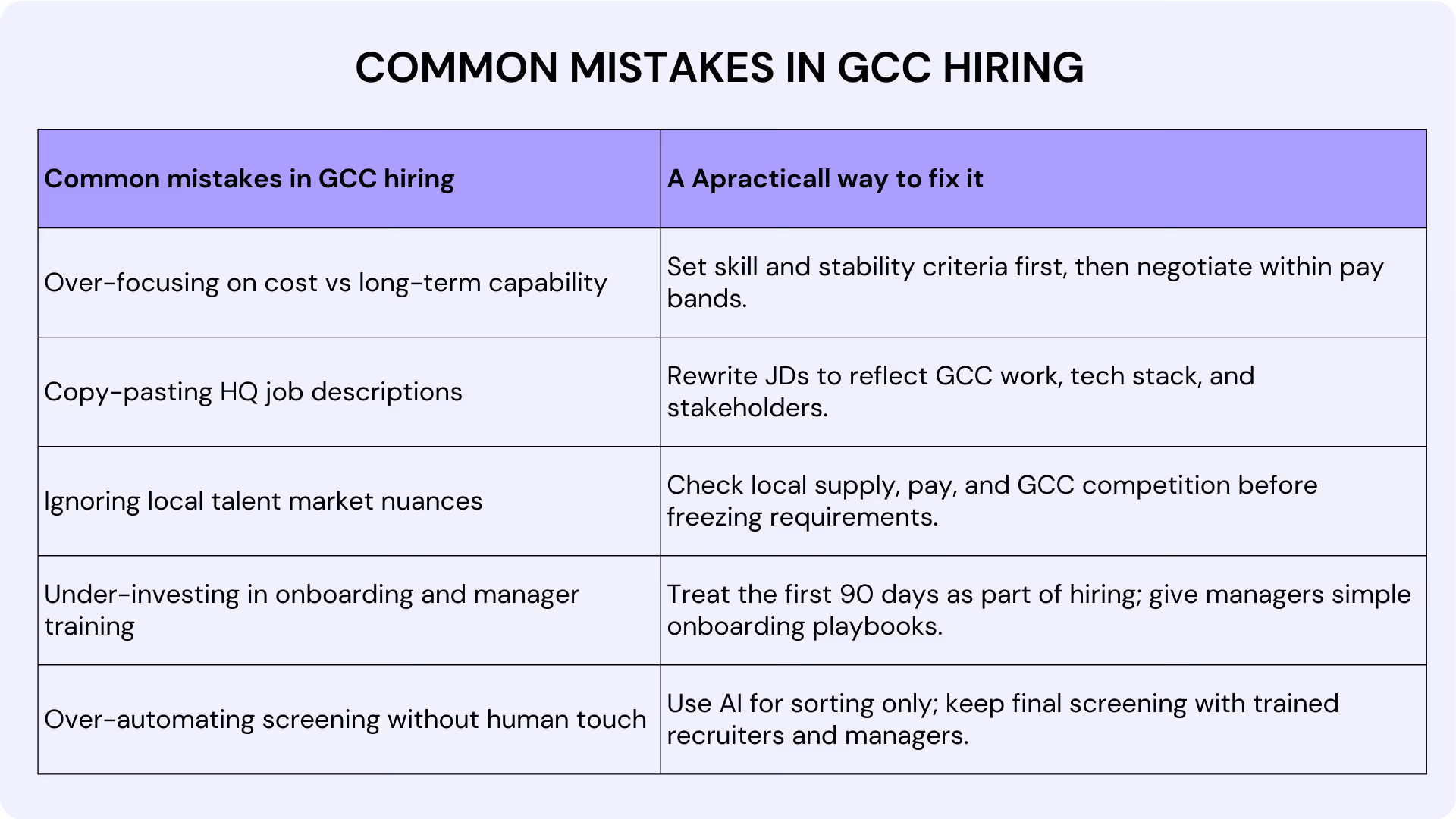
Common Mistakes in GCC Hiring (and How to Avoid Them)
Some hiring strategies for GCCs weaken the capability without anyone noticing at first. The points below highlight frequent missteps in global capability centres and shared-service centres, with simple shifts that protect long-term talent depth.
Conclusion
Recruitment strategies for GCCs and shared-service centres work when they balance speed, capability, and long-term fit. Clear role success profiles, assessment-led decisions, and simple metrics such as quality-of-hire, time-to-productivity, and diversity keep hiring grounded in reality rather than urgency.
Used well, tools like résumé parsing, skill assessments, and AI video interviews simply support one aim: building a future-ready GCC workforce. If you want to rethink hiring strategies for GCC in your organisation, you can reach PMaps at 8591320212 or assessment@pmaps.in for a focused discussion.


%20Hiring.avif)


