.webp)
.webp)



Hiring the right Investment Analyst is crucial because financial decisions depend on solid research and sound judgment. A good analyst can interpret data, write clear reports, and help investment teams with careful analysis. This guide offers a step-by-step approach to help HR find analysts who are clear, reliable, and consistently thorough.
What is an Investment Analyst?
An Investment Analyst reviews financial data, conducts research, and helps investment teams by providing clear insights. This role is important when decisions rely on careful analysis and sound judgment. Good analysts help organizations find opportunities, understand risks, and keep investment discussions clear.
Quick Tip: Write a clear and specific Investment Analyst job description to attract the right candidates.
Where to Find the Best Investment Analyst Candidates?
To find strong Investment Analyst candidates, focus on channels that attract people with solid research skills, experience in financial modelling, and the ability to handle data-heavy tasks. The best candidates usually work in places where analysis, clear reporting, and sound judgment are part of their daily routine. Targeting these talent pools helps HR reach analysts who can interpret numbers with accuracy and maintain clarity when working under tight deadlines.
- Finance and investment-focused job boards
- LinkedIn groups for research, equity, and portfolio professionals
- Internal promotions from junior analysts or research associates
- Referrals from investment teams or finance leadership
- Talent platforms with data, modelling, and investment research experience
How to Screen for Good Investment Analyst Candidates?
Screening Investment Analyst candidates requires a process that emphasizes analytical depth, research discipline, and clear communication. A structured approach enables HR to identify candidates who interpret financial data, explain assumptions, and manage time-sensitive tasks accurately. Each stage supports effective shortlisting and reduces uncertainty in hiring for analytical positions.
- Use AI resume parsing and targeted outreach with AI Recruit to identify candidates with research and modeling experience.
- Conduct a skills assessment focused on financial interpretation, data organization, and reasoning.
- Leverage AI video interviews to evaluate candidates’ clarity, composure, and communication style.
- Make the final selection through an HR-led review of analytical fit and workflow discipline.
How to Assess Skills of Investment Analysts?
To assess investment analysts, use a method that shows how they interpret data, organize research, and handle tasks when time is tight. The job calls for sound judgment, careful modeling, and clear communication. A structured assessment lets HR see how candidates organize information, check assumptions, and stay accurate through repeated analysis.
What Soft Skills Are Important for Investment Analysts?
Soft skills affect how analysts share insights, talk through assumptions, and help their teams meet deadlines. These skills impact how detailed and reliable their research is.
- Clear, concise communication
- Calm reasoning during data-heavy tasks
- Consistent follow-through under deadlines
- Organised approach to research workflow
- Ability to explain assumptions confidently
Hard Skills of Investment Analysts That You Must Test
Hard skills demonstrate whether candidates can read financial statements, analyze data, and build accurate, trustworthy models.
- Financial analysis and statement review
- Data interpretation and organisation
- Excel and modelling proficiency
- Valuation method familiarity
- Ability to identify trends and anomalies
Pro Tip: Use an Investment Analyst test with real financial scenarios to check their reasoning, modelling accuracy, and interpretation skills.
How to Interview an Investment Analyst?
When interviewing an Investment Analyst, ask questions that assess how candidates explain their assumptions, handle data inconsistencies, and organize insights for decision-makers. Scenario-based questions can reveal how they think when numbers do not match, deadlines are tight, or new information changes earlier conclusions. Using a clear signal table can help HR understand candidate behaviors and identify analysts who are disciplined, clear, and demonstrate strong analytical judgment.

Bonus Resource: Ask specific Investment Analyst interview questions to see how candidates handle precise analysis when working under tight deadlines.
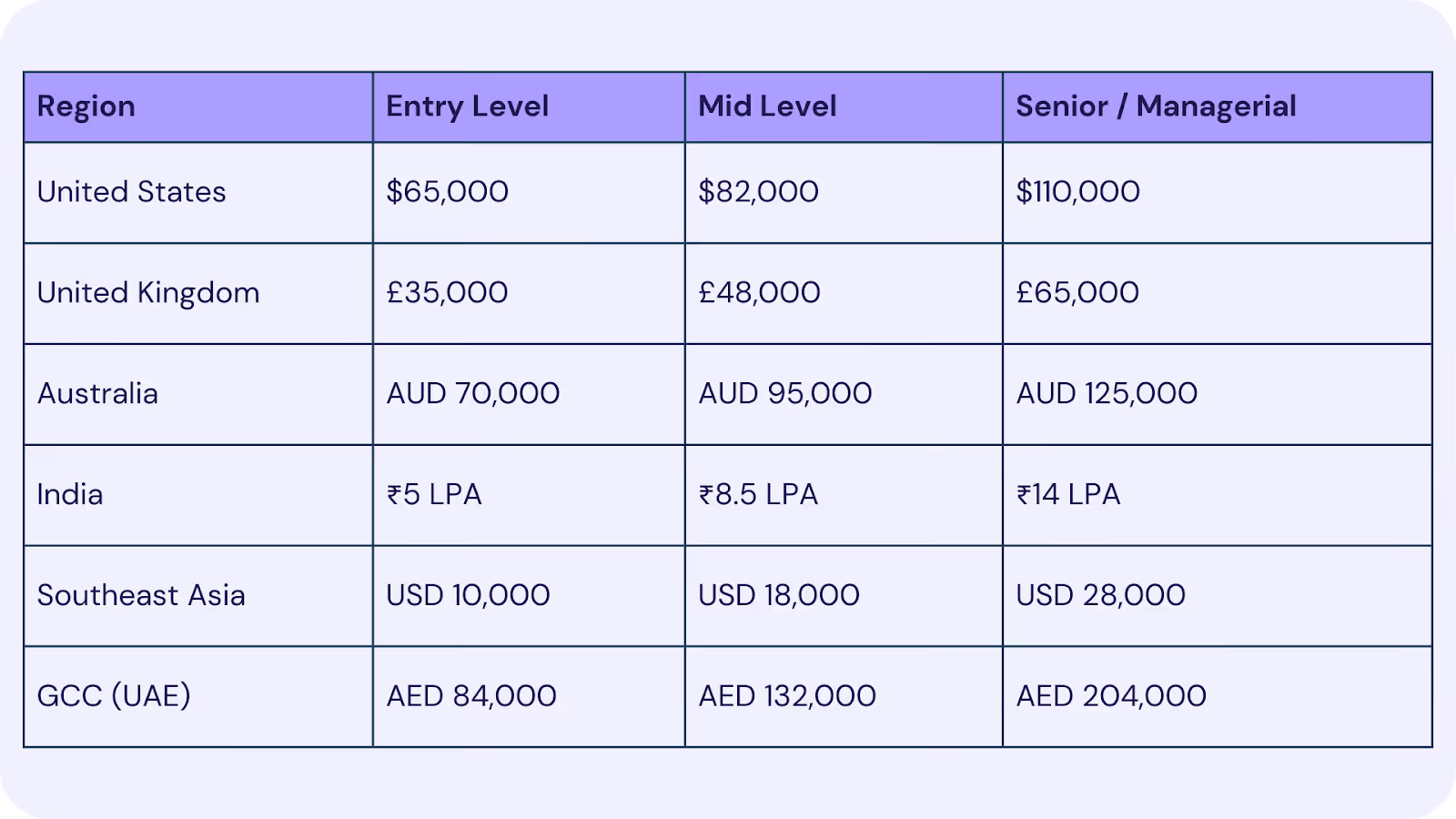
How Much Does an Investment Analyst Cost?
When budgeting for an Investment Analyst, it is important to consider how salaries vary by region, asset class, and the level of analysis required. Pay also depends on modeling skills, research experience, and reporting duties. Setting clear benchmarks helps HR make competitive offers, keep pay fair across the company, and make hiring decisions for roles that require financial accuracy and timely insights more predictable.
Conclusion
Hiring an Investment Analyst helps your organization interpret financial data with confidence and make better investment decisions. The right person offers careful analysis, reliable communication, and clear reports. For structured assessments that reveal these strengths early, connect with PMaps at 8591320212 or assessment@pmaps.in.