.webp)
.webp)



Cash counters are where trust is won or lost in seconds. Therefore, when you hire the right bank teller, you secure a chance to protect the image of your bank and deliver service that keeps your customers coming back.
In this step-by-step guide, you’ll be assisted with the questions of hiring a bank teller, such as ‘how to identify the right type of teller for your branch?’, ‘what skills truly matter?’, ‘how to structure your hiring process?’, and ‘how to conduct effective interviews that lead to better hires?’ This guide also includes practical tips to help you find great bank teller candidates as part of your overall hiring planning.
Before you start bank teller hiring this quarter, it’s essential to understand the different types of bank tellers—each with a distinct impact on the responsibilities and suitability depending on your branch’s operational needs.
Types of Bank Tellers
Different branches need different types of bank tellers—some focused on high-volume transactions, others on sales, and some on complex customer queries. Clarifying which type your branch needs most will shape every decision in your hiring process.
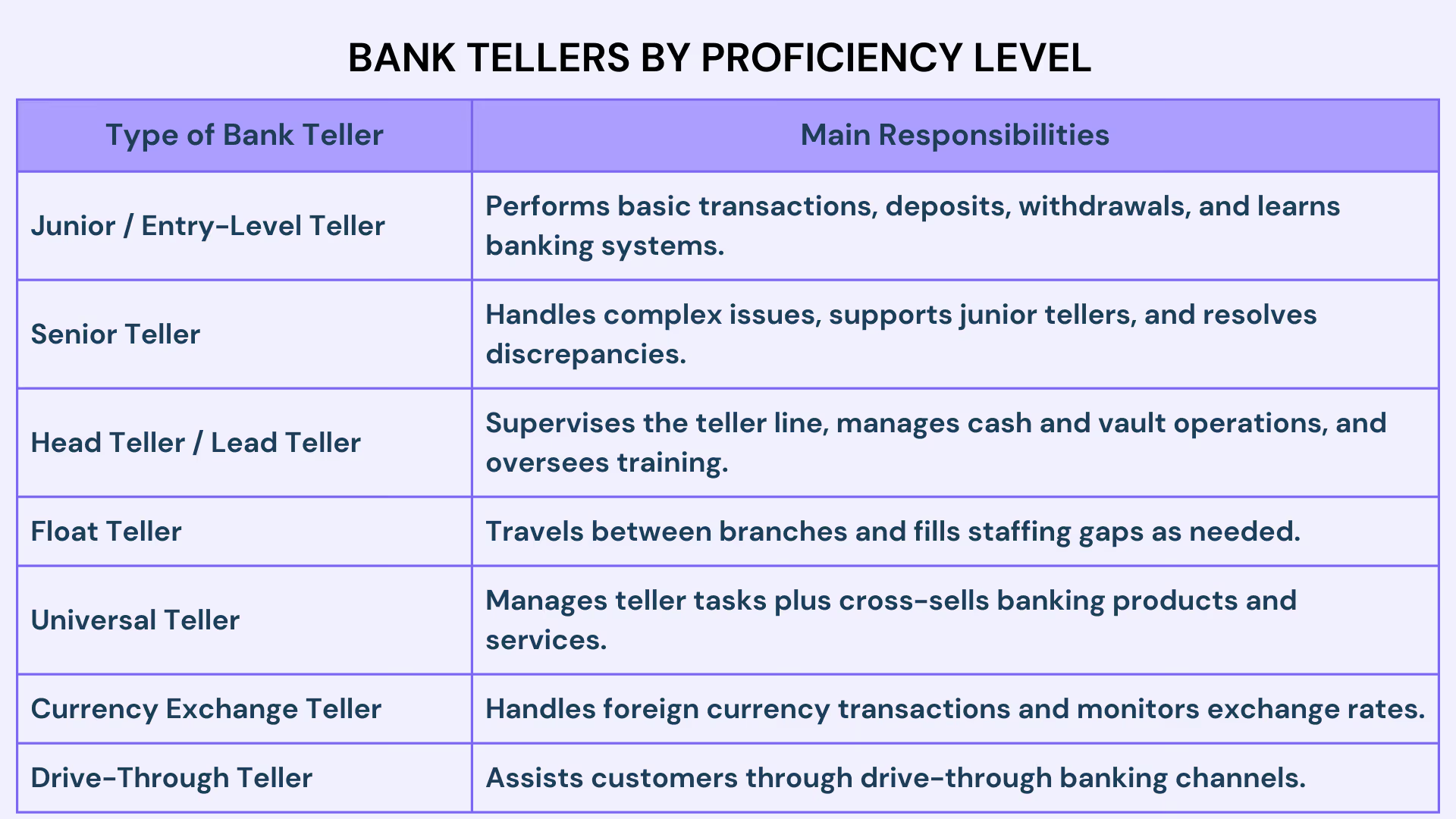
Now that you’ve identified which teller profile fits your operational needs, it’s time to evaluate what skills matter most. From technical accuracy to customer handling, a bank teller’s effectiveness hinges on a specific mix of hard and soft skills.
Skills Needed for a Bank Teller
In the finance industry, success rests on three pillars: precision, accountability, and public trust. Bank tellers stand where all three converge, which is why the role demands a careful balance of hard and soft skills. A strong teller isn't simply competent with numbers. They're observant, consistent, and dependable. Here’s what to prioritize when evaluating skills needed for a bank teller, especially the core skills to look for in a great bank teller:
Essential Hard Skills
These core technical skills form the backbone of a teller’s daily responsibilities, ensuring transaction accuracy, system proficiency, regulatory knowledge which ensures operational integrity and financial correctness. Below are the hard skills that must be tested practically:
1. Math Skills & Numerical Accuracy: Ability to calculate balances, transaction totals, and validate figures with speed and precision to avoid discrepancies.
Example: Accurately balancing a cash drawer that handles ₹15–20 lakh in daily transactions.
2. Cash Handling & Reconciliation: Managing deposits, withdrawals, and daily cash tallies without loss, fraud, or delay.
Example: Identifying a ₹500 shortfall during end-of-day reconciliation and tracing it to a transaction error.
3. Basic Accounting & Record-Keeping: Maintaining ledgers, receipts, and digital records per audit and compliance standards.
Example: Logging each cash transaction in real-time to support audit readiness and reduce manual corrections.
4. Computer Literacy: Proficiency with banking software, digital portals, and transaction systems for accurate and fast processing.
Example: Navigating Core Banking Systems (CBS) to update a customer’s KYC during a live transaction.
5. Financial Product Knowledge: Understanding bank services like savings accounts, debit cards, term deposits, and basic loan features.
Example: Explaining the benefits of a recurring deposit when a customer asks how to save monthly.
While technical accuracy drives a teller’s operational reliability, it’s their interpersonal approach that shapes daily customer experience. These soft skills determine how well a teller manages queues, resolves conflicts, and builds trust face-to-face.
Essential Soft Skills
Soft skills are just as critical as technical ones in frontline banking. A teller’s ability to communicate, stay composed, discrete shapes customer experience and sustains the quality of service that builds loyalty. Therefore, here are the competencies that make sense when assessed objectively and that define the skills needed for a bank teller in real operations:
1. Customer Service & Communication: Engaging customers clearly, calmly, and politely—especially under pressure or during complaints.
Example: Reassuring an irate customer when a cheque deposit is delayed, while calmly explaining next steps.
2. Attention to Detail: Noticing small errors that could affect compliance or lead to financial loss.
Example: Spotting a ₹10,000 discrepancy before finalizing a withdrawal entry.
3. Integrity & Trustworthiness: Upholding ethical behavior while handling cash, sensitive data, and customer confidence.
Example: Reporting an unnoticed over-credit that favored the customer instead of quietly ignoring it.
4. Time Management & Queue Handling: Serving customers efficiently while maintaining accuracy, especially during rush hours.
Example: Processing five customers in under 15 minutes during peak lunch-hour traffic without errors.
5. Problem-Solving & Conflict Resolution: Addressing unexpected issues—like system downtime or customer disputes—without disrupting operations.
Example: Handling a situation where a customer’s deposit was incorrectly marked as a withdrawal.
Beyond the essential skills, some candidates bring added strengths that can significantly improve teller performance. These bonus capabilities aren’t mandatory, but they can enhance customer service, operational flexibility, and long-term value to your branch.
Bonus Skills of a Bank Teller That Add Value
While not essential for every teller role, these additional skills can elevate service quality, improve communication, and support compliance in complex scenarios—especially in diverse, high-volume, or multilingual banking environments
1. Multilingual or Local Language Proficiency: Communicating in regional or local languages builds customer comfort and reduces confusion.
Example: Explaining passbook updates in Marathi at a rural Maharashtra branch.
2. Sales or Cross-Selling Experience: Encouraging customers to explore other services in a helpful, non-intrusive way.
Example: Recommending a credit card suited to a customer’s income and transaction habits.
3. Compliance Knowledge (KYC/AML Basics): Familiarity with essential regulatory procedures protects the branch from legal exposure.
Example: Flagging a high-risk transaction during onboarding that triggers a KYC review.
Identifying the right skills is just the first step. To consistently hire capable, trustworthy tellers, you need a structured bank teller hiring process that reduces risk, supports compliance, and aligns with your branch’s real operational needs.
Plan Your Bank Tellers Hiring Process
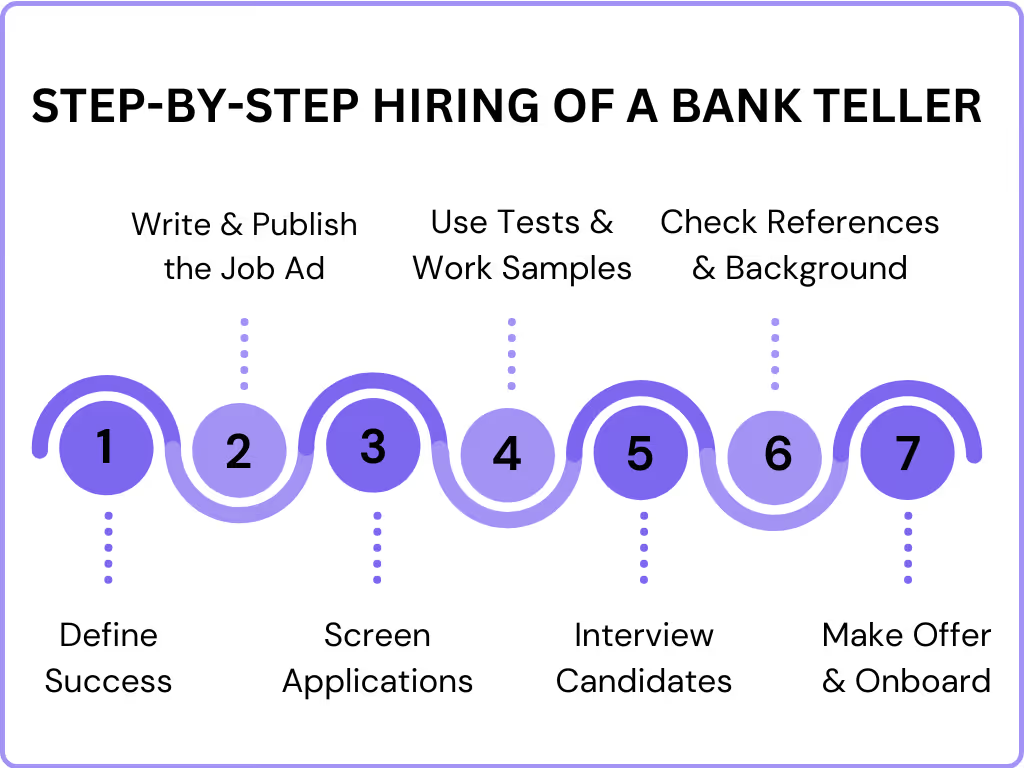
A clear, well-documented bank tellers hiring process helps prevent costly mis-hires and ensures each candidate is screened reasonably and efficiently. Here’s how to build a teller-specific hiring flow that works at scale.
Clarify the Role and Level You’re Hiring For
Every branch has unique staffing demands, and hiring without clearly defining the role increases the risk of a mismatch. Start by identifying the exact responsibilities the position will cover. Do you need a junior teller to support high-volume cash handling? A senior teller who can oversee drawer reconciliation and support junior staff? Or a universal teller who can manage transactions while promoting bank products?
Once you've defined the scope, outline key operational details to avoid surprises during onboarding:
- Decide on full-time or part-time requirements: Define whether the role needs full-time coverage or can be managed part-time, based on transaction volumes and staffing flexibility at the branch.
- Specify the branch location, daily shift hours, and expected footfall: Clearly state where the teller will be stationed, the daily working hours, and the average number of customers expected during each shift.
- Clarify any weekend, holiday, or late-evening shift expectations: Set realistic scheduling expectations, including whether the role involves weekend duties, public holidays, or extended working hours during month-end or peak seasons.
Once you've defined the teller role in detail, the next step is to translate that clarity into a job description. A well-structured listing helps attract qualified candidates and filters out unsuitable ones early.
Create a Clear Bank Teller Job Description
Your bank teller job description should be easy to read, accurate, and realistic. It should reflect daily tasks and tell candidates what success looks like. Start by including the following key elements:
- Role Summary: Briefly describe how the teller contributes to customer satisfaction, daily transactions, and brand trust by ensuring accuracy, professionalism, and timely service at the frontline.
- Key Responsibilities: List 3–7 daily tasks, such as processing deposits, handling cash, resolving basic queries, updating records, and maintaining queue flow with speed, courtesy, and precision.
- Required Skills: Specify essential skills like numerical accuracy, attention to detail, cash handling, and basic system familiarity to ensure the candidate meets performance and compliance expectations.
- Preferred Qualifications: Mention added value credentials such as previous teller experience, core banking system (CBS) exposure, or regional language fluency to strengthen service depth and adaptability.
- Salary and Benefits (Optional): Providing a clear salary range and benefit details promotes transparency and attracts candidates aligned with your compensation structure and long-term retention goals.
Once your job description is finalized, the next priority is filtering applicants effectively. A structured assessment and screening process helps you identify high-potential candidates before committing time to interviews or training.
Decide on Assessment & Screening Steps
To reduce hiring delays and improve decision accuracy, plan your evaluation tools before applications start coming in. A structured funnel lets you screen objectively and consistently across all candidates. Start with these essential components:
- Resume screen: Use AI recruit tools and automated resume parsing to quickly filter for relevant experience, such as cash handling, customer service exposure, and stability across past roles.
- Pre-employment tests: Include cognitive ability, domain-based knowledge, and attention to detail assessments to evaluate a candidate’s suitability for fast-paced, accuracy-driven teller responsibilities.
- Background & reference checks: Confirm reliability, compliance awareness, and performance through previous employer feedback (where legally permitted).
Once assessments are complete, interviews give you the clearest picture of how a candidate thinks, communicates, and fits into your branch culture. A structured, fair interview process is critical to making the right final decision.
Interviewing Bank Teller Candidates
A well-run interview uncovers more than qualifications—it reveals how a candidate will perform under pressure, handle errors, and build customer relationships. To help you do that, we’ve compiled the most effective bank teller interview questions and a clear structure for running interviews with consistency and insight. Here’s how to structure teller interviews for consistency and insight. Once candidates clear a bank teller assessment, interviews become more focused on behavior, ethics, and real-world judgment rather than basic accuracy checks
Structure Your Teller Interview
Using a consistent interview format allows hiring teams to evaluate all candidates fairly, compare responses effectively, and focus on job-relevant qualities without being influenced by bias or inconsistency.
- Opening: Begin the interview by summarizing the teller’s daily responsibilities, customer interaction volume, and branch-specific expectations to give the candidate a realistic understanding of the work environment.
- Behavioral questions: Ask situational questions to assess how the candidate has handled customer complaints, accuracy issues, or teamwork challenges in previous roles, focusing on their judgment and emotional control.
- Role-specific questions: Use practical scenarios to test knowledge of cash reconciliation, system navigation, fraud identification, or policy adherence relevant to your bank’s teller procedures.
- Candidate expectations: Invite the candidate to ask questions about the role, team, or training process—this helps gauge their clarity, interest level, and alignment with your branch culture.
Once your interview structure is in place, it’s important to know what responses indicate strong alignment and which ones signal risk. Watch for these green flags and red flags as you evaluate candidates.
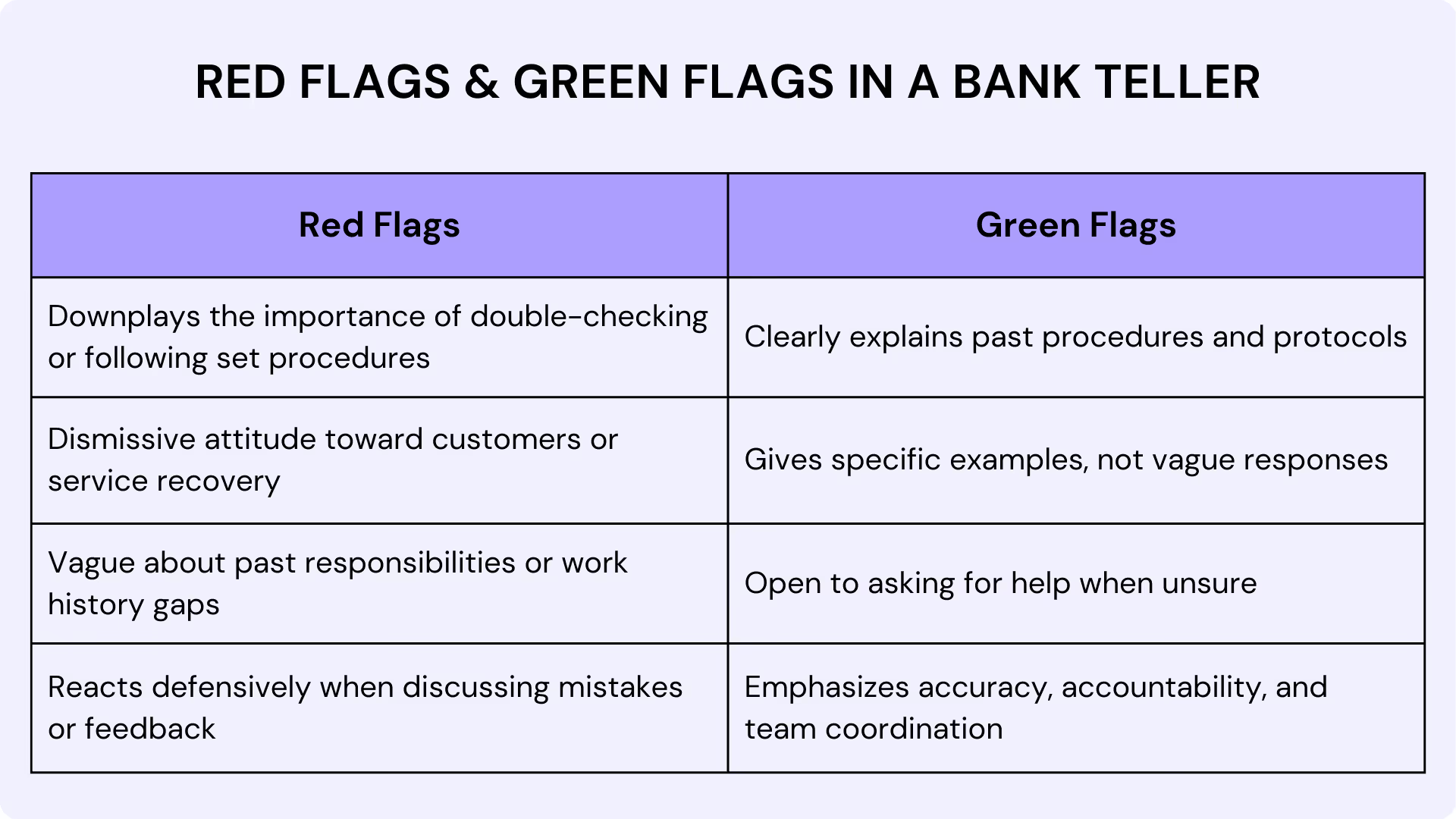
Tips to Identify Great Bank Teller Candidates
This practical checklist helps branch managers and HR teams consistently identify high-potential candidates and strengthens your overall bank teller hiring process. It supports accuracy, reduces turnover, and ensures strong alignment across all teller profiles.
- Match role type to branch need: Clarify whether you need a universal teller who can cross-sell, or a basic cashier-focused role to handle heavy footfall.
- Hire for attitude and ethics: Prioritize integrity, trainability, and service mindset over systems knowledge—technical skills can be taught, trustworthiness cannot.
- Be transparent in the job ad: Mention branch type, footfall, weekend shifts, and growth potential to attract serious applicants who are aligned with the reality of the role.
- Use short pre-screening tests: Filter candidates early with quick assessments focused on accuracy, attention to detail, or customer scenarios before proceeding to interviews.
- Know your compensation benchmarks: Offering market-aligned pay and benefits helps attract dependable tellers and reduces offer-stage dropouts.
- Show a clear growth path: Outline how the teller role can lead to advancement—senior teller, personal banker, or assistant branch manager—based on performance.
Identifying the right candidate is only half the job—how you onboard and support them directly affects performance, retention, and customer satisfaction. A structured onboarding plan turns a good hire into a long-term asset.
Onboarding and Retaining Bank Tellers
Effective onboarding and career visibility reduce early exits and build a reliable teller team that grows with your branch. Use these retention-focused strategies:
Design a Structured Onboarding Plan
A well-paced onboarding plan ensures new tellers gain confidence, accuracy, and customer handling skills by reducing early errors and setting the foundation for long-term performance.
Day 1–7:
- Introduce core systems, security protocols, and basic transaction flows
- Assign shadowing with an experienced teller to observe real scenarios
Week 2–4:
- Allow supervised transactions under real-time guidance
- Provide daily feedback on speed, accuracy, and customer interaction
Month 2+:
- Shift to coaching and developmental feedback
- Introduce cross-selling basics and upselling tactics if applicable
Once onboarding is complete, sustained performance depends on visible growth opportunities. Mapping out career paths early helps tellers stay motivated and view their role as a stepping stone and not just a transactional job.
Build Long-Term Career Paths
Demonstrating clear advancement opportunities keeps tellers engaged and committed. When employees see a future beyond the counter, they’re more likely to invest in their role and grow within your organization.
- Senior Teller: Lead reconciliations, mentor juniors
- Personal Banker: Move into relationship management roles
- Assistant Branch Manager: Step into operations and team leadership
Use internal mobility frameworks to support this progression and communicate them early during onboarding.
Reduce Turnover with Engagement
While growth opportunities keep tellers focused on the future, daily engagement plays a critical role in retaining them. Ongoing recognition, support, and communication help build trust and reduce early-stage attrition.
- Hold regular 1:1s between tellers and branch managers to address concerns
- Recognize accuracy, punctuality, and customer compliments—publicly or in reviews
- Train continuously on new services, digital tools, and fraud awareness to keep skills fresh.
Retention strategies complete the hiring cycle—but the process only works when every step, from screening to onboarding, is handled with clarity and consistency. Let’s recap the key actions before you move forward.
Conclusion
Bank teller recruitment is a strategic decision that impacts customer satisfaction, daily branch operations, and long-term team stability. Starting from identifying the right teller type to assessing relevant skill sets, to structuring interviews, and planning effective onboarding, each step plays a role in reducing turnover and improving branch performance.
By following this guide, your hiring team can move with confidence, consistency, and better alignment to your branch’s needs. In case you are curious how PMaps automates your assessment process for frontline banking roles, covering cognitive ability, attention to detail, customer handling, and trustworthiness—all in one test, you can call us at 8591320212 or email assessment@pmaps.in