.webp)
.webp)



Hiring top talent in GCC environments has shifted from support task to strategic priority. A Global Capability Center is no longer a back-office arm for repeatable work; many now run product, data, engineering, risk, and customer journeys for global markets.
India hosts over 1,700 GCCs, employing about two million professionals and generating USD 64–65 billion in revenue, supporting more than ten million jobs. Salaries sit roughly 20–30 percent above traditional IT roles.
In this context, attracting and retaining top talent sits on board agendas, because attrition and weak hiring decisions damage performance across regions. This article outlines how GCC leaders can shape talent attraction and retention strategies that match this responsibility.
Understanding What “Top Talent” Means in a GCC Context
Hiring top talent in GCC centres starts with a sharper definition of “top.” Labels like “high performer” or “A player” are too vague. GCCs need clarity on which roles carry the heaviest impact, and which skills and behaviours separate reliable contributors from people who can anchor global work.
Critical Roles & Skills in Modern GCCs
Modern GCCs no longer focus only on support. They carry full responsibility for technology, change programs, and complex domain work. That shifts attention toward a set of critical roles where capability, judgement, and stability matter far more than pure volume.
- Product and platform engineering roles that shape core systems used across regions.
- Data, analytics, and AI roles driving decisions on pricing, risk, and customer journeys.
- Cybersecurity and cloud specialists who protect sensitive data and uptime.
- Domain experts in finance, insurance, healthcare, or supply chain who connect tech with real operations.
- Change and program roles that move global portfolios into new digital ways of working.
- Local leadership roles that anchor global mandates, manage stakeholder trust, and represent the centre internally.
Beyond Skills: Mindset & Behaviours
Attracting top GCC talent is not just about tools or certifications. Many candidates can code in the right stack or speak the right domain language. Fewer show the mindset needed for end-to-end ownership and daily collaboration with teams spread across time zones.
- Comfort working with global stakeholders who bring different styles and expectations.
- Strong ownership, following problems through instead of handing them off.
- Learning agility to handle new domains, tools, or markets every few quarters.
- Clear, respectful communication across cultures and remote channels.
- Steady behaviour under pressure from outages, cutovers, or high-stakes deliveries.
When GCC leaders define top talent in this fuller way—skills plus mindset—they can shape attraction and retention strategies that aim at the right people, not just the loudest résumés.
Building a Talent Attraction Strategy for GCCs
Attracting top GCC talent needs more than a recruitment push. A strong talent attraction and retention strategy in GCC settings shows candidates that the centre offers serious work, fair rewards, and a sustainable way to work with global teams.
Craft a Clear, Differentiated GCC Employer Value Proposition (EVP)
A GCC employer value proposition should answer one question for candidates: why here and not another centre next door? Clear positioning around work, growth, and culture helps your hiring teams start every conversation on stronger ground.
- Position the GCC as more than a support unit; highlight ownership and visible global impact.
- Align the EVP with what candidates seek now: meaningful work, growth, flexibility, and wellbeing.
- Use real employee stories and project examples instead of broad, generic brand statements.
Competitive & Holistic Rewards (Salary, Benefits, Flexibility)
In markets where GCCs pay a premium for niche skills, rewards must feel fair and complete, not just slightly higher CTC. Thoughtful pay, benefits, and flexibility together make offers harder to dismiss during comparison.
- Offer market-aligned pay, especially for scarce digital and deep-tech skills.
- Design benefits that cover wellness, mental health, financial security, and family needs.
- Treat hybrid work, flexible hours, and tier-2/3 work options as clear attraction levers.
Strengthening Employer Branding for GCC Talent Markets
Employer branding for hiring top talent in GCC centres works best when it speaks to real work and impact. Candidates want to see the tech, domains, and problems your teams actually handle.
- Maintain an updated careers page, tech content, and active presence on key platforms.
- Showcase GCC projects, core tech stack, and global impact through short case stories.
- Stay visible in communities via hackathons, meetups, campus events, and industry forums.
Targeted Sourcing for Hiring Top Talent in GCC
Generic sourcing floods pipelines but rarely brings the right GCC talent. Targeted sourcing focuses on specific pools and relationships that match your critical roles, especially in cloud, AI, data, cybersecurity, and domain-heavy work.
- Build sourcing plans around priority hubs, campuses, specialist groups, and experience bands.
- Re-engage alumni, boomerang talent, and returnees with both global and local exposure.
- Use specialist partners where skills are rare, and keep warm pipelines for repeat roles.
Designing a GCC Employee Experience That Retains Top Talent
Retention in GCCs depends less on slogans and more on how work, growth, leadership, and culture feel every day. A thoughtful employee experience turns hiring wins into long-term strength and makes it easier to attract and retain top talent in GCC settings.
Offer Careers, Not Just Jobs
Top GCC talent stays where they can see a future, not just a title. Career clarity matters more in centres handling complex, shifting global work, because people want to understand how their role can grow as charters change.
- Clear career paths for engineering, product, operations, and expert tracks.
- Transparent promotion criteria and growth conversations at least once a year.
- Access to global roles and short or long-term assignments with headquarters.
Continuous Learning & Upskilling as a Core Benefit
In fast-moving GCCs, learning is not a perk; it is the safety net that keeps talent relevant. When continuous learning becomes part of the deal, people are more likely to build their long-term careers inside the centre instead of outside.
- Learning academies and role-based learning journeys with clear milestones.
- Internal mobility programs that let people test new domains and roles.
- Upskilling in digital, AI, cloud, and new tools positioned as a core retention hook.
Leadership & Manager Quality as a Retention Lever
Most decisions to stay or leave a GCC trace back to managers and local leaders. Strong leadership makes heavy workloads and complex stakeholders feel manageable; weak leadership drives disengagement, even when pay and benefits look fine.
- Acknowledge the direct impact of local leadership strength on attrition and engagement.
- Train managers on coaching, feedback, and leading distributed or global teams.
- Build “people leader” scorecards that include retention, engagement, and growth metrics.
Culture, Inclusion & Purpose
To retain top talent in GCCs, culture must move beyond perks and events. People stay where they feel safe to speak, valued for who they are, and connected to the larger mission their work supports.
- Focus on psychological safety, autonomy, and meaningful impact, not only surface perks.
- Run DEI&B initiatives that ensure diverse talent feels seen, heard, and supported.
- Regularly connect everyday GCC work with customer outcomes and company purpose.
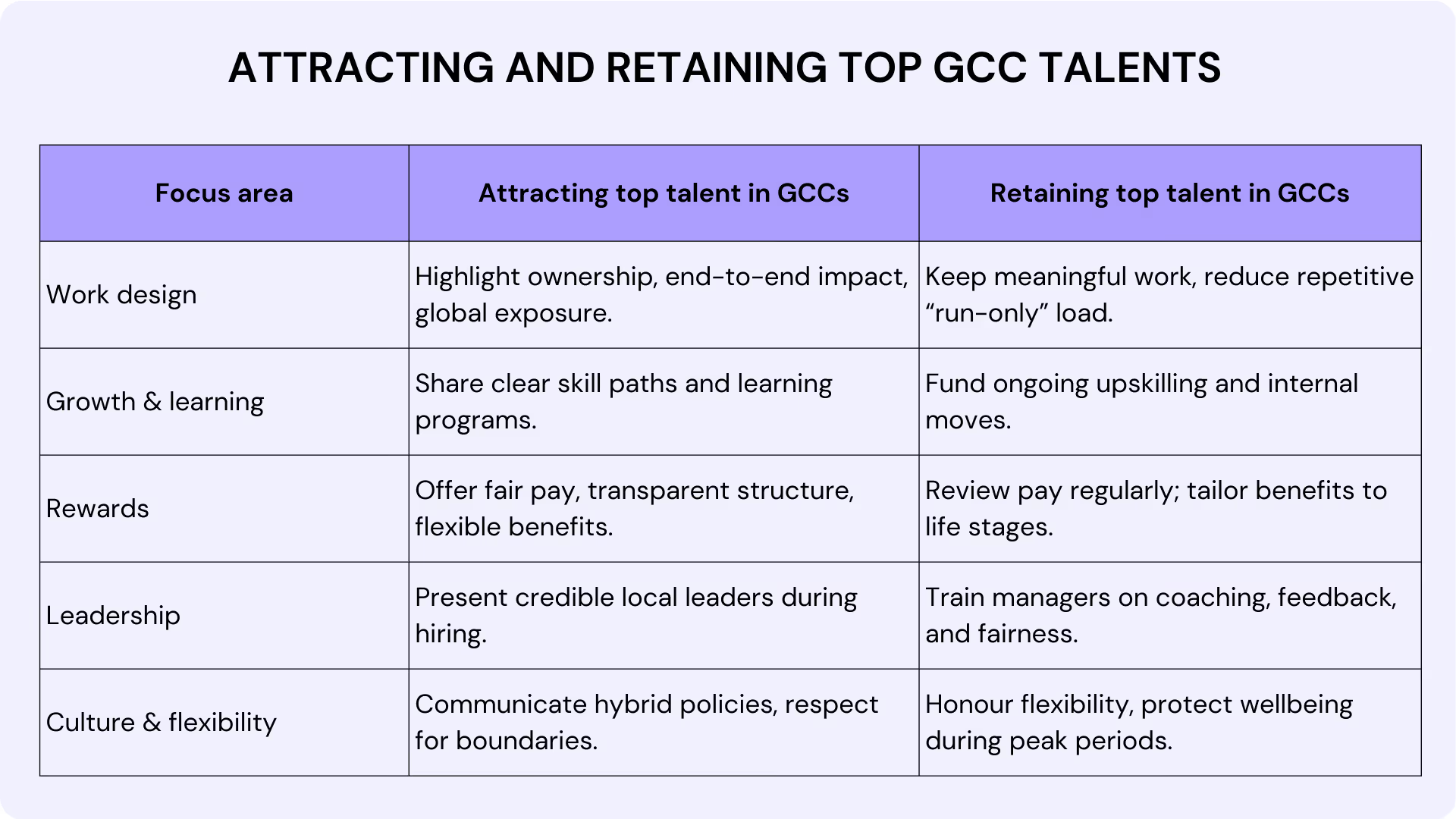
Attracting and Retaining Top GCC Talents
Talent attraction and retention strategy in GCC settings works best when both sides use the same levers. The table below links how each lever should appear in hiring conversations and how it must show up in daily GCC employee experience.
Common Pitfalls in GCC Talent Attraction & Retention
Even strong talent attraction and retention strategy in GCC environments can fail if a few basics are ignored. These pitfalls quietly erode trust, push top performers to exit, and make attracting top talent in GCCs much harder over time.
- Selling “innovation” but delivering only run work: Candidates join for transformation projects but land in mostly maintenance tasks, leading to fast disengagement.
- Over-indexing on pay, underplaying work quality: High CTC attracts, yet shallow roles and limited ownership drive top talent out within a year.
- Weak career paths and internal mobility: No clear movement across products, domains, or locations makes global capability centres feel like dead ends.
- Inconsistent manager quality across teams: Some teams see coaching and fair workloads; others face poor feedback, unclear goals, and high churn.
- One-size-fits-all policies for diverse talent segments: Early-career, mid-career, and second-career professionals receive the same experience, despite very different needs.
- Ignoring warning signs from engagement and exit data: Repeated themes around workload, growth, or leadership appear in surveys and exits but rarely change decisions.
Conclusion
Attracting top talent in GCCs now depends on clear roles, credible growth, and a GCC employee experience that matches the promise made during hiring. Pay can open doors, but work quality, leadership, and learning decide who stays.
A practical talent attraction and retention strategy in GCC settings links EVP, assessments, careers, and culture into one story, refreshed through data from hiring, engagement, and exits. If you want structured support to connect these pieces, you can reach the PMaps team at 8591320212 or assessment@pmaps.in.