.webp)
.webp)



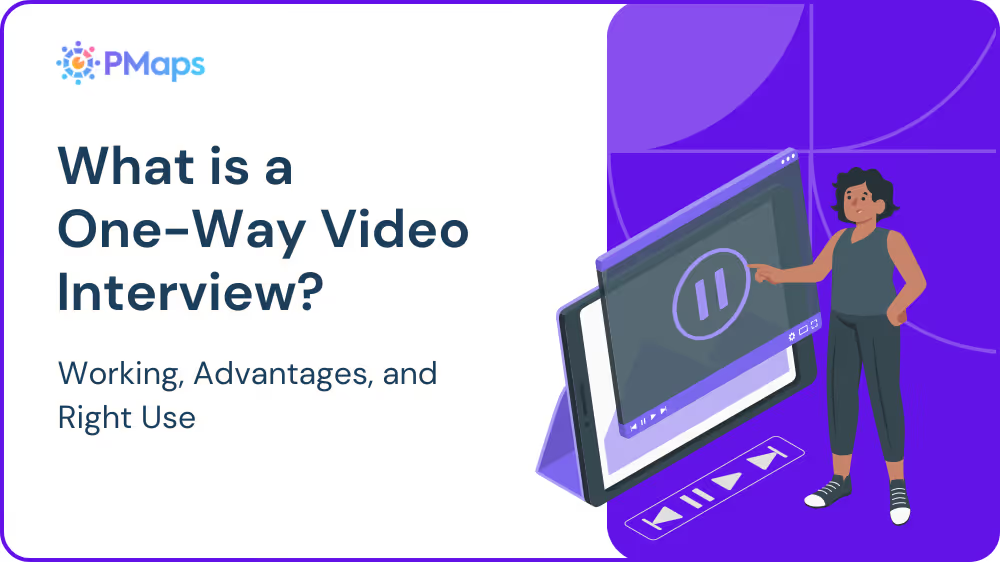
An on-demand interview is an asynchronous screening format where candidates record responses to set questions without live scheduling. If you’re unfamiliar with this format, you can first understand What is a One-Way Video Interview to see how asynchronous interviews work from both candidate and recruiter perspectives.
This approach is particularly effective for speeding up hiring decisions, as 67% of hiring managers say online interviews enable instant sharing of recordings, accelerating the decision-making process.
With the increasing popularity of on-demand interviews, it's important to understand how to effectively structure and leverage this format. In the following sections, we'll explore key strategies, tips, and best practices to ensure your on-demand interviews are successful and impactful.
How is AI in On-Demand Interview Changing Recruitment
AI has changed on-demand video interviews from simple recording tools into decision-support systems. Now, instead of just watching responses later, recruiters get structured insights, automated shortlists, and consistent evaluations. This shift makes early-stage hiring smarter and easier to scale.
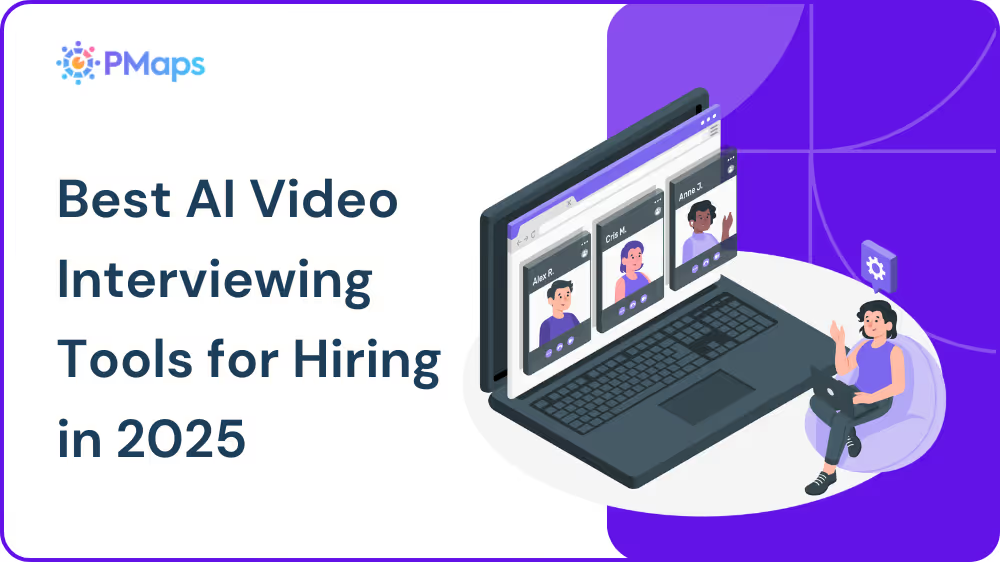
If you want to compare platforms and understand how different systems evaluate candidates, explore these AI Video Interviewing Tools to see how structured screening technology varies across providers.
These platforms typically provide capabilities such as:
- Automates candidate invitations, reminders, and tracking across high-volume roles, reducing manual coordination effort and recruiter dependency significantly.
- Uses structured question frameworks to ensure standardized evaluation, improving fairness, consistency, and comparability across large candidate pools.
- Enables intelligent response tagging and competency mapping for faster shortlisting without relying solely on resume-based screening decisions.
- Supports multilingual and mobile-first experiences, expanding accessibility and improving completion rates for diverse and remote candidate groups globally.
- Integrates with ATS and hiring workflows, allowing seamless data flow, centralized evaluation, and collaborative decision-making across hiring teams.
Platforms such as PMaps AI Video Interviewer use structured screening with behavioral insights to help recruiters find the right candidates more quickly and ensure a consistent experience for everyone.
How Does an On-Demand Interview Work?
An on demand interview may look simple on the surface, but the experience is carefully structured to balance candidate flexibility with recruiter control. From invitation to evaluation, each step ensures consistency, scalability, and measurable insights which makes the video on demand interview process efficient for high-volume and remote hiring.
- Invitation: Candidates receive an email or SMS link with instructions, deadlines, device requirements, and role-specific interview information to begin.
- Recording: After logging in, candidates read or watch each question, get preparation time, then record responses using webcam or mobile.
- Re-recording: Some platforms allow limited retakes per question, helping candidates improve clarity while maintaining structure and preventing excessive retries.
- Submission & Review: Once completed, responses are submitted automatically for recruiter review, scoring, sharing, and shortlisting within the hiring platform.
Key Aspects of On-Demand Interview
An on-demand video interview focuses more on structure than just recording. It helps avoid scheduling issues and keeps the evaluation process controlled, repeatable, and scalable. This is especially helpful when you need to hire quickly while still keeping things consistent.
- Asynchronous Format: No interviewer is present; candidates record answers at their convenience, enabling flexible participation across locations, schedules, and time zones without coordination delays.
- Structure: Questions remain standardized for all applicants, often combining behavioral, situational, and technical prompts to ensure fair comparison and role-relevant evaluation.
- Process: Candidates log into a secure platform (via desktop or mobile), review each question, get brief preparation time (e.g., 30–60 seconds), then record responses sequentially.
- Time Limits & Retakes: Each response is timed. Some platforms allow a single retake, while others restrict re-recording to maintain authenticity.
- Applications: Widely used for high-volume and early-stage screening, helping recruiters filter candidates quickly before moving to live interview rounds.
Benefits of On-Demand Interview
Once organizations adopt an on demand interview, the impact shows up quickly as the faster shortlisting, fewer scheduling bottlenecks, and more consistent evaluation overtakes the traditional recruitment metrics. Unlike traditional screening, an on demand video interview gives both candidates and recruiters flexibility without slowing decision-making, making it especially effective for distributed and high-volume hiring environments.
- Faster screening cycles by eliminating scheduling conflicts and enabling parallel candidate evaluations across multiple roles and locations.
- Improved candidate convenience allowing responses anytime, increasing participation rates and reducing drop-offs during early hiring stages.
- Consistent evaluation process through standardized questions, helping reduce bias and enabling fair comparison across large applicant pools.
- Scalable high-volume hiring without increasing recruiter workload, making it ideal for bulk, campus, or frontline recruitment drives.
- Better collaboration as hiring managers can review, share, and score recorded responses anytime without coordinating live interviews.
Challenges with On-Demand Interviews
While the on demand interview format brings speed and structure, adoption works best when expectations are managed thoughtfully. Most challenges are not limitations of the video on demand interview itself but they’re experience gaps that can be addressed through clear communication, candidate support, and well-designed workflows.
- Candidate nervousness on camera without a live interviewer, which can affect confidence, tone, and natural response delivery.
- Perceived lack of human interaction, making it important to include clear instructions, role context, and a personalized introduction.
- Technical readiness concerns, such as internet stability, device quality, or unfamiliarity with recording platforms among some candidates.
- Overly rigid time limits that may pressure candidates if preparation time or question clarity is insufficient.
- Experience perception risks if communication, feedback timelines, or next-step visibility are not clearly defined.
Common On-Demand Video Interview Questions for HR
A good on-demand video interview is more than just recording answers. It is about asking questions that fit the stage of the hiring process. In these interviews, HR teams usually look for intent, such as behavior, judgment, communication, and alignment. This approach helps them see if a candidate is ready before moving to live interviews.
Introductory and Behavioral
What it assesses:
Evaluates communication clarity, confidence, self-awareness, past performance patterns, and behavioral consistency. Helps understand how candidates present themselves, reflect on experiences, and articulate values relevant to the role.
Sample Questions:
- Tell us about yourself and your professional background.
- Describe a situation where you handled a difficult customer or stakeholder.
- What achievement are you most proud of and why?
- Share an example of a time you worked under pressure.
- What motivates you to perform consistently at work?
What to look for:
Structured responses, specific examples, measurable outcomes, accountability, positive attitude, and clear communication. Watch for authenticity, ownership of actions, and alignment between experience and role expectations.
Situational and Skill-Based
What it assesses:
Measures problem-solving approach, decision-making logic, role-specific capability, adaptability, and practical judgment. Reveals how candidates think through real scenarios rather than relying only on past experience narratives.
Sample Questions:
- How would you handle multiple tasks with conflicting deadlines?
- What would you do if a customer rejected your solution?
- Walk us through your approach to learning a new tool quickly.
- How do you prioritize work during peak workload periods?
- Describe how you would handle a mistake that impacts a client.
What to look for :
Logical thinking, structured decision-making, prioritization clarity, ownership mindset, and practical solutions. Strong candidates explain reasoning, consider consequences, and demonstrate adaptability under changing situations.
Cultural and Career Goals
What it assesses:
Examines organizational fit, long-term intent, learning orientation, work style preferences, and alignment with company values, team environment, performance expectations, and growth opportunities.
Sample Questions:
- Why do you want to work with our organization?
- What kind of work environment helps you perform best?
- Where do you see your career in the next two years?
- How do you handle feedback from managers or peers?
- What does success look like to you in this role?
What to look for :
Genuine interest, realistic expectations, growth mindset, adaptability, and cultural alignment. Look for candidates who understand the role, show commitment, and demonstrate long-term engagement potential.
Conclusion
On-demand interviews now anchor modern screening. By combining flexibility with structured evaluation, organizations can move faster without compromising quality. With the PMaps AI Video Interviewer, teams shortlist with clarity and scale hiring without strain. To refine your screening flow, connect with us at 8591320212 or assessment@pmaps.in