.webp)
.webp)


Cognitive diversity has become essential as teams face rising complexity. Homogeneous thinking often leads to repeated mistakes, and studies show groupthink contributes to nearly 30% of strategic failures in organizations. Teams benefit when individuals think differently, process information uniquely, and approach challenges from varied mental models.
This creates stronger problem-solving and more resilient decision-making. Understanding cognitive diversity helps leaders evaluate talent more accurately and design assessment methods that capture real thinking styles.
What Is Cognitive Diversity?
Cognitive diversity describes differences in how individuals think, solve problems, and process information, shaping the unique mental approaches people bring to workplace challenges.
Cognitive diversity involves thinking patterns, demographic diversity reflects identity attributes, and neurodiversity captures neurological differences. Each dimension contributes differently to team composition and workplace decision quality. Understanding cognitive diversity in workplace includes awareness of:
- How people think?: Workers interpret situations differently, shaping the questions they ask and the assumptions they challenge during discussions.
- How do they solve problems?: Some rely on structured logic, while others use intuition or experimentation, creating complementary approaches to complex issues.
- How they process information?: Employees vary in how they absorb, filter, and prioritize data, influencing clarity, speed, and decision patterns.
Roles That Require Cognitive Diversity
Cognitive diversity strengthens teams handling complex decisions, changing priorities, or ambiguous problems. These environments benefit from varied thinking styles that improve judgment, reduce blind spots, and support balanced decisions across strategic and operational responsibilities.
- Leadership: Combines contrasting reasoning styles for better judgment.
- Product Teams: Blend creative and analytical thinking for stronger solutions.
- Engineering: Mix structured and experimental problem-solving for accuracy.
- Marketing: Balance intuitive and data-driven perspectives for growth.
- Strategy: Use varied reasoning to assess markets, risks, and opportunities.
Benefits of Cognitive Diversity in Teams
Cognitive diversity strengthens team performance by widening perspective, improving judgment, and reducing blind spots. When varied thinking styles collaborate, teams handle ambiguity better, evaluate ideas more thoroughly, and reach decisions with stronger long-term outcomes across strategic and operational responsibilities.
- Better Problem Solving: Varied perspectives uncover issues earlier and strengthen solutions.
- Increased Innovation: Contrasting mental models generate new ideas beyond familiar patterns.
- Stronger Decision-Making: Reduced groupthink and broader scenario testing improve choices.
- Improved Team Performance: Balanced thinking styles support better coordination and execution.
- Greater Adaptability: Diverse cognitive patterns help teams respond faster to change.
Examples of Cognitive Diversity at the Workplace
Cognitive diversity appears through contrasting thinking styles that shape how individuals interpret situations and make decisions. These patterns influence team discussions, idea generation, and execution quality. Understanding these differences helps leaders build balanced teams capable of stronger problem-solving, faster adaptation, and more reliable judgments across varied work challenges.
- Problem-Solving Styles: Analytical thinkers rely on structured logic; intuitive thinkers use patterns and instinct to reach solutions.
- Risk-Oriented vs Cautious Decision Makers: Some push bold choices, while others examine constraints, creating balanced decision outcomes.
- Creative vs Process-Driven Thinkers: Creative minds generate new ideas, while process-focused individuals refine steps and ensure consistent delivery.
How to Build a Cognitively Diverse Team?
Cognitively diverse teams require intentional design across hiring, assessment, and development practices. Leaders must look beyond credentials to understand how individuals think, process information, and approach complex situations. These methods create balanced teams capable of stronger decisions, wider perspectives, and more dependable long-term performance across varied business environments.
Hiring for Personality
Personality assessments help identify thinking preferences, decision patterns, and communication styles. They reveal how individuals interpret information and collaborate under pressure. These insights support balanced hiring decisions by highlighting strengths that complement existing team styles rather than duplicating them.
Skills-Based Hiring Assessments
Skills-based tests measure problem-solving, reasoning, and job-related capability using structured tasks. These assessments reduce subjective judgment and highlight contrasting thinking styles. They help leaders compare cognitive patterns consistently and select candidates who bring unique approaches to complex work.
Culture Fit Assessment
Culture assessments reveal how individuals align with values, collaboration expectations, and workplace behaviors. They clarify whether someone’s thinking style matches the team’s operating rhythm. This helps leaders maintain diversity in thought while ensuring shared principles support cohesion.
Structured Interviews
Structured interviews reduce bias by using uniform questions and scoring criteria. They help capture thinking patterns through scenario responses. Including AI video interviewing supports consistency, highlights reasoning style, and provides deeper insight into how candidates approach unfamiliar challenges.
Employee Surveys
Surveys help measure how team members perceive collaboration, communication flow, and decision quality. They reveal thinking gaps, information friction, and areas needing support. These insights guide better role assignments and help align varied cognitive styles across teams.
Post-Hire Employee Assessments
Post-hire assessments track how employees absorb information, solve problems, and adapt to evolving tasks. They help identify complementary strengths and development needs. These insights inform coaching plans and ensure teams maintain diverse thinking capabilities over time.
Challenges and Solution of Culturing Cognitive Diversity
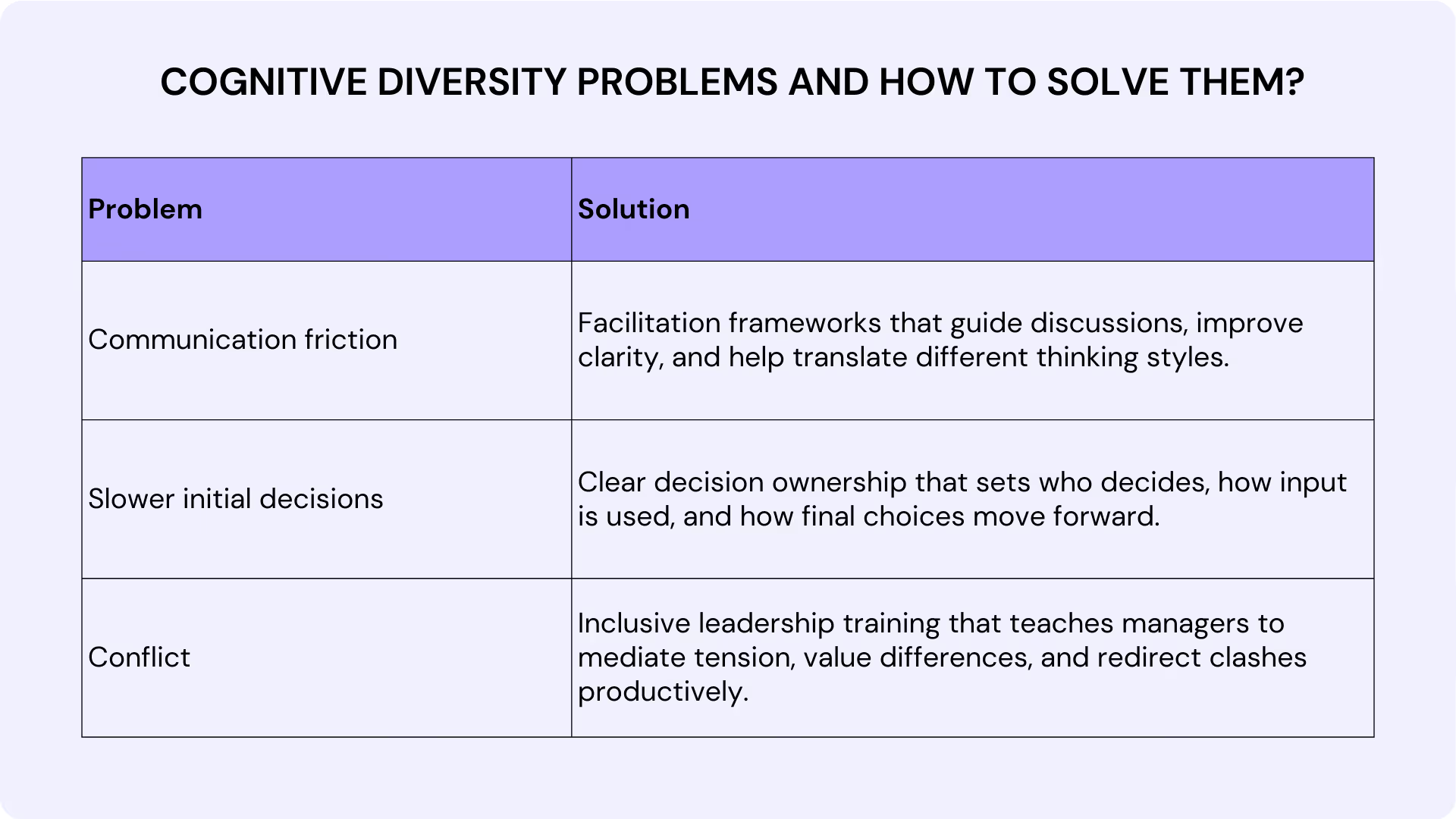
Cognitive diversity strengthens long-term decisions but can introduce early friction when thinking styles differ sharply. Teams may experience slower alignment, communication gaps, or conflicting assumptions. These challenges are manageable with the right structures, and early clarity helps teams benefit fully from varied perspectives.
Conclusion
Cognitive diversity strengthens workplace decisions by uniting varied thinking styles that reduce blind spots and sharpen judgment. Teams gain stronger problem-solving capability, wider idea flow, and more dependable execution across complex projects.
When hiring practices measure thinking patterns through assessments and structured interviews, organizations build teams designed for long-term adaptability and balanced decision quality. To integrate cognitive diversity into your talent assessment strategy, connect with PMaps at 8591320212 or assessment@pmaps.in