Technical
Post-Hire
Skill-Gap
Pre-Hire
Surveys
Personality
Language
Culture
Skill
Domain
Cognitive
Behavioral
left arrow

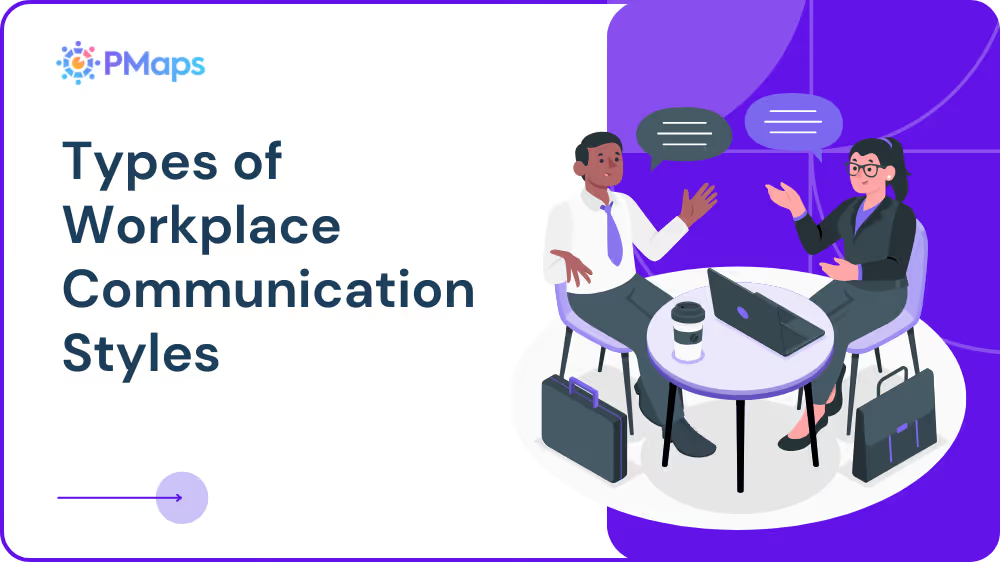
Types of Workplace Communication Styles

HR Glossary
Author:
Pratisrutee Mishra
January 7, 2026
Summarise this post with:

Workplace communication styles shape how employees share information, set expectations, and work together each day. According to a global survey by the Economist Intelligence Unit, 86% of teams say poor communication leads to workplace failures. These styles show regular ways people share information, understand each other, and keep things clear across different roles.

What Are Workplace Communication Styles? 

Workplace communication styles are the regular ways people share information, express opinions, and react in conversations. These patterns affect how clearly teams work together and make decisions. Each style shows different preferences for tone, structure, and emotion, which change how messages are understood in meetings, feedback, and daily work.

Why Communication Styles Matter in the Workplace 

Clear communication styles help teams work together smoothly and avoid confusion in daily tasks. As hybrid work becomes more common, consistency is key for teams across different locations and roles. When employees know how their coworkers share needs and urgency, it is easier to collaborate and make quick decisions. Using a communication assessment for hiring helps ensure new hires align with existing team dynamics. 

Good communication also reduces repeated work, reduces conflict, and builds accountability. These benefits improve project progress, leadership awareness, and employee confidence when working across teams.

Key reasons communication styles matter:

  • Faster decisions across teams
  • Fewer misunderstandings during handovers
  • Stronger collaboration across functions
  • Clearer escalation paths
  • Better feedback quality
  • Smoother conflict navigation
  • More predictable meeting outcomes

Two Popular Models of Workplace Communication Styles

There are two main models for understanding workplace communication styles. Each one helps leaders see how employees share ideas, handle conflict, and process information at work. Teams use different styles depending on urgency, hierarchy, and how serious a situation feels. These models help explain common behaviors in meetings, feedback, and problem-solving.

Model 1 — Behavioral Stance Styles (how people “show up”)

This model examines how employees behave during conversations, focusing on how open, assertive, or controlling they are. It shows how people react under pressure from authority, deadlines, or conflict. Leaders use this model to understand emotional tone, how people express themselves, and how habits affect team dynamics.

Model 2 — Thinking and Processing Styles (how people “process”)

This model examines how people prefer to understand information, organize their thoughts, and make decisions. It is helpful when teams from different areas need to work together. Leaders use it to see how employees deal with details, urgency, and big ideas during planning or problem-solving.

When and Where to Use Each Model?

Use the behavioral model for moments that involve conflict, boundary-setting, or direct feedback, where tone and expression influence team stability. Use the thinking model for planning, cross-team coordination, and decision-making, where understanding how people process information helps groups work together with clarity.

Personality and Communication Styles in the Workplace 

Personality and communication styles at work are linked to factors such as attention to detail, how people show emotion, and how quickly they make decisions. Personality affects how people see situations and share their thoughts, but team dynamics, hierarchy, urgency, and culture also play a role. Assessments can help, but communication styles can change based on the situation and team setup.

4 Thinking Styles at Work 

How people process information, judge situations, and handle shifting priorities affects how they communicate at work. Different thinking styles influence how discussions flow, how much detail is needed, and how decisions are made. When managers understand these patterns, they can communicate in ways that fit their teams and help avoid misunderstandings. Each style has its own strengths that are useful for certain tasks and workflows.

  • Analytical Communicator
    This style uses data, logic, and clear evidence. Analytical communicators ask direct questions and want clear answers. They do well in jobs that need accuracy, numbers, and careful thinking.
  • Functional Communicator
    Functional communicators value step-by-step detail, timelines, and clearly sequenced processes. They strengthen planning, documentation, and workflow coordination with a consistent structure.
  • Intuitive Communicator
    Intuitive communicators focus on the big picture. They work quickly, care about results, and skip extra details. They do best in strategy and fast problem-solving.
  • Personal Communicator
    Personal communicators pay attention to tone, emotions, and social signals. They help teams stay connected, build trust, and handle conflicts smoothly.

Effective Communication Styles in the Workplace 

Clear communication at work helps teams collaborate smoothly and make decisions more easily. Teams rely on consistent habits such as being direct, staying organized, showing emotional awareness, and focusing on the big picture. These habits reduce mistakes and make expectations clear. 

Good communication also builds trust and accountability, which is especially important when people work in different locations or across departments. Leaders do better when they understand how different styles affect teamwork and daily interactions.

Key practices for effective communication:

  • Match detail level to audience needs
  • State expectations early
  • Maintain steady tone and pacing
  • Ask clarifying questions
  • Offer balanced feedback
  • Document important agreements

Common Communication Style Clashes

Communication style clashes happen when teammates use different ways of talking during discussions. These differences can slow things down, cause confusion, or create tension during decisions, feedback, and daily work.

Conclusion 

Workplace communication styles affect how clear, trusting, and coordinated teams are. Knowing these patterns helps leaders improve teamwork, reduce conflict, and maintain steady performance. Assessments make this easier by showing the habits that shape daily work. To build stronger teams, contact our experts at 8591320212 or assessment@pmaps.in

Frequently Asked Questions

Learn more about this blog through the commonly asked questions:

How can teams train communication styles for different dynamics?

Teams benefit from structured coaching that addresses tone, pacing, and clarity. Using communication assessments helps managers identify patterns and tailor support for navigating conflict, improving feedback habits, and improving meeting behaviour. Regular practice sessions and role-based simulations reinforce consistent communication across varied team setups.

How does personality affect effective communication at work?

Personality affects how direct people are, how they show emotions, and how much detail they like. These habits shape how employees share information and understand one another. While personality sets the base, workplace rules, urgency, and power also affect how communication styles show up in real life.

What are the five common communication methods in the workplace?

Workplaces use talking, written updates, digital messages, body language, and organized documents. Each method has its own use, such as quick check-ins, recordkeeping, or clarity when working with other teams.

What are practical ways to improve communication at work?

Teams improve at communicating by agreeing on rules, setting clear expectations early, documenting key decisions, and using assessments to identify gaps. Regular check-ins, feedback, and clear meeting plans also help keep things consistent across teams.

Download Now

Mindful Hiring

Oops! Something went wrong while submitting the form.

Resources Related To Test

Related Assessments

Voice and Accent Assessment Test

time
59 min
type bar
All
Featured

Measures pronunciation, accent clarity, and communication effectiveness for customer-facing roles.

Verbal Ability Assessment

time
40 min
type bar
Entry Level

Measures understanding, processing, and communication of verbal information accurately.

Written Communication Assessment

time
13 min
type bar
All

Designed to identify professionals who excel in drafting concise, impactful documents and correspondence, vital for all

Comprehension Assessment Test

time
21 min
type bar
Entry Level
Popular

Evaluate reading and listening comprehension with a mobile-friendly test for entry-level hiring.

Subscribe to the best newsletter. Ever.

Your email is only to send you the good stuff. We won't spam or sell your data.

Thank you! Your submission has been received!
Oops! Something went wrong while submitting the form.
Get a callback

Get a Callback

Need support? Fill out the form and we'll get back to you shortly.

Get a Callback

Need support? Fill out the form and we'll get back to you shortly.

Valid number

Thank you!

Thank you! Your submission has been received!
You can check submitted datas from "Project Settings".
Oops! Something went wrong while submitting the form.
✓ Valid number