.webp)
.webp)


Hiring in financial services now comes with serious stakes. Whether in banking, insurance, or wealth management, each role ties to regulatory pressure, brand risk, and performance targets. A wrong hire isn’t just costly; it can breach compliance, harm customer trust, and trigger reputational damage. Today’s candidates care about more than compensation.
They want clarity on company ethics, decision-making, and pressure levels before accepting an offer. At the same time, they’re being courted by bigger firms. That’s why structured hiring is critical. A consistent approach—from planning to onboarding—helps attract the right people while minimizing risk. This 2025 guide will share practical recruiting tips for financial services, covering employer branding, candidate assessment, and building teams that fit your goals.
What is Financial Services Recruitment?

Recruiting in the Financial Services Industry starts with a clear definition of the function. Financial services recruiting covers workforce planning, sourcing, assessment, and onboarding for banking, insurance, and investment roles. It adds strict expectations around regulation, fiduciary duty, customer trust, and scrutiny from internal and external auditors.
Compared with general corporate hiring, financial services recruiting emphasizes risk awareness and ethical judgment. You are not only matching skills to job descriptions, but you are also assigning guardianship over money and data. That responsibility demands structured screening for numeracy, compliance knowledge, integrity, customer empathy, and comfort with digital systems.
In practice, financial services recruiting brings together HR, business leaders, and compliance officers. They coordinate role design, target profiles, assessment tools, and background checks for each product line.
Understanding the definition sets the foundation—but effective recruiting in finance depends on how well you address each moving part of the process. From workforce planning to onboarding, every step comes with risk, scrutiny, and performance pressure. Let’s explore the key aspects that shape financial services recruitment today.
Key Aspects of Recruitment in the Finance Industry
Recruiting in financial services isn’t just about filling roles. It’s about safeguarding reputational risk, sustaining regulatory trust, and supporting long-term business goals through the right talent. Each step in the recruitment process must reflect the high-stakes environment of financial institutions, where one weak hire could compromise client confidence or compliance standing.
From strategy to selection, every aspect of your recruitment process must align with the expectations of both regulators and high-performing candidates. Below are the core components that define successful financial services recruiting strategies today.
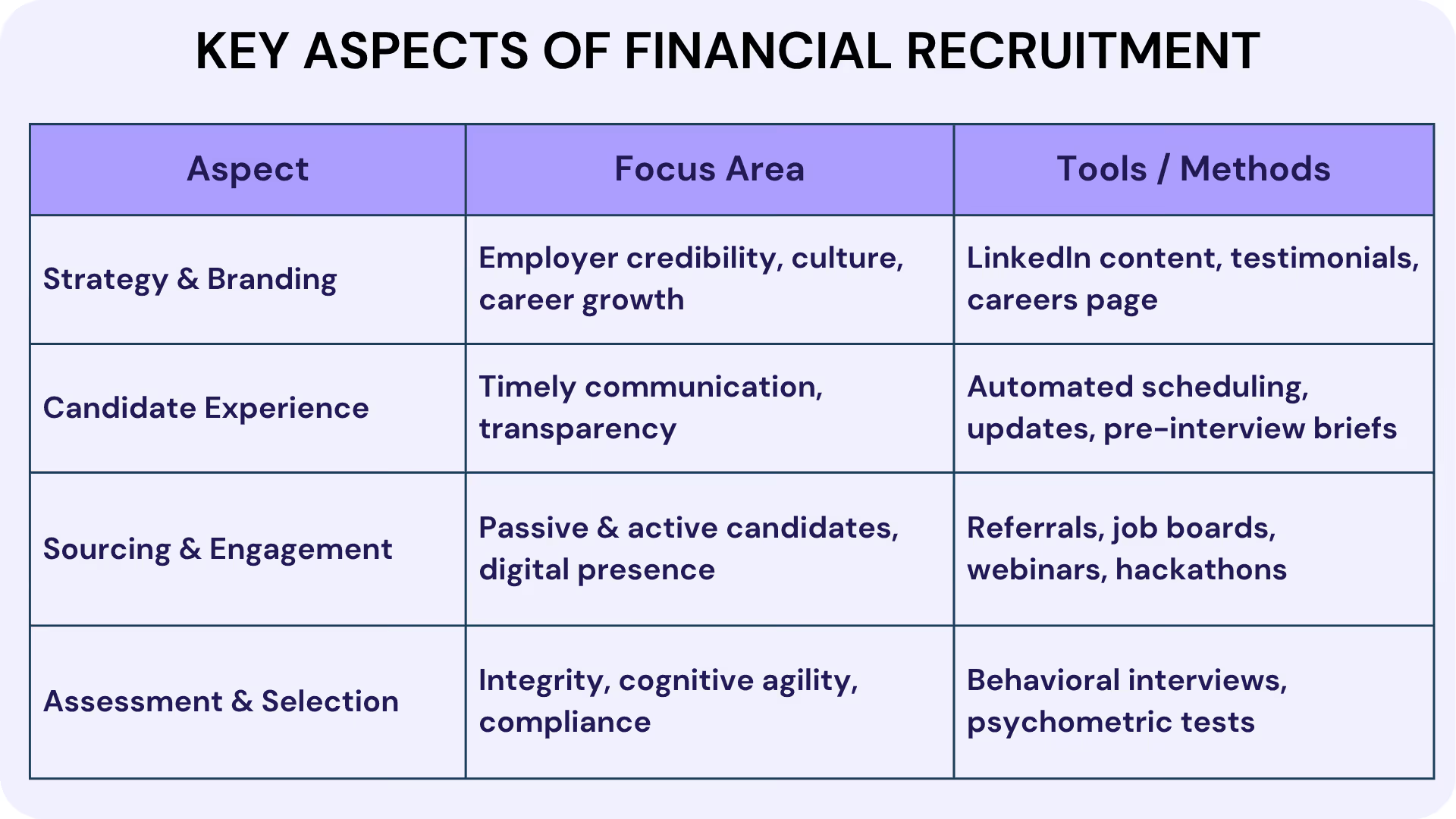
1. Strategy and Branding
Your hiring strategy must echo your firm’s regulatory discipline, ethical stance, and client expectations. In 2025, top finance professionals evaluate employers just as rigorously as they are evaluated—reviewing everything from values to leadership reputation.
A strong employer brand is no longer optional. It anchors your credibility in the market and attracts candidates who align with your compliance-driven culture. Communicate this brand through employee testimonials, role-specific career stories, and public commitments to ethics and governance.
Use platforms like LinkedIn, Glassdoor, and your company’s careers page to deliver this content with clarity and consistency. When done right, your employer brand doesn’t just support recruitment—it shapes it. It becomes a differentiator in a hiring environment where talent is both scarce and highly mobile.
2. Candidate Experience
In the finance sector, hiring timelines and touchpoints are under scrutiny—not just by candidates, but often by your own internal compliance and HR audit teams. Yet many organizations still lose top talent due to unclear processes and sluggish communication.
Start by setting and communicating firm timelines for the hiring process. Uncertainty drives disengagement, especially among passive candidates who aren’t actively job hunting. Use automated scheduling tools to eliminate back-and-forth and respect candidates’ time.
Pre-interview briefs are another overlooked opportunity. Equip candidates with role expectations and evaluation criteria ahead of interviews. This improves the quality of conversation and reduces misalignment.
Lastly, every interview round should be followed by timely feedback. Even if it’s a simple update or next steps email, it reflects professionalism and reinforces your organizational integrity. These small touchpoints collectively influence how your firm is perceived in the market. In regulated industries like finance, that perception matters.
3. Sourcing and Engagement
The most skilled finance professionals are rarely active on job boards. They’re typically employed, performing well, and open only to opportunities that match their values and career trajectory. This makes proactive sourcing not just valuable—but essential.
Modern sourcing strategies in the financial sector focus on precision and relationship-building. Referrals remain a strong channel, especially for mid- to senior-level roles. Executive search firms bring industry-specific reach, while platforms like eFinancial Careers help target niche talent pools across risk, investment, and compliance domains.
For early-career hiring, campus engagement still matters. But it must evolve beyond placement drives. Consider hosting virtual finance competitions, gamified assessments, and interactive webinars featuring real business challenges. These not only attract high-potential graduates but also position your firm as progressive and engaged.
Every touchpoint—whether through digital outreach or live interaction—contributes to your presence in the financial talent ecosystem. Sourcing isn’t just about reach. It’s about relevance, reputation, and repeated visibility to the right audience.
4. Assessment and Selection
Skills alone do not guarantee sound judgment, adherence to regulations, or ethical conduct, especially in roles that handle money, compliance, or client advisory. This is why structured assessments have become central to financial services recruitment frameworks.
- Digital assessment tools help measure job-critical attributes like integrity under pressure, cognitive flexibility, and situational judgement. These assessments simulate real-world scenarios that mirror the regulatory and ethical nuances of your business—offering a far more accurate screening process.
- Customization is key. Assessments for client-facing banking roles must differ from those used in back-office compliance or operations. Likewise, evaluation frameworks should reflect whether a role influences advisory outcomes, manages risk portfolios, or operates within administrative thresholds.
- When designed correctly, assessment tools do more than shortlist candidates. They improve hiring accuracy, reduce bias, and support long-term retention by matching talent with the realities of the role.
- Additionally, instead of relying on unstructured interviews or generic aptitude tests, forward-thinking firms now use behavior-based interviews aligned with core job traits. These include pressure-handling capacity, ethical reasoning, risk perception, and agility in regulatory decision-making.
Before you set on to improve your recruitment process, it’s essential to address the practical barriers most HR leaders in finance face today. Understanding these challenges will help you align resources, timelines, and tools with your hiring goals more effectively.
What are the Challenges in Financial Services Recruiting?
Recruiting in the financial services industry involves a unique combination of regulatory compliance, role complexity, and high candidate expectations. Unlike other sectors, finance roles are tightly linked to governance, data privacy, and fiduciary responsibility—making poor hires particularly costly.
These recruitment hurdles aren’t always visible in early planning—but they often surface during critical hiring stages. By identifying the most common friction points, HR leaders in finance can take proactive steps to reduce delays, prevent dropouts, and maintain hiring quality. These are:
1. Regulatory Overhead and Compliance Checks
Each hire must pass through rigorous vetting to meet regulatory standards. From background verification to fit-and-proper assessments, the volume and depth of compliance checks slow down hiring pipelines. Delays can discourage top candidates or lead to last-minute dropouts.
2. Talent Scarcity for Niche Roles
Roles in risk management, financial modeling, forensic accounting, or regulatory reporting often suffer from a narrow talent pool. Many professionals in these domains are passive candidates, already tied to firms offering competitive retention packages. Without targeted sourcing, reaching them becomes difficult.
3. Compensation Mismatch and Offer Dropouts
Financial candidates—especially those in investment and compliance—often receive multiple offers in parallel. If your compensation structure lacks flexibility or negotiation bandwidth, you risk losing talent even after final rounds. Offer renegotiations or late-stage withdrawals are common in this sector.
4. Pressure to Maintain Employer Brand Integrity
One negative hiring experience, especially in a tightly networked industry like finance, can damage your reputation. Candidates share feedback on platforms such as Glassdoor and industry forums. An unresponsive process, ambiguous communication, or inconsistent assessment experience can damage long-term employer brand perception.
5. Skill vs. Culture Fit Imbalance
It’s common to find technically skilled candidates who fall short on behavioral or ethical expectations. The reverse is also true. Striking the right balance between cognitive capability, compliance orientation, and cultural fit continues to challenge recruiters—particularly for mid-level and leadership roles.
While these challenges can’t be eliminated overnight, they can be mitigated with the right hiring practices. The following tips for recruiting in the financial services industry offer actionable ways to strengthen outcomes across sourcing, assessment, and decision-making.
7 Tips for Recruiting in the Financial Services Industry
Recruiting for finance roles demands more than good instincts or industry reach—it requires discipline, foresight, and a structured process. The margin for error is narrow, and the reputational stakes are high. From compliance-driven assessments to employer branding, each component plays a critical role in securing the right talent.
By applying these practical, field-tested strategies, organizations can strengthen hiring processes, attract higher-quality candidates, and achieve superior talent outcomes—making them especially valuable for leaders seeking actionable guidance for successful financial services recruiting.
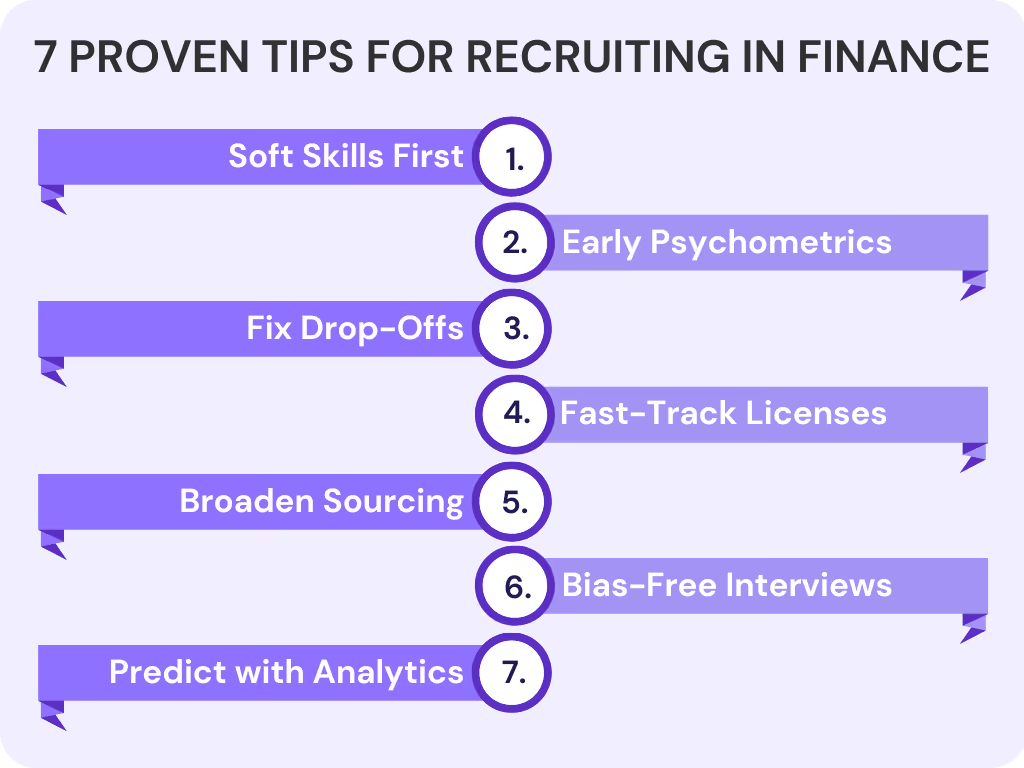
1. Pre-Define Role-Specific Soft Skills
Before posting a job, identify non-negotiable traits such as resilience, ethics, and communication. For client-facing roles, emotional intelligence is as vital as domain knowledge. Incorporate behavioral assessments early to align with modern financial recruiting tactics.
2. Use Psychometric Testing Early in the Funnel
Do not wait until the interview stage to evaluate candidate fit. Implement brief digital assessments that measure traits such as risk tolerance, compliance orientation, and integrity. This enhances your financial services recruitment process and enables more effective early-stage filtering.
3. Audit Your Candidate Drop-Off Points
Identify where strong applicants disengage—whether due to lengthy application forms, slow response times, or overly complex interviews. Use analytics to diagnose and address these issues. This critical step is absent in outdated financial services recruiting strategies.
4. Fast-Track Licensing for Entry-Level Roles
Support new hires in obtaining essential licenses like Series 7, CFA Level 1, or AMFI certifications by funding exam preparation or related training. This investment enhances goodwill, accelerates time-to-productivity, and represents one of the most effective tips for recruitment in financial services.
5. Diversify Your Sourcing Channels
Relying exclusively on job boards limits access to qualified talent. Expand your sourcing efforts through alumni networks, professional associations, industry-focused hackathons, and content-driven LinkedIn campaigns. Ensure that underrepresented groups are intentionally included to broaden and strengthen the overall talent pool.
6. Structure Your Interviews Around Bias-Free Frameworks
Unstructured interviews often lead to inconsistent, subjective decisions. Using the BEI (Behavioral Event Interview) method with competency-based scoring rubrics ensures objectivity and defensibility—an essential approach when recruiting in the financial services industry.
7. Leverage Assessment Analytics to Predict Long-Term Fit
Modern assessment tools extend beyond basic evaluation by offering predictive insights. Utilize analytics dashboards to correlate assessment scores with long-term employee performance. This data-driven approach is fundamental to advanced financial services recruiting strategies.
By applying these tips consistently, you create a recruitment process that reflects both operational precision and ethical strength—two qualities that define successful hiring in today’s financial services industry. This brings us to a focused conclusion.
Conclusion
Recruiting in the financial services industry is a high-stakes process—shaped by regulation, reputation, and the realities of risk. It requires more than filling vacancies. It demands a thoughtful, structured approach that safeguards your business while attracting high-integrity talent.
From employer branding to structured assessments, each step must reflect the rigor and transparency expected in finance. Tools like Finance Assessments for hiring can support this process—helping you evaluate not just skill, but judgment, compliance orientation, and cultural fit.
A strong recruitment system isn’t just about better hires. It’s about fewer dropouts, faster timelines, and teams built to last under pressure. To discuss how PMaps assessments can improve your financial services hiring process, connect with us at 8591320212 or email assessment@pmaps.in.