.webp)
.webp)



Accounts payable skills matter more than most teams realize—one small mistake in AP can delay payments, strain vendor relationships, or skew financial reports. In this guide, we break down the essential competencies every AP professional should bring to the table, from accuracy and organization to judgment and process awareness. You’ll also find a clear, practical accounts payable skills list to help you hire and structure your team with confidence, while understanding the accounts payable competencies and accounts payable key skills needed for efficiency.
Accounts Payable Skills List (Overview)
Building a strong accounts payable team starts with clarity on the essential skills needed for accuracy, compliance, and efficiency. Below is an accounts payable skills list grouped into key skill categories—technical, behavioral, digital, and compliance-focused to help you identify and assess the most relevant accounts payable competencies for your finance department and understand the skills required for accounts payable roles.

Technical / Hard Skills for Accounts Payable
Technical or hard skills form the backbone of accurate invoice processing and vendor management. These capabilities ensure precise data handling, accurate financial processing, and quick problem-solving in high-volume, deadline-driven finance environments. These are also among the most critical accounts payable key skills needed in day-to-day operations.
- Attention to Detail: Ability to spot discrepancies in invoice data, such as incorrect tax amounts or missing line items.
Example: Identifying a duplicated payment entry before processing. - Analytical Thinking: Using logic to assess invoice exceptions, vendor statements, or unusual spending patterns.
Example: Flagging a supplier overcharge by analyzing monthly variance reports. - Problem-Solving: Resolving payment delays, mismatches in purchase orders, or account coding issues quickly.
Example: Coordinating with procurement to fix a pricing mismatch on a PO.
While technical accuracy drives transactional success, soft skills are equally vital. They shape how AP professionals communicate, resolve conflicts, and collaborate especially when working across departments or managing vendor expectations. These soft skills strengthen overall accounts payable competencies and accounts payable required skills necessary in finance environments.
Soft Skills & Behavioral Competencies
Beyond technical skills, accounts payable professionals need strong interpersonal abilities. Clear communication enables seamless collaboration with vendors, procurement teams, and colleagues, ensuring every transaction flows smoothly and relationships remain positive.
- Communication: Clear internal communication and professional vendor correspondence across phone, email, or ERP platforms.
Example: Explaining delayed payments to vendors without escalating tension. - Customer Orientation: Understanding internal stakeholders’ urgency for accurate billing and payment resolution.
Example: Prioritizing critical payments requested by the procurement team. - Conflict Management: Handling disagreements with vendors or cross-functional teams tactfully.
Example: Mediating disputes over late payment penalties due to invoicing errors.
Strong interpersonal skills set the foundation, but today’s accounts payable roles demand digital fluency. From invoice automation to ERP navigation, tech proficiency is now essential for daily AP efficiency and is one of the top accounts payable key skills across industries.
Digital & Automation Skills
As accounts payable becomes increasingly digital, technology skills are now essential. It starts with accurate data entry ensuring clean, reliable information that supports seamless payment workflows and enables effective automation across finance operations.
- Data Entry & Numeric Accuracy: Entering invoice amounts, dates, and codes precisely into ERP or AP software.
Example: Recording 200+ line items daily with zero errors in SAP. - Invoice Processing & Three-Way Matching: Matching purchase orders, invoices, and delivery receipts to validate transactions.
Example: Identifying a missing GRN (Goods Receipt Note) during approval. - Excel & Spreadsheet Skills: Using formulas, pivot tables, and VLOOKUP for reconciliations and tracking.
Example: Creating a monthly payment tracker using pivot tables. - ERP/AP Software Proficiency: Navigating systems like SAP, Oracle, or QuickBooks for workflow management.
Example: Using Oracle Fusion to batch-approve vendor invoices.
Digital proficiency ensures speed, but without control, it risks compliance failures. That’s where regulatory knowledge and process discipline comes in ensuring every transaction meets audit, tax, and policy standards seamlessly and aligns with the skills required for accounts payable excellence.
Compliance & Control Skills
Compliance and control skills protect the integrity of your AP operations. It starts with month-end closing ensuring all transactions are accurately recorded and aligned with financial reporting standards and deadlines.
- Month-End Closing: Finalizing AP ledgers, ensuring all invoices are posted in the correct period.
Example: Processing last-minute utility bills before closing books. - Vendor Management: Building vendor trust through timely payments, documentation, and follow-up.
Example: Onboarding a new supplier and resolving KYC issues quickly. - Time Management & Organization: Prioritizing urgent approvals without missing scheduled pay runs.
Example: Processing 50+ invoices by EOD to meet weekly deadlines. - Basic Tax and Compliance Knowledge: Understanding GST, TDS, or regional tax compliance applicable to AP operations.
Example: Deducting correct TDS for professional service vendors.
Mastering compliance and control completes the skill spectrum for AP professionals. But not every role demands the same depth. Let’s explore how these skills vary by title, responsibility, and seniority level, especially the differences in accounts payable key skills as responsibilities grow.
Accounts Payable Skills by Role & Seniority
Defining these skills clearly inside an Accounts Payable job description helps set expectations by role level and ensures candidates understand responsibility scope from day one
Skills for Entry-Level Accounts Payable Clerks
Entry-level accounts payable professionals are responsible for maintaining accuracy in routine tasks, organizing documentation, and using basic systems. Their role begins with mastering data entry accuracy to prevent costly downstream errors.
- Data Entry Accuracy: Quickly enters high volumes of invoice data into ERP systems with zero input errors.
Example: Entering 150+ vendor invoices daily into Tally with full GL code accuracy. - Invoice Coding and Sorting: Applies the correct general ledger (GL) codes based on expense categories and vendor types.
Example: Assigning travel expense codes to hotel invoices based on company policy. - Excel Basics: Uses Excel for simple tasks like sorting, filtering, and formula-based totals.
Example: Filtering pending invoices by due date for weekly reporting. - Document Organization and Tracking: Maintains digital and paper records systematically for audits and approvals.
Example: Indexing scanned invoices with invoice number, date, and department tags.
As clerks gain experience and confidence, they progress into specialist roles where independent judgment, exception handling, and deeper system knowledge become essential for managing more complex accounts payable competencies.
Skills for Accounts Payable Specialists
Accounts payable specialists handle exceptions, vendor queries, and reconciliations with minimal supervision. Their responsibilities expand with vendor statement reconciliation, ensuring records match and discrepancies are resolved quickly and accurately.
- Vendor Statement Reconciliation: Compares vendor statements with internal ledgers to spot missing or duplicate entries.
Example: Identifying unpaid invoices by cross-referencing monthly vendor statements in SAP. - Exception Handling: Resolves billing disputes, pricing mismatches, and approvals independently.
Example: Clarifying duplicate freight charges with logistics vendors and amending entries. - Basic Analytics: Identifies trends or bottlenecks in invoice processing using spreadsheets or dashboards.
Example: Reporting a spike in payment delays caused by missing GRNs. - ERP Workflow Handling: Navigates approval paths, vendor creation, and hold-release processes in ERP platforms.
Example: Releasing payment holds in Oracle after pending PO approvals are secured.
With refined skills and process ownership, specialists often move into managerial roles. At this level, the focus shifts from execution to oversight—driving team performance, improving workflows, and aligning AP goals with broader accounts payable competencies.
Skills for Accounts Payable Managers / Team Leads
AP managers guide teams, streamline processes, and align operations with organizational objectives. They monitor key performance indicators such as tracking accuracy rates, processing times, and payment schedules to ensure efficiency and continuous improvement across operations—some of the strongest accounts payable key skills at leadership levels.
- KPI Tracking and Reporting: Monitors key metrics like invoice cycle time, late payments, and error rates.
Example: Reporting 98% on-time payments in monthly finance review meetings. - Process Improvement Projects: Identifies inefficiencies and leads initiatives to reduce manual work or errors.
Example: Implementing OCR tools to automate invoice data extraction. - Team Leadership: Coaches team members, resolves escalations, and ensures even task allocation.
Example: Mentoring new hires on AP process flows and ERP navigation. - Cross-Functional Collaboration: Works with procurement, tax, and compliance teams to meet internal service levels.
Example: Coordinating with legal for vendor onboarding compliance before invoice processing.
Identifying the right skills for each AP role requires more than reviewing resumes. Employers need structured assessment methods to evaluate technical proficiency, interpersonal strengths, and job readiness, ensuring candidates truly fit before making critical hiring decisions.
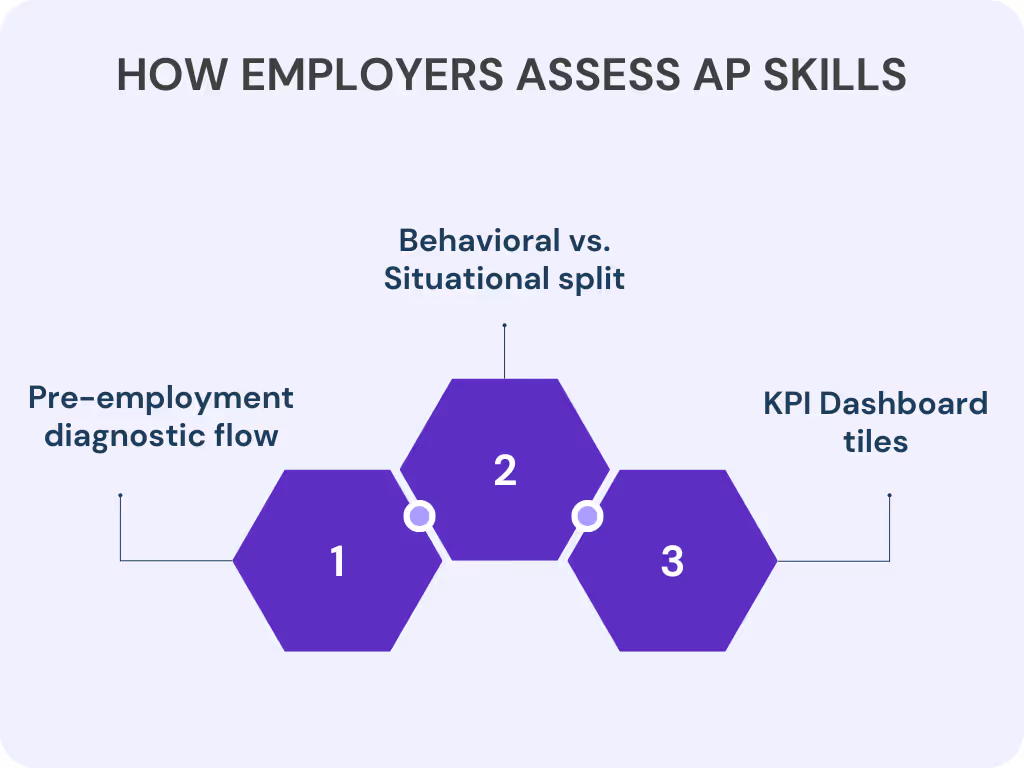
How Employers Can Assess Accounts Payable Skills
Hiring the right accounts payable talent requires more than scanning work history. Effective evaluation means assessing real capabilities such as processing accuracy, analytical thinking, and compliance knowledge through practical tests, scenario-based questions, and relevant performance measures. This approach ensures candidates possess the skills needed to excel in today's dynamic AP environment.
Pre-Employment Tests & Practical Tasks
A structured pre-hiring assessment is the fastest way to verify both hard and soft accounts payable skills. A role-specific accounts payable skills test simulates real-world tasks such as invoice validation, three-way matching, and error detection
- Skills Typically Measured: These tests assess accuracy in invoice processing, transaction recording, data validation, and error detection.
Example: Spotting mismatches in a 3-way match scenario (PO-Invoice-GRN). - Realistic Case Exercises: Offer candidates a simulated environment with authentic challenges.
Examples:
– Resolving a disputed invoice with missing delivery confirmation
– Matching supplier statements to ledger entries with one incorrect value
– Flagging duplicate vendor creation in ERP
While practical tests confirm technical capability, behavioral and situational questions uncover how candidates think, respond to pressure, and communicate—crucial traits that impact team dynamics and vendor relationships in AP roles.
Behavioral & Situational Interview Questions
To evaluate mindset, communication, and problem-solving skills, structured accounts payable interview questions are essential. They help uncover how candidates respond to real-time finance challenges. Pairing these questions with video-based assessments offered by PMaps helps you assess attentiveness, tone, and clarity objectively. This supports faster, unbiased shortlisting across locations and teams.
Sample Behavioral Questions:
- Tell me about a time you caught an invoice error others missed.
- How have you handled late payment escalations from a critical vendor?
Sample Situational Questions:
- A supplier is threatening to stop services over delayed payments. What steps would you take?
- Your team is behind on month-end closing. How do you prioritize and delegate?
Interview insights offer a glimpse into potential, but true capability emerges on the job. Monitoring probation KPIs helps validate hiring decisions and ensures new AP hires meet performance expectations early.
On-the-Job Probation & KPI Monitoring
Tracking the right KPIs ensures accountability and supports ongoing performance improvement in AP roles. Here are the key metrics with context and role-relevant examples:
- Invoice Throughput Rate: Measures how many invoices a team member processes within a given time frame—typically weekly or monthly.
Example: An executive processes 400 invoices per week, consistently meeting the 24-hour TAT for approvals. - Payment Accuracy Percentage: Reflects the rate of error-free payments made to vendors, avoiding rework or reversals.
Example: Achieving 99% accuracy by validating account details before processing bulk payments. - Percentage of Invoices Paid Within Due Dates: Indicates how efficiently payments are scheduled and executed before deadlines to maintain vendor relationships.
Example: 96% of invoices cleared before the due date, avoiding late fees and escalation. - Rate of Early Payment Discounts Captured: Tracks how often finance teams take advantage of early payment terms to save costs.
Example: Capturing 85% of available early payment discounts in a quarter through proactive scheduling.
KPI tracking during probation highlights individual strengths and gaps. These insights allow L&D teams to tailor training programs that enhance technical precision, system fluency, and behavioral skills across AP roles.
How L&D Specialists Can Develop and Improve AP Skills
Training and development in accounts payable isn’t just about finance—it’s about building accuracy, speed, and adaptability into your team. Here’s how L&D teams can bridge skill gaps effectively.

Designing Learning Foundations for AP Teams
Designing learning foundations for AP teams ensures consistency, clarity, and long-term performance. Structured programs equip new hires with the technical, system, and compliance knowledge needed for accurate financial operations.
- Introduce Finance Fundamentals: Begin with structured sessions covering core finance operations like cost coding, invoice lifecycle, and basic ledger principles.
Example: A new hire learns to differentiate between CAPEX and OPEX while coding vendor invoices.
- Hands-On Invoice Handling Training: Provide practical tasks for sorting, verifying, and coding invoices to teach approval flows and detect common errors.
Example: Trainees practice flagging duplicate invoice numbers in a simulated batch entry exercise.
- ERP Navigation Skills: Train AP staff in using ERP platforms for entering invoices, tracking approvals, and accessing vendor data.
Example: A new employee learns to locate pending POs and initiate a 3-way match in Oracle.
- Compliance & Tax Knowledge: Teach basics of TDS, GST, and vendor documentation requirements to support error-free processing and audit readiness.
Example: The team runs a case exercise on calculating and deducting TDS for a consulting invoice.
- Policy and Process Familiarization: Walk through internal AP workflows, SLAs, escalation paths, and payment cycles to build role clarity.
Example: A trainee maps out the full invoice process—from receipt to payment—based on company-specific timelines.
While foundational training builds core knowledge, real confidence comes from practical exposure. Hands-on learning opportunities allow AP professionals to apply concepts in live scenarios, bridging the gap between theory and execution.
Creating Hands-On AP Learning Opportunities
Creating hands-on learning opportunities helps accounts payable teams apply theoretical knowledge in real scenarios. These experiences build decision-making, system confidence, and cross-functional understanding critical to AP success.
- Interactive Simulations: Use case-based simulations to replicate AP scenarios like invoice discrepancies or 3-way matching.
Example: Trainees resolve a simulated mismatch between invoice, PO, and GRN in a sandbox ERP system.
- Job Shadowing: Pair new team members with experienced staff to observe real-time processes like reconciliations and vendor follow-ups.
Example: A trainee shadows the reconciliations team to learn vendor ledger balancing firsthand.
- Role Rotations Across Finance Functions: Rotate AP staff through related areas like procurement or GL to expand their understanding of upstream and downstream dependencies.
Example: An AP associate joins procurement for a week to learn how PO errors impact invoice processing.
While real-world exposure sharpens operational judgment, modern AP teams also need digital fluency. Training in automation and analytics equips them to handle high-volume tasks and contribute to data-driven decision-making.
Training AP Teams in Automation & Analytics
Training AP teams in automation and analytics is essential for modern finance operations. It enhances efficiency, reduces manual errors, and empowers staff to make informed, data-driven process improvements.
- Excel Dashboard Training: Teach AP staff to use pivot tables, formulas, and visual dashboards for invoice tracking and error analysis.
Example: An AP executive builds a dashboard to monitor overdue payments by vendor category.
- ERP Workflow Automation: Train teams to automate repetitive tasks like invoice approvals and 3-way matching within ERP systems.
Example: Hosting a monthly ERP workshop on automating 3-way match validations in SAP.
- Introductory Data Analysis: Equip staff with basic analytical skills to interpret trends in payment delays or exception rates.
Example: A team member creates a weekly report highlighting vendors with the most invoice discrepancies.
While automation and analytics sharpen technical efficiency, soft skills remain crucial for effective communication, vendor management, and teamwork. Balancing digital capabilities with interpersonal strengths creates a well-rounded and dependable AP function.
Soft Skills Development for AP Professionals
Soft skills are essential in accounts payable roles, influencing how professionals communicate, prioritize tasks, and handle vendor interactions. Developing these traits ensures smoother operations and stronger cross-functional relationships.
- Communication Skills Training: Conduct workshops to improve clarity in email, phone, and cross-team communication for smoother AP coordination.
Example: Practicing how to professionally communicate payment status updates to external vendors.
- Prioritization Under Pressure: Teach AP teams how to manage workload spikes by identifying urgent vs. non-urgent tasks.
Example: Simulating a month-end rush where team members must prioritize payments based on due dates and penalties.
- Vendor Management Scenarios: Use real-world case studies to build confidence in handling vendor concerns and disputes.
Example: Running role-play sessions on how to handle vendor escalations calmly and professionally.
With the right training and support, AP teams can evolve from task-driven roles to strategic finance contributors. But skill development must be paired with smart hiring practices to build lasting, high-performing accounts payable functions.
Conclusion
Hiring and developing talent in accounts payable is no longer just about experience. It’s about verified competencies across accuracy, compliance, automation, and communication. Whether you're evaluating entry-level clerks or leading AP managers, structured assessments, practical tasks, and focused training are your most reliable tools.
With the right skills in place, your finance operations become faster, cleaner, and more vendor-friendly—freeing your team to focus on what matters most. Connect with our team at assessment@pmaps.in or call 8591320212 to explore tailored assessments and training support for your finance roles.