.webp)
.webp)


Planning the process of hiring Project Manager talent begins with defining what success looks like at 30, 60, and 90 days. The right hire aligns stakeholders, protects timelines, and keeps delivery predictable when priorities shift. A structured process improves Hiring a Project Manager by testing planning discipline, risk judgment, and communication under real constraints.
What is a Project Manager?
A Project Manager plans, coordinates, and delivers work across timelines, budgets, and stakeholder expectations. In smaller teams, they run day-to-day execution. In larger organisations, they manage multiple workstreams, dependencies, and governance routines across functions.
Quick tip: Ensure a fit candidate pool with a clear Project Manager job description aligned to outcomes.
Where to Find the Best Project Manager Candidates?
If you want to hire a project manager who can stabilise delivery, source from environments where dependency management and stakeholder alignment are everyday work. Strong PMs leave evidence in how they run cadence, manage risk, and communicate trade-offs. Hiring a Project Manager becomes easier when you look for repeatable delivery habits, not just certifications.
- PMO and delivery guilds where members share RAID logs, cadence templates, and governance practices across programs.
- Product-led companies where PMs partner with engineering and manage release risk, scope control, and stakeholder pressure.
- Implementation and onboarding teams in SaaS where PMs run multi-client rollouts with strict timelines and SLAs.
- Consulting and systems integration networks where PMs coordinate cross-functional workstreams and client expectations at scale.
- Agile communities and Scrum circles where facilitators demonstrate sprint hygiene, retrospectives, and dependency resolution discipline.
How to Screen for Good Project Managers?
Screening a Project Manager works best when it mirrors delivery reality: unclear requirements, competing stakeholders, and one timeline that refuses to move. A strong candidate brings structure fast—turning chaos into a plan, calling risks early, and documenting decisions so the team can execute without rework. This is the point in How to Hire Project Manager talent where you separate “meeting managers” from delivery owners.
- Use AI Recruit to shortlist profiles showing ownership of scope, dependencies, and measurable delivery outcomes across similar complexity.
- Run a short work-sample or employ talent assessment: build a mini plan with milestones, RAID log, and stakeholder updates from a messy brief.
- Use AI video interviewing for a change-request scenario that tests negotiation, escalation judgment, and clarity under pressure.
- Close with an HR round to confirm cadence discipline, collaboration style, and comfort enforcing governance without friction.
How to Assess Skills of Project Managers?
To hire a project manager who keeps delivery predictable, you need more than “managed timelines” on a resume. Assess whether the candidate can take a messy brief and turn it into a workable plan with clear milestones, owners, and dependencies. Hiring a Project Manager becomes safer when assessments mirror real constraints: incomplete information, competing deadlines, and cross-team handoffs.
Pro Tip: Use a role-based Project Manager test that combines planning, risk judgment, and stakeholder communication scenarios.
What Soft Skills are Important for Project Managers?
Project managers need strong soft skills like communication, leadership, and problem-solving to align teams, manage conflicts, and ensure successful project delivery.
- Stakeholder management that balances firm boundaries with trust, especially when timelines and scope collide.
- Communication clarity that turns ambiguity into decisions, and decisions into documented next steps.
- Conflict handling that resolves priority clashes without escalating tension across teams.
- Ownership that drives follow-through, not just meetings and status updates.
Hard Skills of Project Managers that You Must Test
Assessing project managers requires testing hard skills such as scheduling, budgeting, risk management, resource allocation, and proficiency with project management tools.
- Dependency mapping and critical-path thinking that prevents hidden blockers from derailing delivery.
- Change control discipline that records impact, approvals, and revised plans before execution shifts.
- Risk management using RAID logs with mitigation actions, owners, and review cadence.
- Governance routines: stand-ups, reviews, stakeholder updates, and clean documentation hygiene.
How to Interview a Project Manager?
Interviewing a Project Manager should resemble a real delivery checkpoint, not a self-intro round. Give one scenario: a deadline is fixed, scope keeps expanding, and two stakeholders disagree on priority. Ask the candidate to outline the plan, critical risks, and the exact update they’d send to stakeholders.
Then introduce a late change request and see how they negotiate trade-offs, reset expectations, and protect governance. This reveals whether they drive clarity or simply track tasks.
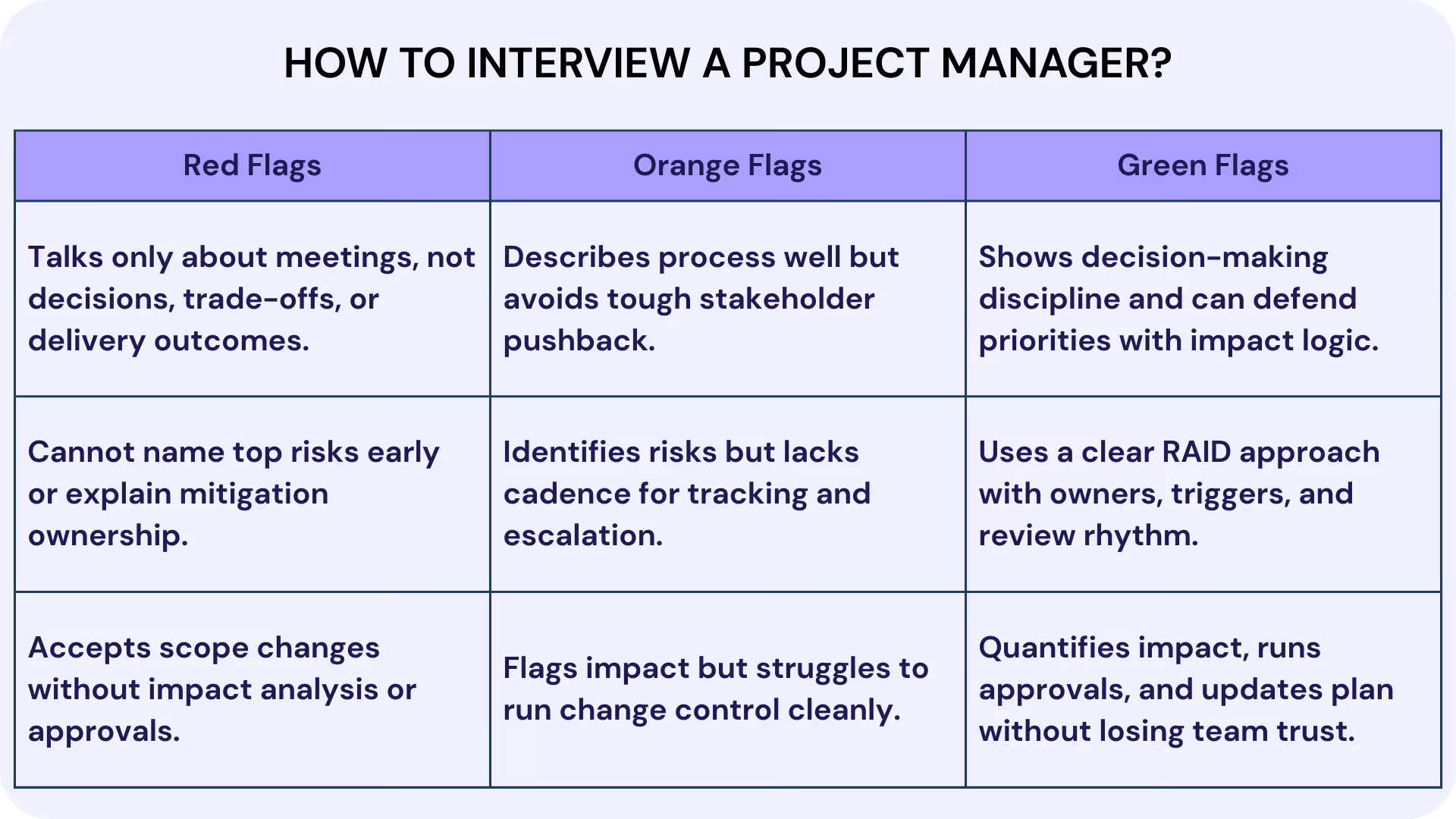
Bonus Resource: Standardize Project Manager interview questions with pmaps tied to change control, critical path management, and effective stakeholder alignment.
How Much Does a Project Manager Cost?
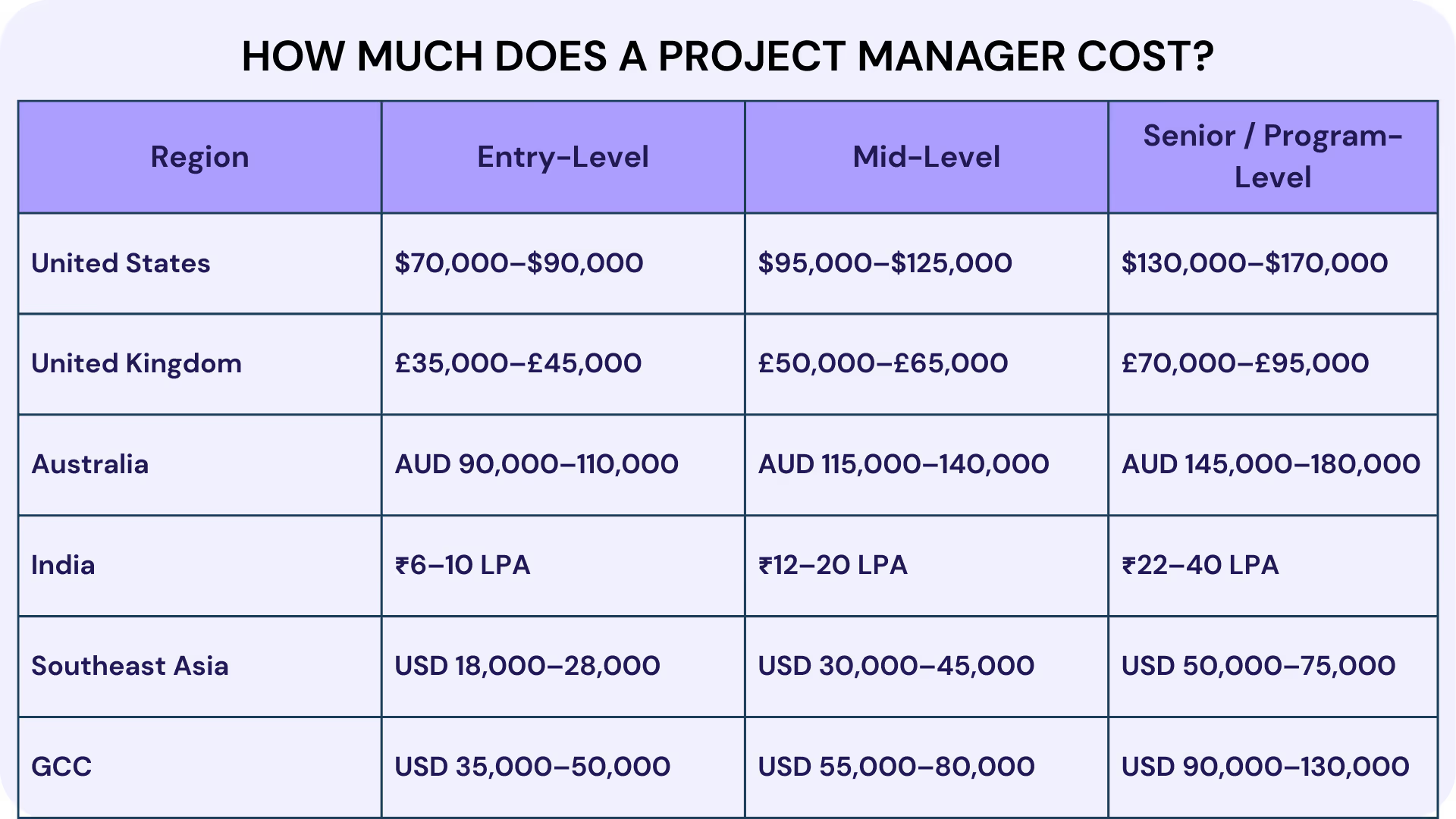
Cost varies by project complexity, stakeholder load, and delivery risk ownership. Entry roles manage smaller workstreams with limited governance. Mid-level PMs run multi-team dependencies and reporting cadence. Senior PMs handle complex programs, change control, and high-stakes stakeholder alignment. When you hire a Project Manager, budget for governance discipline—not just task tracking.
Conclusion
The most effective way to hire Project Manager talent is to focus on clear delivery expectations, disciplined planning, and strong risk awareness. Using structured, role-based evaluations helps assess critical-path thinking, change management, and stakeholder communication under real-world pressure. Carefully hiring a project manager reduces delivery surprises and supports predictable project outcomes. For customised assessments and screening support, contact PMaps at 8591320212 or assessment@pmaps.in.