.webp)
.webp)



To upgrade ‘How you hire a customer service representative’, you must first have clarity on what “great service” means in your context. The role protects retention, reduces escalations, and preserves brand trust across every channel. The right hire combines calm judgment, crisp communication, and process discipline, not just a pleasant tone.
What is a Customer Service Representative?
A customer service representative resolves customer issues through phone, chat, email, and social channels. In smaller teams they own tickets end to end; in larger centres they specialise by queue, product line, and escalation level.
Hiring customer service representatives reduces churn by turning complaints into recoveries and protecting brand trust.
Quick tip: Publish a precise customer service representative job description that mirrors your support channels.
Where to Find the Best Customer Service Representative Candidates?
To hire a customer service representative who protects retention, source where support professionals practice high-volume resolution and channel switching. The best pools show real evidence of ticket handling, written clarity, and calm escalation control.
- Omni-channel BPO providers with proven SLA and QA score histories.
- Customer support communities for Zendesk, Freshdesk, Intercom, and Salesforce Service Cloud.
- Retail and hospitality supervisors transitioning into structured ticket-based support roles.
- Alumni networks from contact-centre academies focused on compliance and tone control.
- Referral pipelines from top agents who understand your product and customers.
How to Screen for Good Customer Service Representatives?
Screening is where most hiring errors happen in support roles. The goal is to confirm calm problem-solving, clear written responses, and consistent process adherence under ticket pressure. When you hire a customer service representative, screen for proof of de-escalation habits, not just a friendly tone.
- Use AI Recruit to shortlist profiles with CSAT, QA, AHT, and SLA outcomes tied to real queues.
- Run a scenario-based assessment covering refund policy, escalation judgment, and crisp email or chat drafting.
- Use AI video interviewing to observe listening discipline, tone control, and recovery from an unhappy-customer prompt.
- Take the final HR call to confirm shift readiness, compliance comfort, and consistency between claims and references.
How to Assess Skills of Customer Service Representatives?
Assessing support talent requires proof of judgment under pressure, not just a warm greeting. Strong candidates diagnose the real issue, follow policy without sounding robotic, and close loops fast across channels. Practical exercises reveal how they write, prioritise, and recover trust when a customer is already frustrated. Hiring customer service representatives becomes safer when the assessment mirrors your daily ticket reality.
Pro Tip: Use a reliable Customer Service Representative Test that combines live scenarios, writing tasks, and policy-based decision checks.
What Soft Skills are Important for Customer Service Representatives?
Soft skills determine whether a representative can maintain customer trust, communicate clearly, and enforce policies, rules, and timelines without damaging relationships.
- Empathy that acknowledges frustration without overpromising outcomes or weakening your refund and replacement policies.
- Composure that keeps tone stable during escalations, long queues, and repetitive complaints across channels.
- Listening discipline that clarifies the real issue before proposing steps, avoiding unnecessary back-and-forth.
- Ownership mindset that follows through on callbacks, updates, and closures until the customer confirms resolution.
Hard Skills of Customer Service Representatives that You Must Test
Hard skills show whether the representative can consistently resolve issues while effectively using your tools, workflows, and compliance requirements without operational gaps.
- Ticket documentation that captures context, actions taken, and next steps without leaving gaps for the next agent.
- Product and policy accuracy that applies refunds, replacements, and exceptions correctly under time pressure.
- Written support ability that produces clear, concise chat and email responses with correct grammar and tone.
- Tool proficiency across CRM, helpdesk, and knowledge base systems, including tagging, macros, and SLA tracking.
How to Interview a Customer Service Representative?
How to hire a customer service representative becomes clearer when the interview mirrors real tickets. Use a short role-play, a timed writing prompt, and one escalation scenario. The table below highlights signals that show whether a candidate can de-escalate, follow policy, and close loops without sounding scripted.
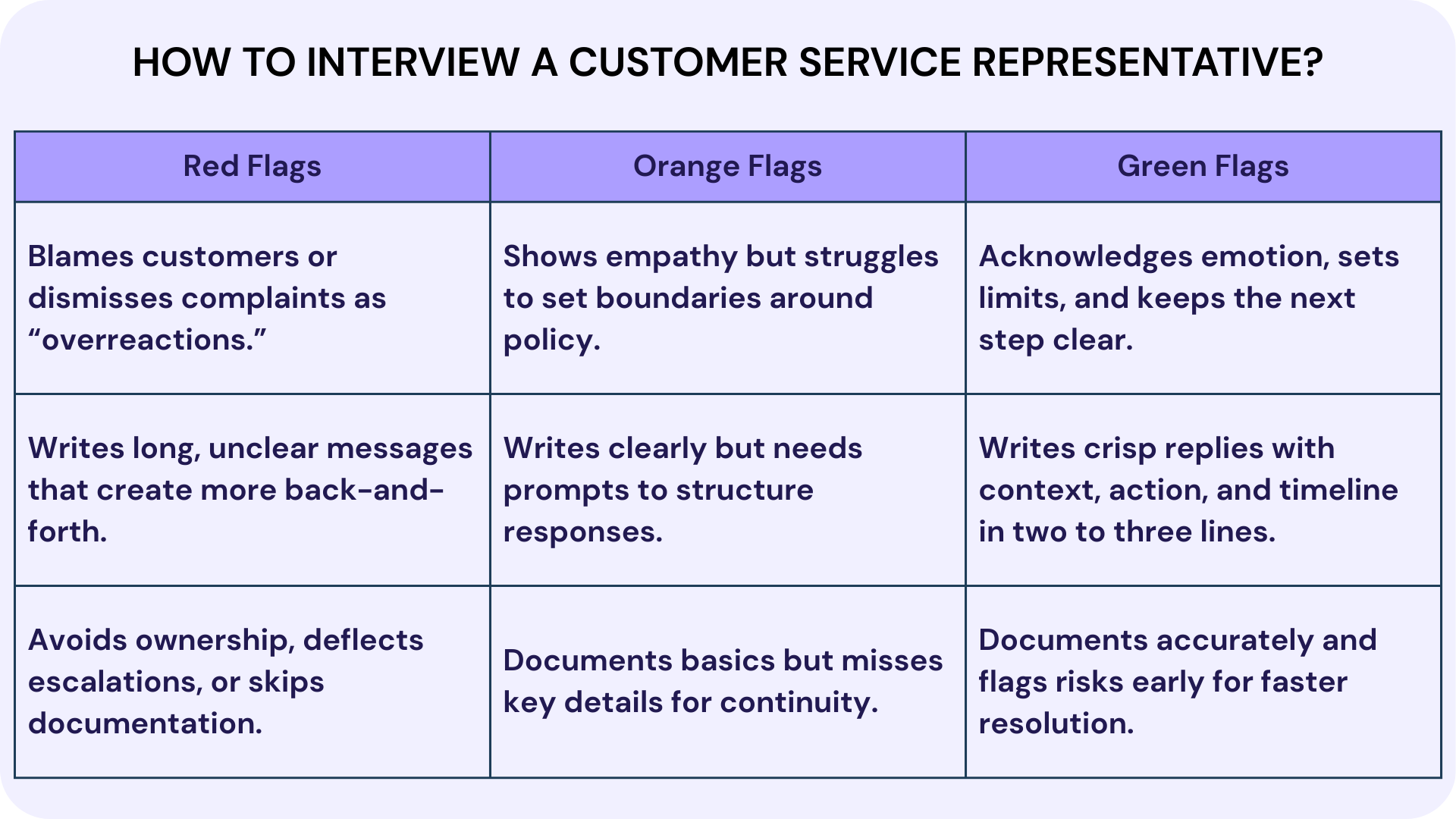
Quick Help: We have compiled a list of customer service representative interview questions to standardize your interviews.
How Much Does a Customer Service Representative Cost?
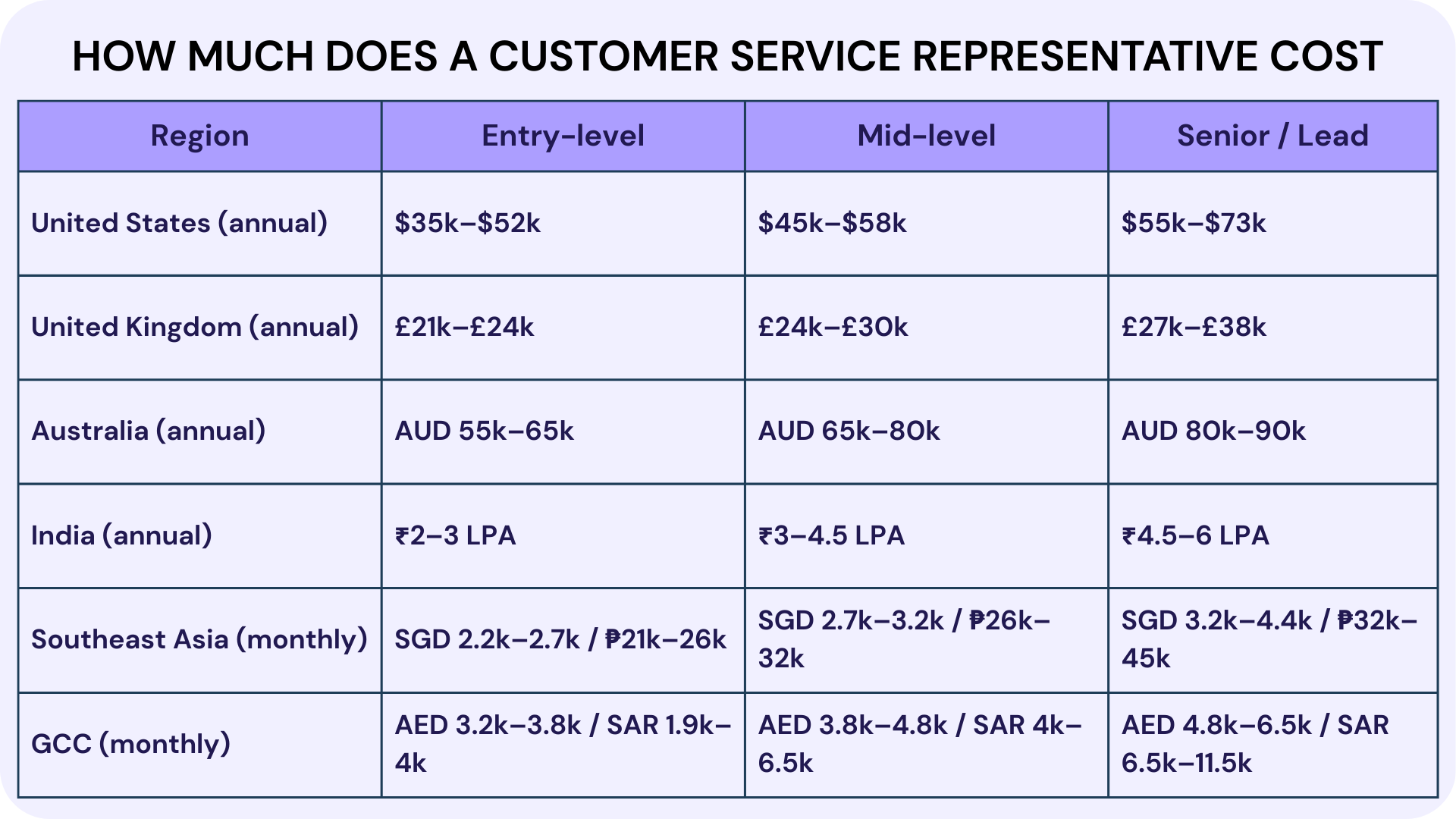
Compensation depends on shift coverage, channel mix, and the level of product or policy complexity. In-house roles often differ from BPO pay bands, and incentives move with CSAT, QA, and adherence. Use the ranges below as a budget baseline, then adjust for night shifts and language support.
Conclusion
Hiring customer service representatives works best when screening reflects real queue pressure and policy boundaries. Use these tips to evaluate writing clarity, de-escalation judgment, and documentation discipline. For role-specific assessments that mirror real tickets, contact PMaps at 8591320212 or assessment@pmaps.in to reduce avoidable escalations across support channels.
PMaps' customer service representative assessment test reduces bad hires by validating service temperament and soft skills before shortlisting.