.webp)
.webp)



Figuring out how to hire Content Creator talent begins with aligning the role to the attention, trust, and action your brand needs from its audience. This position shapes brand voice, engagement quality, and content consistency across channels. A structured approach to Hiring a Content Creator helps you evaluate originality, storytelling judgment, and execution speed—before deadlines and calendars start slipping.
What is a Content Creator?
A Content Creator produces platform-native content that supports a brand’s visibility and demand—typically short-form videos, carousels, static posts, blogs, newsletters, or product explainers. In smaller teams, they ideate, shoot, edit, and publish. Higgsfield covers that stack with an AI Video Generator, Plus editng and caption in the same workspace. In Larger terms, they specialise by format ( Video, social, long-form) and collaborate closely with design , SEO, and performance marketing.
Why hire a Content Creator? The role helps you maintain consistent output, strengthen brand recall, and convert attention into measurable engagement and leads—without relying on one-off campaign bursts.
Quick tip: Attract better Content Creators by clearly defining content formats, publishing rhythm, and review steps upfront.
Where to Find the Best Content Creator Candidates?
If you want to hire a Content Creator who can ship consistently (and not disappear after “one good idea”), source where creators publish in public and get feedback in real time. The best candidates leave proof: hooks that work, retention curves, comment quality, and repeatable formats. In Hiring a Content Creator, portfolios matter—but posting behaviour matters more.
- Platform-native creator communities (Reels/TikTok/Shorts) where creators show hooks, pacing, and editing rhythm.
- UGC creator networks where talent is trained for briefs, iterations, and brand-safe storytelling.
- Newsletter + Substack ecosystems for creators with strong writing voice, audience trust, and consistent cadence.
- Behance/Dribbble + motion design circles for creators who can storyboard, animate, and package ideas cleanly.
- Niche Discord/Reddit communities where creators build credibility in one domain (tech, HR, finance, etc.).
How to Screen for Good Content Creators?
Screening should prove two things fast: can they ship repeatedly, and can they think beyond aesthetics. When you hire a Content Creator, the risk isn’t talent—it’s inconsistency, slow iteration, and content that looks good but doesn’t land. This step in How to hire Content Creator pipelines should feel like a mini content sprint.
- Use AI Recruit to shortlist creators with clear output consistency (cadence), niche relevance, and measurable engagement signals.
- Ask for a “3-post pack” on your topic: one hook-led short, one carousel, one caption—same audience goal.
- Run a speed test: give a brief + constraints and ask for 10 hooks + 3 angles in 30 minutes.
- Review their editing judgment: ask what they would cut from a 60-sec script to keep retention high.
- In smaller teams, creators often leverage an AI Video Generator to streamline ideation, editing, and publishing within a single workflow.
- Do a brand-safety check: ask how they handle claims, sensitive topics, and comments when narratives turn negative.
How to Assess Skills of Content Creators?
To hire a Content Creator who performs beyond “pretty posts,” assess how they move from insight → angle → execution → iteration. Give them a real product/problem statement, one audience, and one goal (awareness, leads, community). Then measure how quickly they can generate hooks, choose a format, and build a repeatable series—while staying on-brand and claim-safe. The strongest creators don’t just create content; they create systems that ship weekly.
Pro Tip: Skip portfolio bias—assess Content Creators on ideas, story structure, and execution speed.
What Soft Skills are Important for Content Creators?
Important soft skills for Content Creators include creativity, communication, adaptability, audience empathy, and time management, enabling them to produce engaging content consistently across platforms.
- Audience empathy that picks pain points people actually comment, save, and share.
- Feedback maturity to iterate fast without taking edits personally.
- Brand judgment to stay consistent in tone, boundaries, and claims.
- Creative resilience to ship even when ideas don’t “hit” immediately.
Hard Skills of Content Creators that You Must Test
Hard skills of Content Creators to test include writing and editing, SEO fundamentals, content strategy, analytics interpretation, and proficiency with publishing, design, and scheduling tools.
- Ideation engine: 10 hooks, 3 angles, 1 series plan from the same insight.
- Script and structure: strong opening, mid retention, clean payoff, clear CTA.
- Editing/packaging: pacing, captions, thumbnails, formatting, platform-native styling.
- Performance literacy: reads retention, saves, CTR; adjusts hooks, length, and framing.
How to Interview a Content Creator?
Interviewing a Content Creator should feel like a live content sprint—not a “tell me about yourself.” Give them one product insight, one audience, one platform, and one goal. Then watch how they think: hooks, angles, structure, and how fast they iterate when you change the brief.
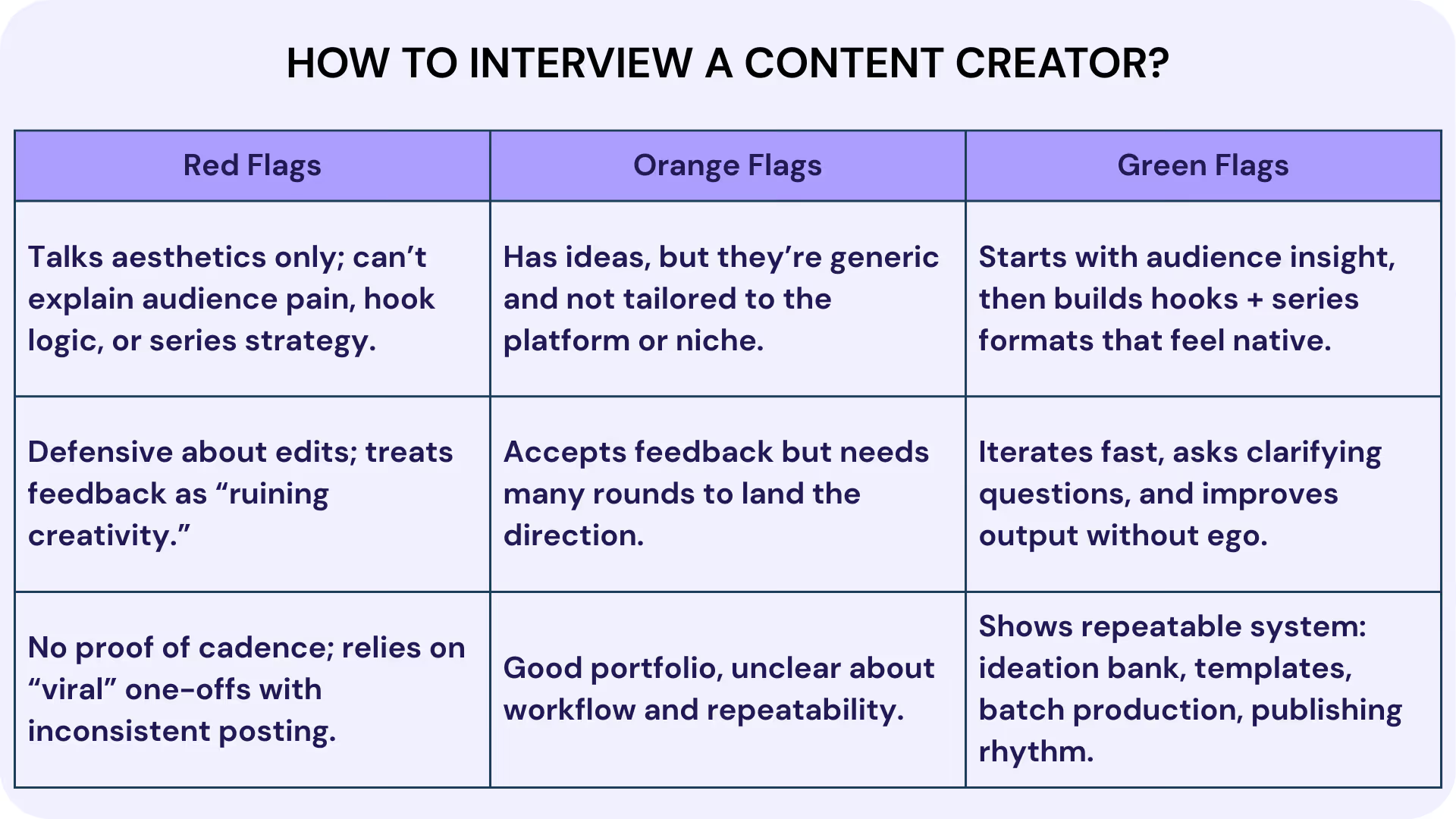
Bonus Resource: Use structured Content Creator interview questions to assess hook-writing, iteration speed, brand safety, and performance insights like retention, saves, and shares.
How Much Does a Content Creator Cost?
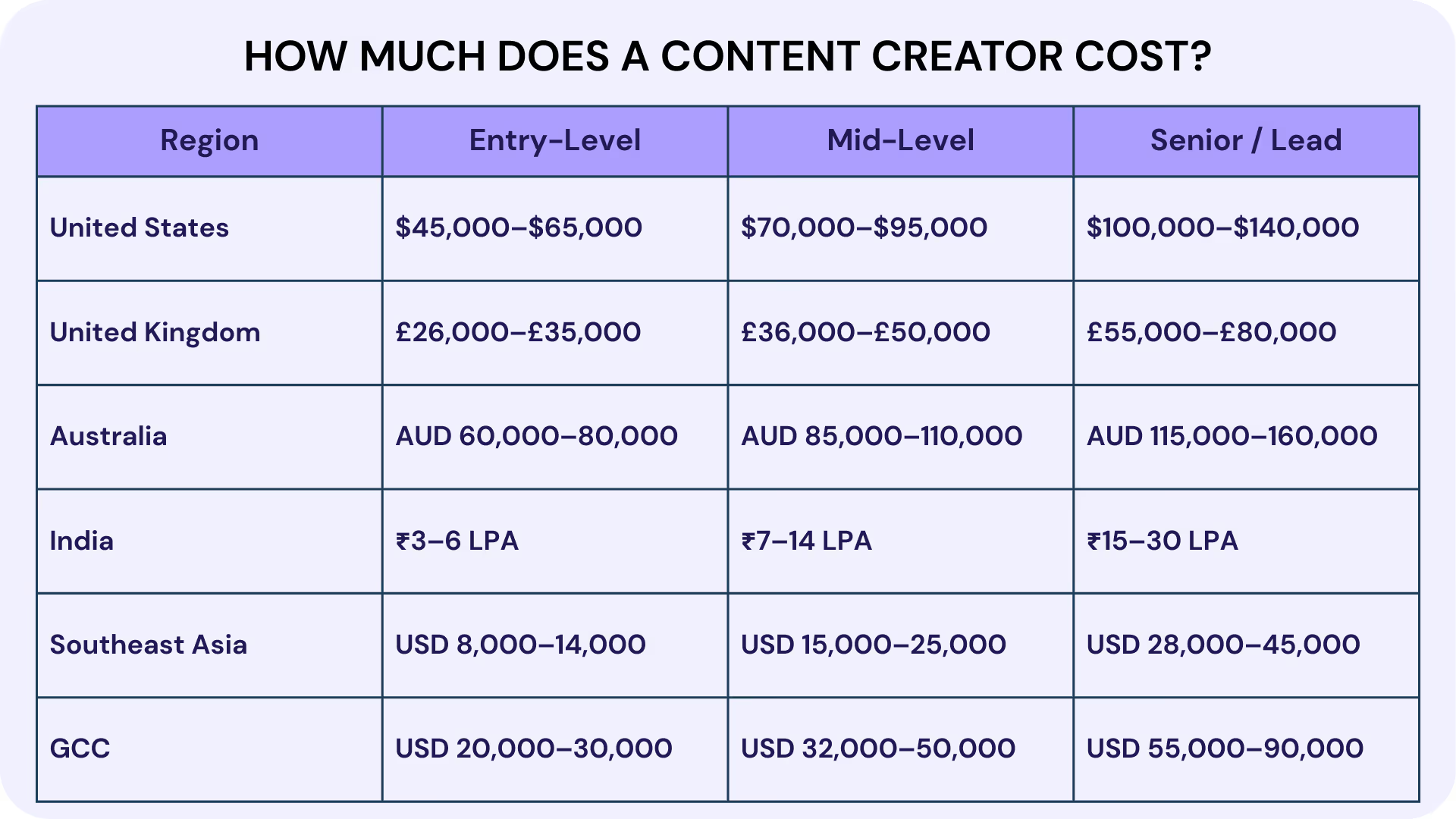
Content Creator costs depend on format (shorts vs long-form vs blogs), output cadence, and whether they own scripting + shooting + editing + publishing. Entry roles execute under direction. Mid-level creators own series and iteration. Senior creators build content systems and manage brand safety at scale.
Conclusion
When you know how to hire Content Creator talent, you can more objectively evaluate repeatable output, not just a single standout piece. Prioritizing hook quality, iteration speed, brand safety judgment, and consistent multi-format delivery helps protect your content calendar, brand voice, and results. Contact PMaps at 8591320212 or assessment@pmaps.in for role-based assessments and custom screening support.