
.webp)
.webp)


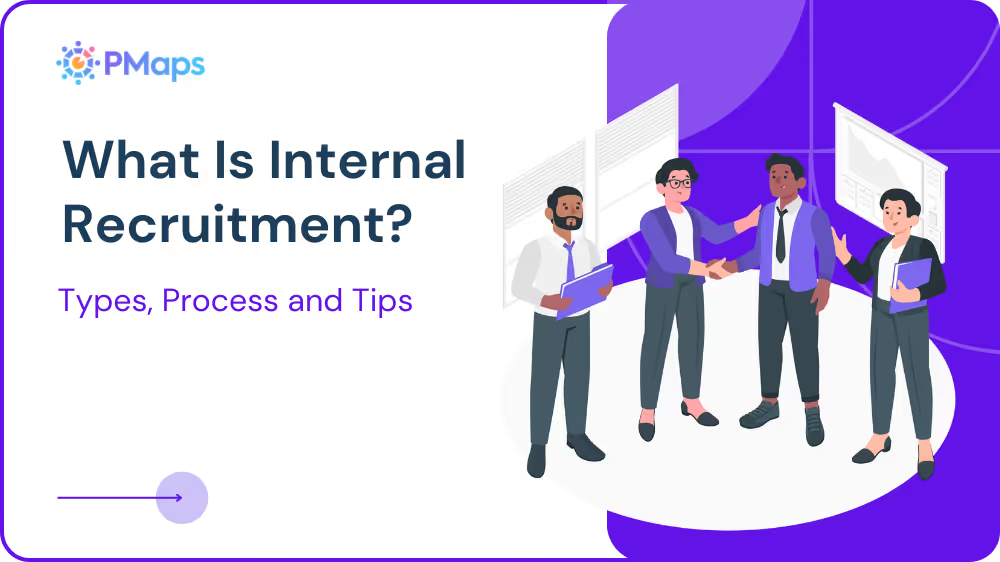
Internal recruitment means filling open positions with current employees using clear pathways for movement. Many HR teams rely on this approach, as studies show that hiring cycles are about 35% shorter when companies promote or transfer people who already know their systems and standards.
What Is Internal Recruitment?
Internal recruitment is when a company fills open jobs with employees who have already shown they can do the work and understand the company. This helps organizations that want faster hiring, smoother transitions, and to move talent based on proven performance. Any size business can benefit if they value clear career paths and less time spent on onboarding.
Internal recruitment meaning
Internal recruitment means choosing candidates who already work at the company. It uses what is already known about their skills, how they fit in, and the trust they have built. HR teams choose this method when they want steady transitions, lower risk, and greater consistency, rather than searching outside the company.
Internal recruitment vs external recruitment
Internal recruitment is best for jobs that need a strong understanding of the company or when teams need to fill roles quickly. External recruitment is better for jobs that need new skills or fresh viewpoints. Using both methods helps avoid skill gaps and keeps the company growing.
How does internal recruitment work?
Internal recruitment follows a set process. It starts with posting the job inside the company, then reviewing candidates’ skills, potential, and past performance. HR then makes offers, supports the transition, and plans to fill the former role to keep things running smoothly.
Types of Internal Recruitment
In internal recruitment, there are several ways to move employees into new roles within a company. HR uses these options to ensure talent moves fairly, and teams stay stable. Each type fits different needs, like how quickly a change is needed or what skills are required.
- Promotions – Placing employees into roles with greater responsibility.
- Transfers (lateral moves) – Shifting employees to new functions at the same level.
- Employee referrals – Recommending internal talent for open roles.
- Restructuring or redeployment – Reassigning employees during organizational changes.
- Internal mobility projects – Short-term rotations or secondments to build broader capability.
What Are Internal Recruitment Methods?
Internal recruitment methods help HR find the right employees for open positions through clear, fair processes. These methods make evaluations more reliable, support talent movement, and help employees see how they can access new opportunities within the company.
- Internal job postings (IJP) – Openings shared on internal job boards.
- Skills inventory or talent profiles – Capability data stored in HRIS.
- Succession planning pipelines – Prepared future-ready candidates.
- Manager nominations – Recommendations guided by clear rules.
- Internal talent marketplace – Projects and short-term gigs.
- Learning-to-role pathways – Reskilling programs preparing employees.
- Alumni boomerang hires – Returning former employees when relevant.
Benefits of Internal Recruitment
Internal recruitment helps keep teams stable and makes it easier to move talent within the organization. HR teams use this method to hire faster and select candidates who already understand the company’s expectations, culture, and routines.
- Faster hiring due to familiar candidates.
- Lower cost because sourcing steps reduce.
- Better culture fit from proven employees.
- Higher retention through clear mobility.
- Stronger morale when progression is visible.
Disadvantages and Risks
Internal recruitment has downsides if used too much. HR teams may see skill gaps if employees only move within the same groups. Relying on it too often can limit new ideas, reduce outside learning, and change team dynamics in ways that hurt long-term results.
- Limits new ideas when used too frequently.
- Creates internal competition or resentment.
- Introduces favoritism or bias risks.
- Produces backfill effects that open new vacancies.
Internal Recruitment Process
A clear internal recruitment process helps HR fairly move talent and maintain high performance. It provides employees with clear information, ensures consistent assessments, and helps managers plan for changes and replacements within their teams.
Identify role + confirm internal-first eligibility
The process begins by identifying the open role and determining whether an internal-first approach aligns with business needs. HR checks skill depth, urgency, talent availability, and succession plans before confirming internal eligibility.
Post internally + communicate timeline and criteria
HR shares the internal job posting with clear details on the required skills, who can apply, and when to apply. Being open about this helps avoid confusion, sets fair rules for everyone, and lets managers prepare for potential changes.
Select for skills and competence fairly
HR uses structured, job-related tools to assess candidates against the role's actual requirements. These tools enable consistent employee comparisons and help avoid subjective decisions. Each assessment provides clear evidence of a person's skills, potential, and readiness to move into a new position.
- Skills tests check if employees have the practical abilities needed for daily tasks and job requirements.
- High-potential assessments look for learning ability, adaptability, and the potential to contribute over the long term.
- Managerial tests focus on skills like managing people, delegating tasks, coordinating work, and setting priorities.
- Leadership assessments review how well someone influences others, makes decisions, and works with stakeholders.
Using several types of assessments helps reduce bias, makes the process fairer, and increases the chances that the chosen employee will do well both now and in the future.
Assess performance consistently
HR reviews past performance using official records rather than relying solely on informal feedback. This helps check reliability, results, teamwork, and behavior. Using the same evidence for everyone makes decisions fairer and easier to compare.
Select + offer (leveling, compensation, transition plan)
After evaluations conclude, HR selects the most suitable candidate. The offer includes clarity on leveling, compensation revision, and a defined transition plan to support both the employee and the receiving manager.
Onboard into role + plan backfill + measure results
After the employee starts their new job, HR helps them settle in by explaining their duties and expectations. At the same time, HR plans to have someone fill the old role, so work continues smoothly. HR also checks how things are going by tracking retention, early results, and the effectiveness of the process.
Common Mistakes
Internal recruitment fails when processes lack structure or transparency. HR teams face challenges when mobility rules remain unclear or when decisions are made without consistent communication. These gaps influence workforce trust, delay transitions, and weaken the purpose of promoting fair access to internal opportunities.
- Secret hires completed before posting.
- No feedback provided to internal candidates.
- No backfill plan to maintain continuity.
- No tracking of retention or performance outcomes.
Internal Recruitment Strategies
Good internal recruitment needs clear rules, visible job openings, and systems that help HR find the right people fast. Strategies should ensure fair movement, reduce bias, and support workforce planning. When these things work together, internal moves help retain employees and build trust in career growth.
- Create an internal mobility policy covering eligibility and timelines.
- Make internal opportunities visible through job boards and regular communication.
- Build a skills-first internal talent database.
- Train managers to support mobility with structured handover playbooks.
- Use structured evaluation methods to reduce bias.
- Balance internal and external hiring to prevent stagnation.
Internal Recruitment Examples
Internal recruitment works best when companies set clear expectations and use structured evaluation methods. The following examples show how different ways of moving employees can work in real business situations, and how clear processes help employees move smoothly.
Example 1 — Promotion (IC → Team Lead)
A top-performing employee is promoted to team lead after good reviews and a test of their management potential. HR creates a plan to help them adjust, including early coaching to support the move from doing tasks to leading people.
Example 2 — Transfer (Lateral Move Across Functions)
A skilled operations specialist is moved to the procurement team after demonstrating strong analytical skills. This helps the company stay flexible and lets the employee learn new things without changing their job level. HR handles training, sets expectations, and manages the handover.
Example 3 — Reskilling or Upskilling Pathway (L&D → New Role)
An employee from the learning and development team finishes a reskilling program to move into a training technology job. Skills tests check if they are ready, and HR gives them practice tasks with clear goals. The comprehensive results checks for strengths and weaknesses for the particular roles and suggests training programs that help build long-term skills.
Example 4 — Restructuring Redeployment
During a company restructure, HR may redeploy employees to maintain workforce continuity. When a role changes or is eliminated, employees are assessed against required skills and matched to suitable internal roles. This minimizes disruption, retains institutional knowledge, and reduces the immediate need for external hiring.
How Top Companies Do It?
Top companies like Google, Deloitte, and Zappos have strong cultures of moving employees into new roles. They use open job postings, clear skill assessments, and keep good records of employee movement. These practices help employees see how they can grow and make it easier to move into new jobs on time.
Conclusion
Internal recruitment helps keep teams stable, supports steady growth, and speeds up hiring by using clear processes. When HR teams use consistent assessments, they ensure fairness and build future skills. If you want help with internal role assessments, contact our team at 8591320212 or assessment@pmaps.in.


.avif)
.avif)


