.webp)
.webp)


The process of how to hire a Product Manager becomes a central priority when product decisions guide long-term growth. A capable manager aligns user needs, business goals, and technical constraints with steady judgment. This guide outlines a structured approach to selecting Product Managers who bring clarity, cross-functional coordination, and reliable product thinking to daily decisions.
What is a Product Manager?
A Product Manager connects user needs, business goals, and technical possibilities to guide product outcomes. Their role becomes essential when teams rely on clear priorities, structured problem-solving, and consistent decision flow. Strong Product Managers bring direction to cross-functional work and help organisations move from scattered ideas to focused product execution.
Quick tip: Ensure you attract only relevant and strong applicants with a clear and specific Product Manager job description.
Where to Find the Best Product Manager Candidate?
Finding dependable Product Manager candidates requires sourcing channels that attract individuals skilled in user understanding, prioritisation, and cross-functional leadership. Strong profiles often emerge from environments where teams rely on structured product thinking, steady communication, and clear decision ownership. Targeting these talent pools helps HR reach candidates who can balance user needs with business goals.
- Product-focused job boards and tech hiring platforms
- LinkedIn groups for product leaders and PM communities
- Internal promotions from business analysts or associate PMs
- Referrals from engineering, design, and marketing leads
- Talent platforms with SaaS and product-building experience
How to Screen for Good Product Manager Candidates?
Screening a Product Manager requires a structured approach that highlights user understanding, prioritisation habits, and the ability to guide cross-functional teams. A clear sequence helps HR filter candidates who can interpret product signals, explain decisions clearly, and maintain alignment across engineering, design, and business teams. Each step strengthens shortlist reliability and reduces decision uncertainty.
- AI resume parsing and outreach using AI Recruit to identify product-building experience
- Skills assessment focused on prioritisation, problem framing, and product judgment
- AI video interviewing to evaluate clarity, reasoning, and communication
- Taking the final call through HR-led review of leadership fit and decision approach
How to Assess Skills of Product Managers?
Assessing Product Managers requires an approach that reveals how they interpret user needs, guide cross-functional discussions, and make decisions when priorities compete. The role demands structured thinking, balanced judgment, and the ability to turn feedback into actionable steps. A reliable assessment helps HR understand how candidates solve product problems, communicate trade-offs, and maintain clarity during rapid development cycles.
What Soft Skills Are Important for Product Managers?
Soft skills influence how Product Managers bring alignment across teams, explain product choices, and guide discussions without friction. These behaviours shape daily collaboration.
- Clear and concise communication
- Calm reasoning during conflicting priorities
- Ability to guide cross-functional teams
- Fair decision approach with stakeholders
- Strong follow-through on product commitments
Hard Skills of Product Managers That You Must Test
Hard skills determine whether a candidate can work through product decisions logically, analyse data, and convert insights into plans that teams can execute reliably.
- Prioritisation and roadmap planning
- Data interpretation for product signals
- Problem framing and structured thinking
- Familiarity with product discovery methods
- User understanding and requirement clarity
Pro Tip: Use a Product Manager test built around real product trade-offs to see how candidates think when decisions carry long-term impact.
How to Interview a Product Manager?
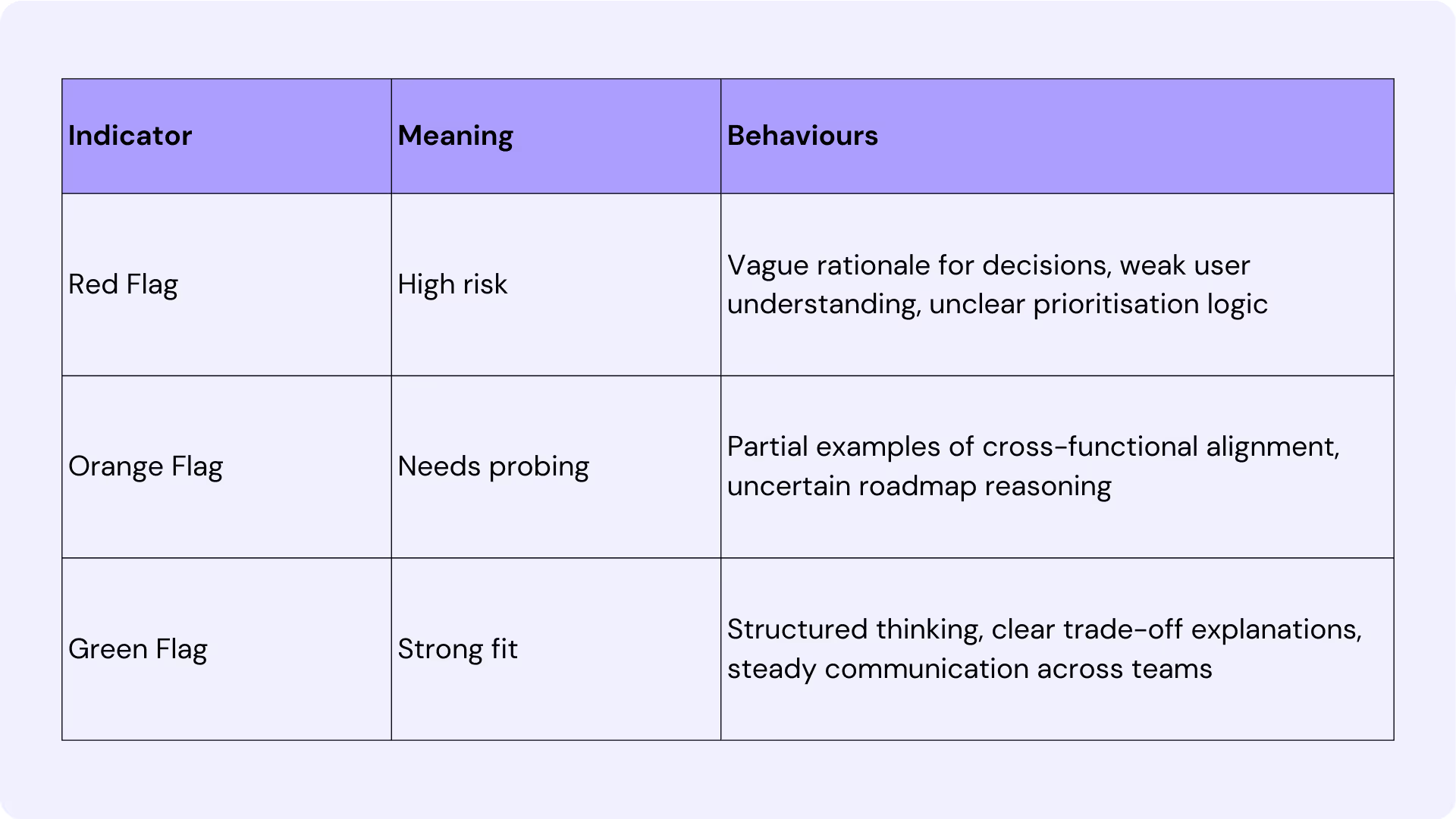
Interviewing a Product Manager requires prompts that reveal how candidates frame problems, explain decisions, and create alignment across teams. Use situational questions that surface their reasoning when priorities collide, deadlines shift, or customer feedback challenges the roadmap. The table helps HR interpret behaviour and identify candidates who can balance user needs, business goals, and technical trade-offs without losing clarity.
Bonus Resource: Use targeted Product Manager interview questions to uncover how candidates think when product choices carry long-term impact.
How Much Does a Product Manager Cost?
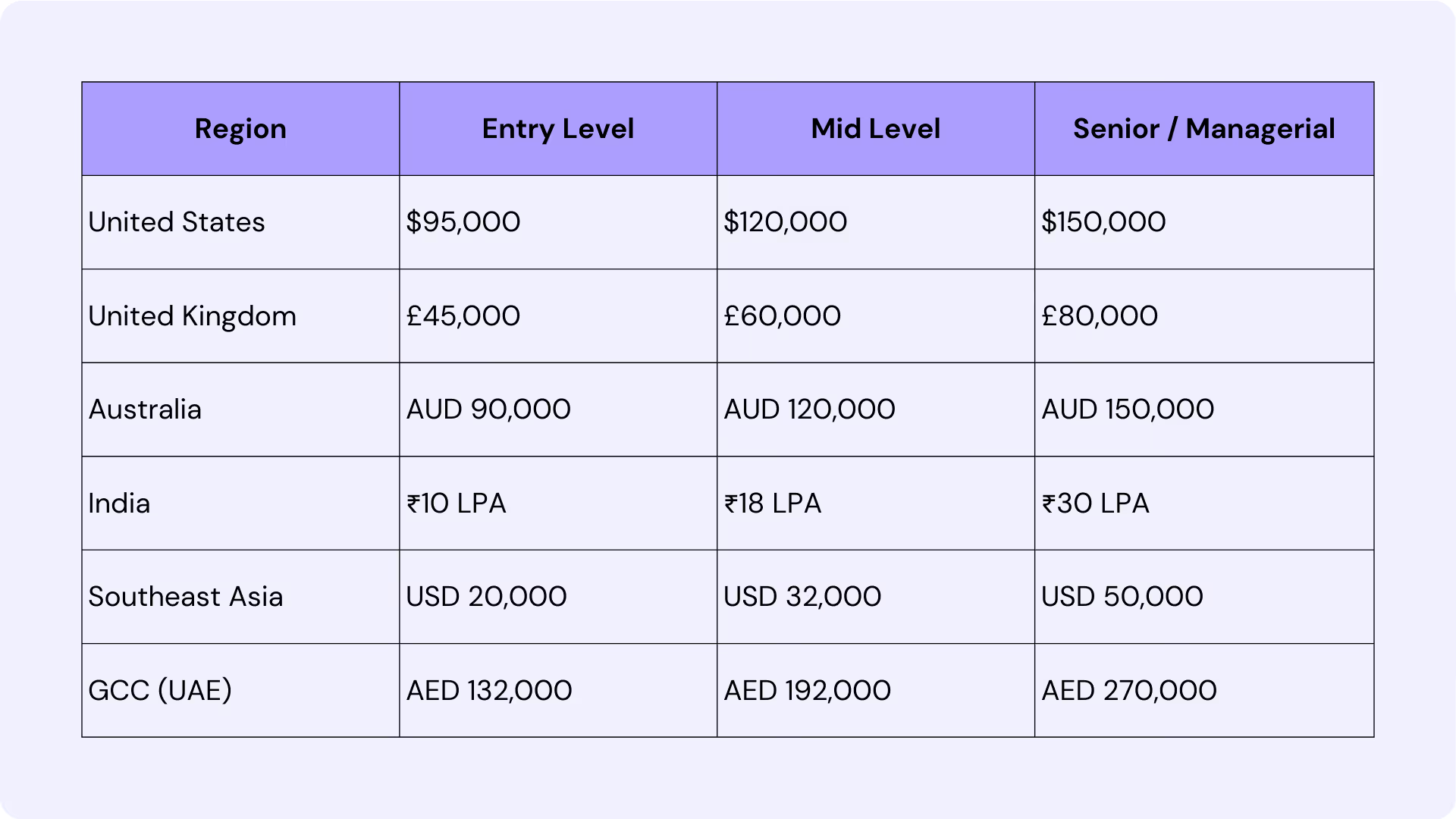
Budgeting for a Product Manager requires awareness of salary differences across regions, product maturity, and organisational scale. Compensation shifts based on experience, technical familiarity, and ownership level. Using structured benchmarks helps HR design competitive offers, maintain internal parity, and support predictable hiring decisions for product teams across markets.
Conclusion
Hiring a Product Manager affects how well teams move from ideas to measurable outcomes. The right choice brings clarity, structured reasoning, and steady cross-functional coordination. For support evaluating product-thinking skills with reliable assessments, connect with PMaps at 8591320212 or assessment@pmaps.in to strengthen your hiring decisions.

.avif)