.webp)
.webp)



Driving smarter business decisions begins with clarity on the role’s impact. Hiring Financial Analyst talent focuses on improving forecasting accuracy, identifying risks early, and converting raw data into actionable insights. A structured hiring process ensures consistency by evaluating financial reasoning, attention to detail, and communication tailored for stakeholders under real-world business constraints.
What is a Financial Analyst?
A Financial Analyst evaluates financial data to support budgeting, forecasting, investment decisions, and performance reporting. In smaller teams, they build models, track variances, and support leadership reviews. In larger organisations, they specialise by FP&A, treasury, pricing, or business partnering.
Why hire a Financial Analyst? They improve decision confidence by translating numbers into clear risk, return, and runway implications.
Quick tip: A strong financial analyst job description shows exactly which decisions this role will drive.
Where to Find the Best Financial Analyst Candidates?
If you want to hire a Financial Analyst who can improve decision clarity, source from places where analysts actively build models, review performance, and debate assumptions—not just where job seekers browse listings. Strong candidates leave signals in how they explain variance, structure forecasts, and communicate risk. Hiring a Financial Analyst becomes faster when you target communities that reward precision and commercial thinking.
- FP&A and corporate finance communities where analysts share forecasting methods, variance bridges, and leadership-ready reporting formats.
- Big4 audit, transaction advisory, and corporate controllership alumni pools with strong discipline in numbers, controls, and review cycles.
- CFA society chapters and finance associations where analysts discuss valuation, risk, and macro-to-business impact with rigor.
- Financial modeling and Excel certification cohorts where candidates demonstrate structured thinking, clean assumptions, and audit-ready work.
- Industry-focused networks in fintech, insurance, or manufacturing where analysts understand unit economics and operational drivers deeply.
How to Screen for Good Financial Analysts?
Screening a Financial Analyst should feel like a mini business review, not a resume scan. You’re checking whether the candidate can explain drivers, spot risk in assumptions, and communicate numbers without hiding behind spreadsheets. This step in How to Hire Financial Analyst talent helps you separate “model builders” from analysts who can support real decisions with discipline.
- Use AI Recruit to shortlist profiles showing forecasting exposure, variance analysis ownership, and leadership reporting cadence.
- Run a short work-sample: give a simple P&L snapshot and ask for a variance bridge and next-step questions.
- Use AI video interviewing to test how they explain assumptions, handle pushback, and summarise insights for non-finance stakeholders.
- Close with an HR round to validate integrity with numbers, attention to detail, and comfort collaborating across functions.
How to Assess Skills of Financial Analysts?
To hire a Financial Analyst who improves decision quality, test how they think when numbers conflict, not just how fast they build spreadsheets. Give a messy revenue story and ask for a clean driver tree: price, volume, mix, churn, and one-off effects. Then add uncertainty—late invoices, FX movement, or a changed pricing plan and see if they update assumptions without breaking the model. This is where How to Hire Financial Analyst processes often fail, because surface-level modelers look confident until you probe logic and controls. A strong analyst explains sensitivity, highlights risk early, and writes conclusions that a non-finance leader can act on. This step also answers Why hire a Financial Analyst: they prevent expensive decisions driven by weak assumptions.
Pro Tip: A role-based Finance Analyst test works best when it blends modeling, variance analysis, and clear business-writing exercises.
What Soft Skills are Important for Financial Analysts?
Soft skills determine if hiring a Financial Analyst enhances stakeholder decision-making, fosters clear communication, and builds trust, or whether it leads to misalignment, confusion, and slower financial insights.
- Business communication that turns analysis into a clear recommendation with risks, options, and next steps.
- Curiosity to challenge assumptions respectfully and ask “what changed” before updating forecasts.
- Stakeholder handling to push back on unrealistic targets without damaging trust or speed.
- Ownership that follows numbers to their source and closes gaps instead of leaving “open items.”
Hard Skills of Financial Analysts that You Must Test
Hard skills demonstrate whether a candidate can maintain accuracy and consistency while efficiently handling tasks under pressure and meeting tight deadlines.
- Financial modelling with structured assumptions, scenario logic, and sensitivity analysis that survives scrutiny.
- Variance analysis that explains movements using drivers, not labels, and links to operational reality.
- Excel proficiency: clean formulas, error checks, and model hygiene that prevents silent mistakes.
- Reporting discipline: building dashboards, monthly packs, and narratives aligned to leadership review cadence.
How to Interview a Financial Analyst?
Interviewing a Financial Analyst should feel like a mini forecast review, not a résumé recap. Ask them to walk through one model they built, then challenge an assumption and see how they respond. Use a short variance bridge prompt and ask what questions they’d take to the business owner. This approach makes Hiring a Financial Analyst more predictable because it surfaces judgment, control habits, and how clearly they communicate numbers to non-finance leaders.
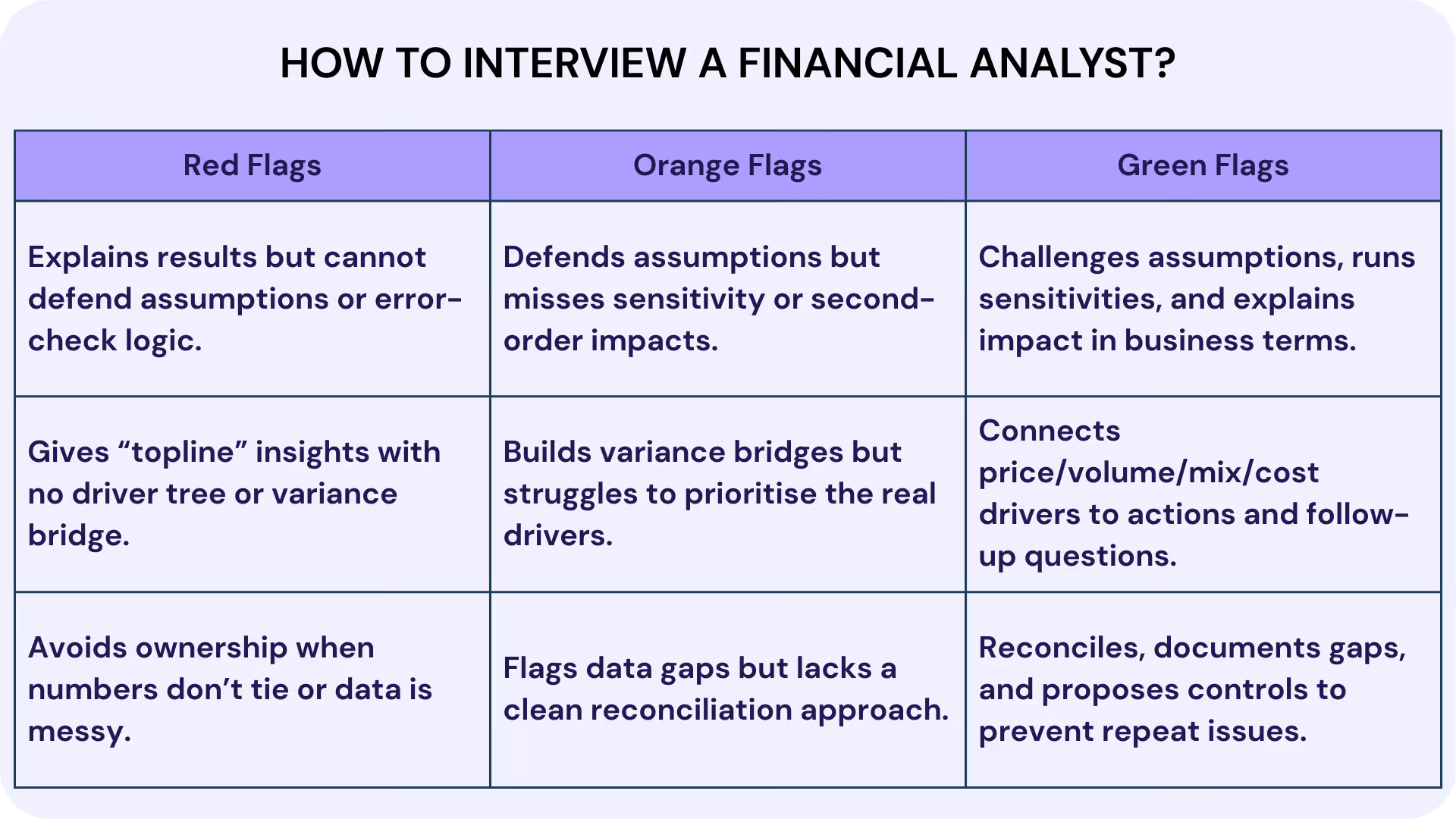
Bonus Resource: Use structured Financial Analyst interview questions to standardize scoring and evaluate assumption testing, variance analysis, and actionable recommendations.
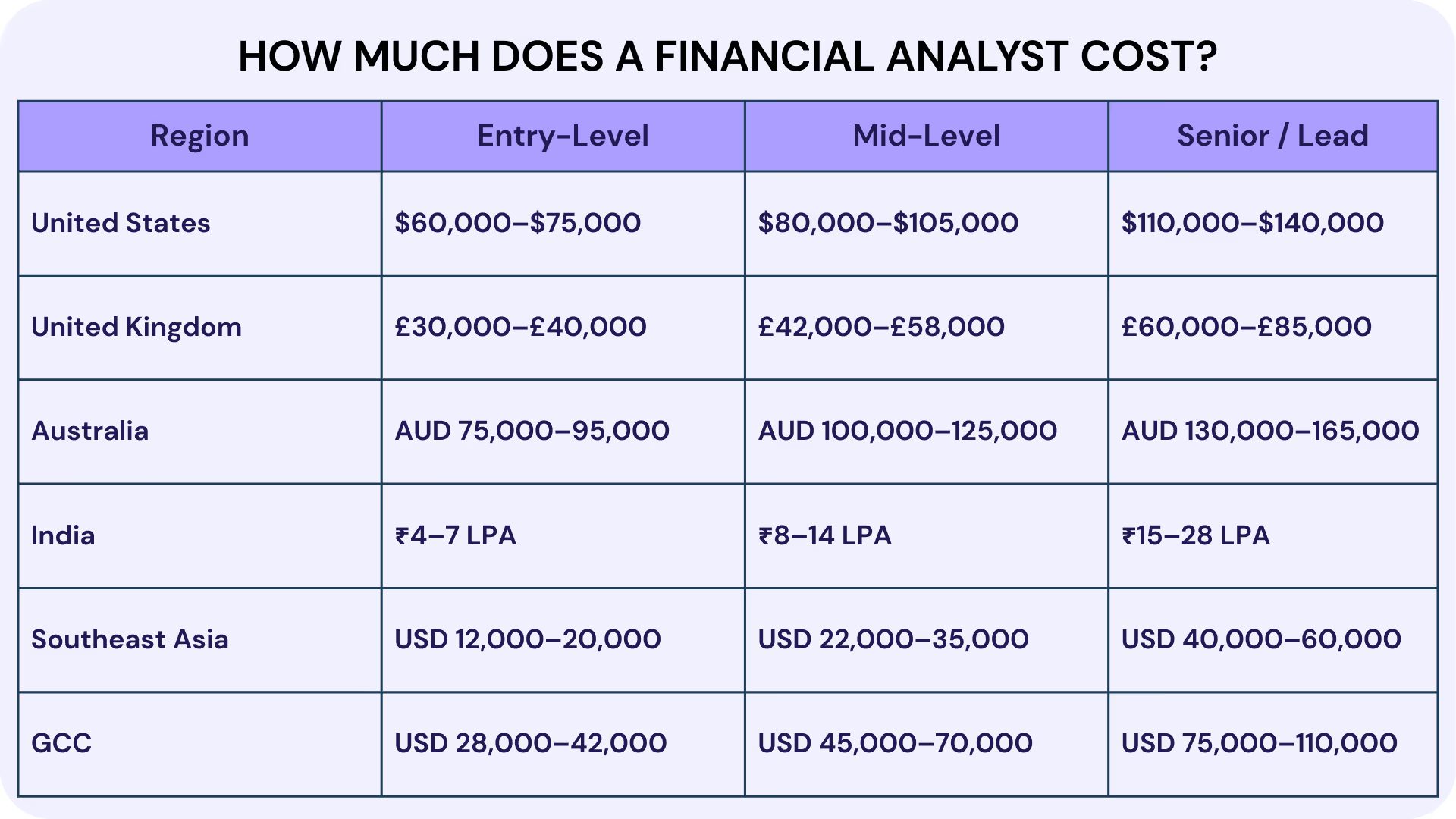
How Much Does a Financial Analyst Cost?
Financial Analyst compensation depends on modelling complexity, reporting cadence, and how close the role sits to leadership decisions. Entry roles focus on reporting support and basic variance work. Mid-level analysts own forecasts and business partnering. Senior analysts lead planning cycles, scenario modelling, and decision packs when you hire a Financial Analyst.
Conclusion
Hiring Financial Analyst talent requires clarity in expectations, structured evaluation, and consistent measurement of analytical skills. Prioritizing model accuracy, sensitivity analysis, and clear communication ensures analysts turn data into actionable insights. A defined hiring process reduces decision risk and strengthens forecast confidence. For role-based assessments and screening support, contact PMaps at 8591320212 or assessment@pmaps.in.