.webp)
.webp)



Figuring out how to hire Financial Advisor talent begins with aligning the role to the client outcomes and trust your business aims to deliver. This position influences portfolio performance, risk communication, and long-term client relationships. The strongest hires combine ethical product matching, clear risk explanation, and disciplined compliance, ensuring judgment, relationship management, and advisory communication remain consistently reliable before handling client assets.
What is a Financial Advisor?
A Financial Advisor helps clients plan and manage money across goals like savings, retirement, insurance, and investments. In banks, they work with defined products and compliance rules. In independent advisory setups, they build long-term portfolios and manage ongoing client reviews.
Why hire a Financial Advisor? The role protects client trust, improves retention, and reduces compliance and mis-selling risk through suitability-led recommendations.
Quick tip: Start with a clear Financial Advisor job description that defines products, client segment, and compliance expectations.
Where to Find the Best Financial Advisor Candidates?
If you want to hire a financial advisor who builds trust and stays compliant, source from places where advisors are already working with suitability checks, client reviews, and regulated product conversations. Strong candidates often come with proof of long-term client handling, not just short-term sales numbers. This stage in How to hire Financial Advisor pipelines works best when you target advisors familiar with your client segment and product mix, because Hiring a Financial Advisor is ultimately about protecting relationships and reducing mis-selling risk.
- CFP/CFA and wealth-planning communities where advisors discuss goal-based planning, risk profiling, and review cadence.
- Bank RM and wealth desk talent pools with experience in suitability-led product mapping and compliance documentation.
- Mutual fund distributor and AMFI-linked networks where advisors handle SIP behaviour, churn, and portfolio reviews.
- Insurance advisory ecosystems with IRDAI exposure, where advisors manage disclosure, need analysis, and persistency.
- Fintech and RIA-style advisory teams where advisors use data-led recommendations and structured client onboarding.
How to Screen for Good Financial Advisors?
Screening should reveal whether a candidate can protect suitability, explain risk, and follow compliance routines without shortcuts. When you hire a financial advisor, look beyond product pitch and ask for evidence of long-term client reviews, documentation habits, and ethical boundary setting. This step in How to hire Financial Advisor plans works best when screening tests real advisory moments: risk profiling, misaligned client expectations, and regulatory constraints.
- Use AI Recruit to shortlist advisors with relevant client segment exposure, persistency, and compliant sales records.
- Run a short case screen: client goal + risk profile, then ask for product mapping and disclosures.
- Use AI video interviewing to test objection handling without mis-selling or fear-based persuasion.
- Close with HR validation for integrity signals, documentation discipline, and comfort refusing unsuitable requests.
How to Assess Skills of Financial Advisors?
To hire a financial advisor who protects client trust, assess how they recommend—not how they pitch. Start with a goal-based case (retirement in 12 years, child education in 6, moderate income volatility). Ask the candidate to run risk profiling, map products to suitability, and explain why certain options are excluded. Add a constraint: client wants high returns but cannot tolerate drawdowns. Strong advisors set expectations, explain risk in plain language, and document disclosures without shortcuts. Next, test review discipline: provide a portfolio with drift and a market shock and ask what changes they would make and how they would communicate it. This step in how to hire Financial Advisor talent reveals ethics, clarity, and long-term thinking—core to Hiring a Financial Advisor safely.
Pro Tip: Use a role-based Financial Advisor Test covering suitability judgment, compliance scenarios, and advisory communication.
What Soft Skills are Important for Financial Advisors?
Soft skills reveal whether a Financial Advisor can foster client trust, communicate transparently, and guide decisions ethically, all while avoiding mis-selling or applying undue pressure.
- Empathy and listening that uncover real goals, constraints, and fear triggers behind client demands.
- Communication clarity that explains risk, volatility, and trade-offs without jargon or selective framing.
- Integrity under pressure when targets conflict with suitability or disclosure requirements.
- Relationship discipline that maintains review cadence and proactive outreach during market swings.
Hard Skills of Financial Advisors that You Must Test
Hard skills confirm whether a Financial Advisor can deliver recommendations that are well-structured, compliant with regulations, and consistently repeatable across different client scenarios.
- Risk profiling and suitability mapping across client segment, horizon, liquidity needs, and tolerance.
- Product knowledge and comparison across mutual funds, insurance, retirement instruments, and diversification basics.
- Compliance routines: documentation, disclosures, KYC/AML awareness, and audit-ready record keeping.
- Portfolio review basics: drift detection, rebalancing logic, and communicating changes with rationale.
How to Interview a Financial Advisor?
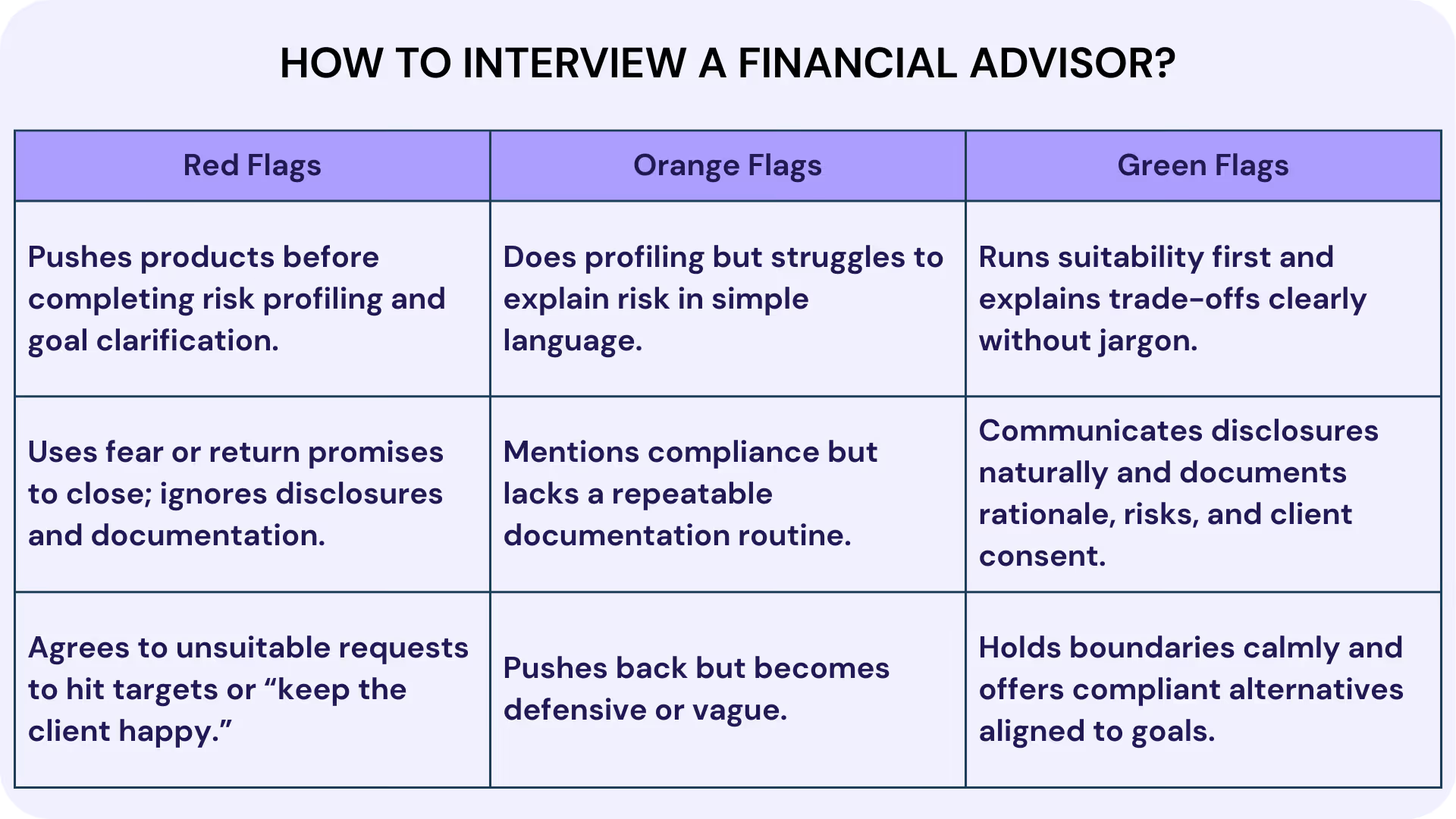
Interviewing a Financial Advisor should replicate real client conversations, not product quizzes. To hire a financial advisor who protects trust, run two structured scenarios: a goal-planning discussion (risk profile + horizon + liquidity) and a compliance boundary test (client wants “guaranteed” returns or asks to hide income). Ask the candidate to explain what they would recommend, what they would not recommend, and what they would document. This is the most reliable part of How to hire Financial Advisor processes because it shows whether the candidate can educate clients, resist pressure, and keep advice suitability-led. It also clarifies Why hire a Financial Advisor: long-term outcomes with ethical discipline.
Bonus Resource: Use structured Financial Advisor interview questions to score suitability, ethics, and client communication consistently across interviewers.
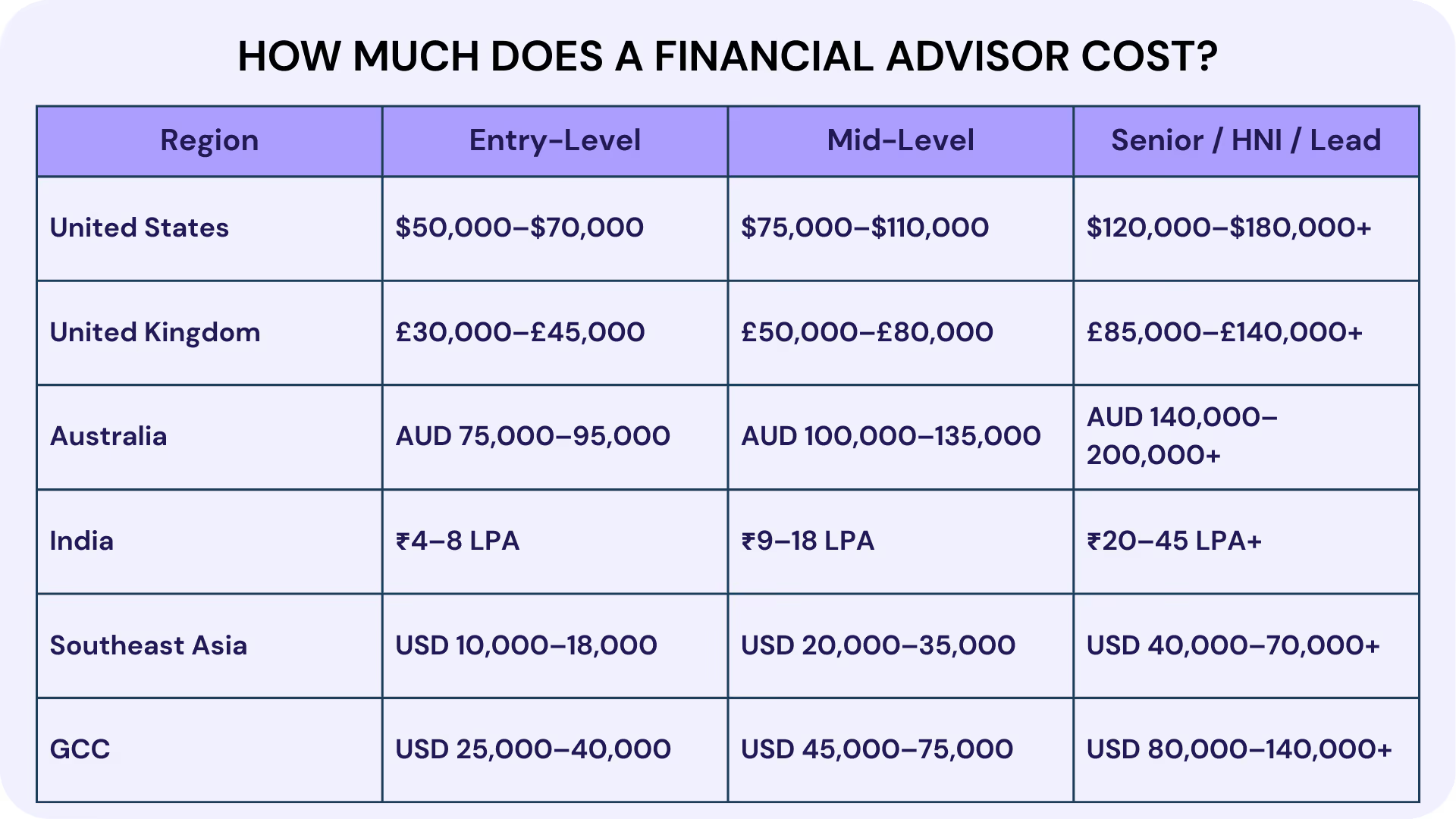
How Much Does a Financial Advisor Cost?
Financial Advisor compensation depends on client segment, product mix, regulatory burden, and whether the role is relationship-led or acquisition-heavy. Entry roles support basic planning and product guidance. Mid-level advisors manage portfolios and reviews. Senior advisors handle HNI books, complex suitability, and compliance ownership when you hire a financial advisor.
Conclusion
The most effective way to hire Financial Advisor talent is to focus on suitability discipline, client education, and compliance habits and not just product knowledge. Using structured evaluations to assess risk profiling, documented recommendations, and calm boundary-setting under pressure helps protect client trust, retention, and regulatory compliance. For role-based assessments and screening support, contact PMaps at 8591320212 or assessment@pmaps.in.