.webp)
.webp)



Driving financial clarity requires more than clean reports. How to Hire Finance Manager talent focuses on defining the decisions this role must own, from cash discipline to budgeting accuracy. The right hire translates financial data into clear, executable actions. A structured hiring approach reduces risk by evaluating judgment, attention to detail, and stakeholder-ready communication early.
What is a Finance Manager?
A Finance Manager owns the financial rhythm of a business—monthly close, budgeting, forecasting, cash oversight, and variance reviews. In smaller teams, they are hands-on with models and reconciliations. In larger organisations, they manage FP&A, controllership processes, and stakeholder reporting across functions.
Why hire a Finance Manager? This role prevents cash surprises, improves cost discipline, and helps leaders make decisions with clean, reliable numbers.
Quick tip: A strong Finance Manager job description spells out close cadence, ownership scope, and the decisions this role supports.
Where to Find the Best Finance Manager Candidates?
If you want to hire a Finance Manager who can run close cadence and still influence decisions, source from environments where numbers are reviewed, challenged, and acted on every month. The strongest candidates usually leave evidence of ownership such as budget cycles, cash discipline, variance narratives, and cross-functional partnering rather than only “reporting” responsibilities.
- FP&A and business finance networks where managers share forecasting methods, variance bridges, and review pack structures.
- Big4 audit / advisory alumni pools with strong controls mindset, reconciliations discipline, and deadline-tested accuracy.
- ERP and accounting system cohorts for SAP/Oracle/Tally users who understand approvals, controls, and audit trails.
- High-transaction industries like retail, logistics, and manufacturing where finance managers manage cut-offs and cost leakage.
- Shared services and controllership teams where managers drive close efficiency, governance, and stakeholder reporting routines.
How to Screen for Good Finance Managers?
Screening a Finance Manager should feel like a real month-end and budget review—tight timelines, messy inputs, and stakeholders pushing for answers. The best candidates bring control, clarity, and decision discipline. This step in How to Hire Finance Manager talent should quickly reveal who can run the financial rhythm versus who only compiles reports.
- Use AI Recruit to shortlist profiles showing close ownership, forecasting responsibility, and cost-control impact.
- Run a work-sample: share a mini P&L and ask for a variance bridge and the top five questions.
- Add a scenario: cash is tightening; ask how they change approvals, cadence, and reporting immediately.
- Use AI video interviewing to test how they explain numbers to non-finance leaders under pushback.
- Close with HR validation for integrity, attention to detail, and stakeholder partnering style before Hiring a Finance Manager.
How to Assess Skills of Finance Managers?
To hire a Finance Manager who improves decision quality, assess how they handle ambiguity, tight cut-offs, and stakeholder pushback—not just how well they build reports. Start with a monthly close scenario and ask how they would lock the timetable, handle late entries, and reduce recurring reconciliations. Next, give a mini budget with one shock (revenue miss, cost spike, delayed collections) and ask for a reforecast approach, key assumptions, and the exact actions they would recommend to business leaders. Strong candidates show control habits, model hygiene, and the ability to translate numbers into crisp trade-offs. This is the most reliable step in How to Hire Finance Manager talent because it reveals whether the person can run cadence and influence outcomes. It also clarifies why hire a Finance Manager: fewer cash surprises, cleaner accountability, and faster decision cycles.
Pro Tip: Use a role-based Finance Manager test that evaluates variance analysis, cash discipline, and stakeholder-writing scenarios.
What Soft Skills are Important for Finance Managers?
Important soft skills for Finance Managers include strategic thinking, clear communication, stakeholder influence, decision-making, and integrity, enabling them to translate financial insights into confident business actions.
- Stakeholder communication that converts metrics into decisions, with risks, options, and clear next steps.
- Backbone to challenge weak assumptions or spend requests without slowing execution or damaging trust.
- Calm prioritisation during cut-offs and audits when data arrives late and timelines compress.
- Ownership that closes open items, documents decisions, and maintains accountability across functions.
Hard Skills of Finance Managers that You Must Test
Hard skills of Finance Managers to test include financial planning, budgeting, forecasting, risk management, financial reporting, and data analysis to support accurate, compliant, and strategic financial decisions.
- Close and controls discipline: reconciliations, cut-offs, approvals, and audit-ready documentation habits.
- Forecasting and budgeting: driver trees, scenario modelling, and reforecast logic under changing assumptions.
- Cash oversight: working-capital thinking, collections visibility, and early warning signals for runway pressure.
- Reporting rigor: variance bridges, model hygiene in Excel/ERP, and decision packs aligned to leadership cadence.
How to Interview a Finance Manager?
Interviewing a Finance Manager should feel like a real close-and-forecast review, not a résumé recap. Give one messy P&L, one cash constraint, and one stakeholder disagreement. Ask how they would diagnose the variance, tighten controls, and communicate trade-offs. This is where Hiring a Finance Manager becomes predictable.

Bonus Resource: Use structured Finance Manager interview questions to standardize scoring on variance analysis, cash discipline, and stakeholder communication.
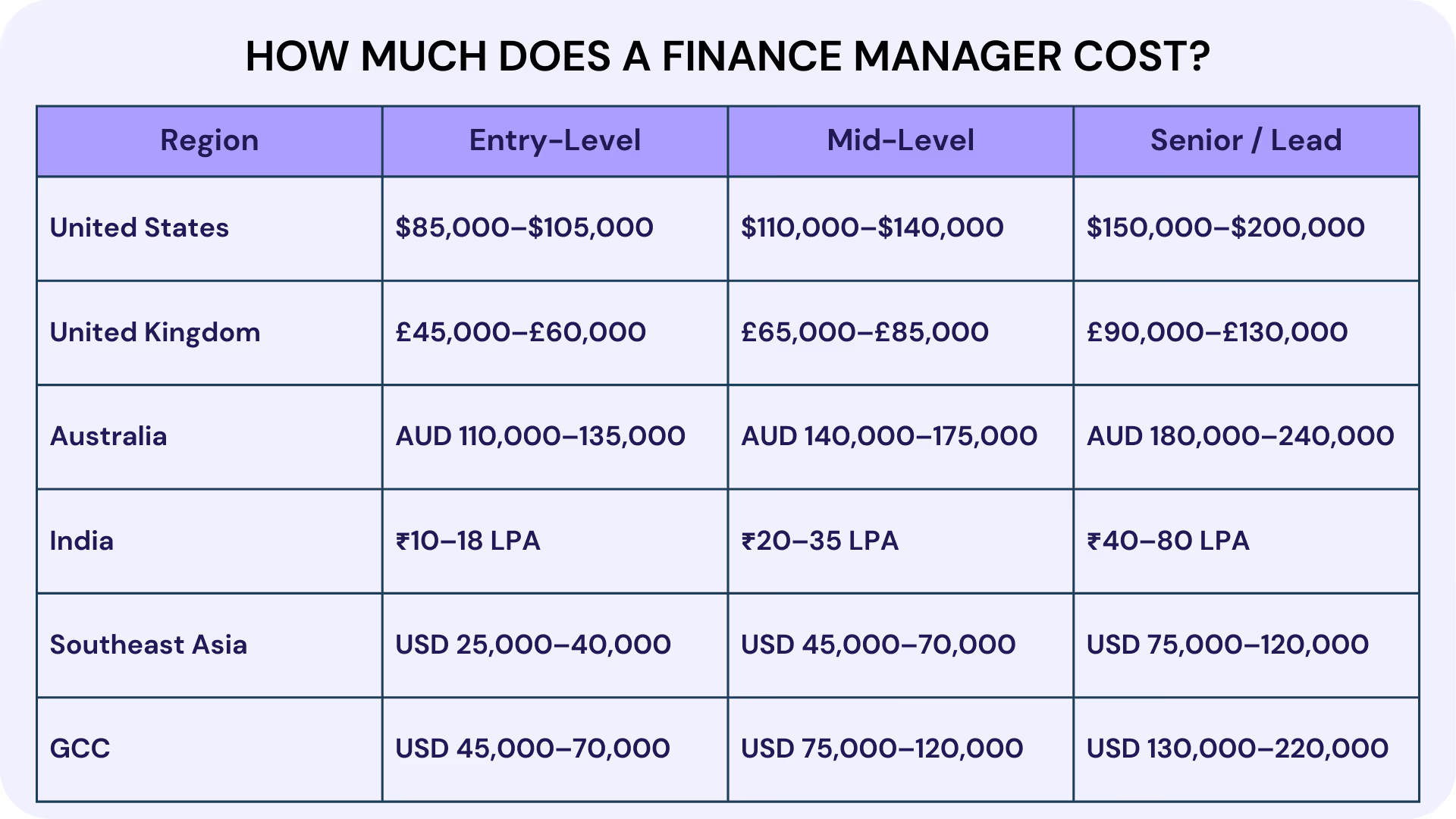
How Much Does a Finance Manager Cost?
Finance Manager compensation varies by close complexity, governance responsibility, and how closely the role partners with leadership on budget and cash decisions. Entry roles support close and reporting. Mid-level roles own forecasting and business partnering. Senior roles lead controls, audits, and decision cadence at scale.
Conclusion
The most effective way to hire Finance Manager talent is to focus on close discipline, forecasting judgment, and stakeholder-ready communication—not just reporting output. Structured evaluations that assess controls, cash visibility, and the ability to translate numbers into actionable trade-offs help leaders make better decisions. For role-based assessments and screening support, contact PMaps at 8591320212 or assessment@pmaps.in.