.webp)
.webp)



Hiring Credit Analyst talent starts with protecting lending decisions before risk becomes loss. A strong credit analyst validates borrower quality, tests assumptions, and flags early warning signals in financial statements and cash flows. A structured hiring process improves consistency by assessing analytical reasoning, attention to detail, and decision discipline under real credit scenarios.
What is a Credit Analyst?
A Credit Analyst reviews borrower profiles, financial statements, and repayment capacity to recommend safe credit decisions. In smaller teams, they handle end-to-end analysis and documentation. In larger setups, they specialise by retail, SME, corporate, or portfolio monitoring.
Why hire a Credit Analyst? The role reduces default risk and improves lending consistency.
Quick tip: Attract sharper profiles with a clear Credit Analyst job description tied to portfolio type, limits, and risk controls.
Where to Find the Best Credit Analyst Candidates?
Sourcing strong credit analysts works best when you target environments built around underwriting discipline, statement review, and risk documentation. If you want to hire a credit analyst who can spot weak assumptions early, look for proof of exposure to real credit files, cash-flow assessment, and policy-led decisioning. This step in How to hire Credit Analyst pipelines becomes faster when sourcing focuses on portfolio relevance, not generic finance labels.
- Bank and NBFC credit teams handling SME, retail, or corporate underwriting with policy-led approval workflows.
- Credit rating and research firms where analysts build structured notes on risk, covenants, and repayment capacity.
- Trade finance and invoice discounting desks evaluating receivables quality, buyer risk, and cash conversion cycles.
- Fintech lending operations where analysts review bureau signals, bank statements, and fraud-risk indicators daily.
- Big4 audit and transaction services alumni with strong statement scrutiny and documentation discipline under deadlines.
How to Screen for Good Credit Analysts?
Screening should replicate real underwriting pressure: incomplete documents, conflicting cash-flow signals, and policy limits that cannot be bent. Strong candidates explain why a borrower is safe or risky, highlight missing information early, and document decisions so approvals remain defensible. This stage in How to hire Credit Analyst pipelines works best when you test judgment, not just ratios.
- Use AI Recruit to shortlist profiles with portfolio-relevant underwriting, covenant checks, and policy-led decisioning exposure.
- Run a short case: bank statement + P&L snapshot, then ask for red flags, questions, and a risk summary.
- Use AI video interviewing for a credit memo walkthrough to test clarity, assumptions, and pushback handling.
- Close with HR validation for integrity, documentation discipline, and comfort saying “no” when risk is high.
How to Assess Skills of Credit Analysts?
To hire a credit analyst who protects portfolio quality, assess how they read risk when data is incomplete. Start with a compact borrower pack: P&L, balance sheet, bank statements, and a brief business note. Ask the candidate to identify red flags, list missing documents, and state what would change their recommendation. Then introduce a twist—stretched receivables, customer concentration, or a recent EMI bounce—and watch how they reassess assumptions without overreacting. Strong analysts separate “temporary noise” from structural weakness and document decisions so approvals stay defensible. This step in How to hire Credit Analyst workflows should reveal decision discipline, not just ratio familiarity.
Pro Tip: Use a role-based Credit Analyst Test that evaluates cash-flow analysis, policy judgment, and credit memo writing.
What Soft Skills are Important for Credit Analysts?
Soft skills determine whether a Credit Analyst communicates insights effectively, collaborates smoothly with stakeholders, and applies judgment thoughtfully, ultimately improving decision quality and fostering trust across teams.
- Judgment and integrity to recommend “decline” even when business pressure is high.
- Clear writing to produce credit notes that approvals teams can audit and trust.
- Structured questioning to clarify borrower intent, sources of repayment, and hidden risks.
- Calm stakeholder handling when sales pushes for exceptions or faster approvals.
Hard Skills of Credit Analysts that You Must Test
Hard skills confirm whether a Credit Analyst can underwrite loans or credit accurately, apply risk models consistently, and maintain precise, compliant documentation for reliable decision-making.
- Financial statement analysis, ratio interpretation, and trend reading across cycles.
- Cash-flow assessment using bank statements, repayment capacity, and stress testing.
- Policy and documentation discipline: limits, covenants, exceptions, and KYC checks.
- Credit memo ability: risk summary, mitigants, conditions, and monitoring triggers.
How to Interview a Credit Analyst?
Interviewing a credit analyst should feel like a real underwriting discussion, not a finance quiz. Use one borrower case and ask for: key risks, missing documents, repayment sources, mitigants, and a clear recommendation with conditions. Add a policy exception prompt and see whether they hold boundaries or bend under pressure. This reveals judgment, documentation discipline, and whether their decisions remain defensible in audits.
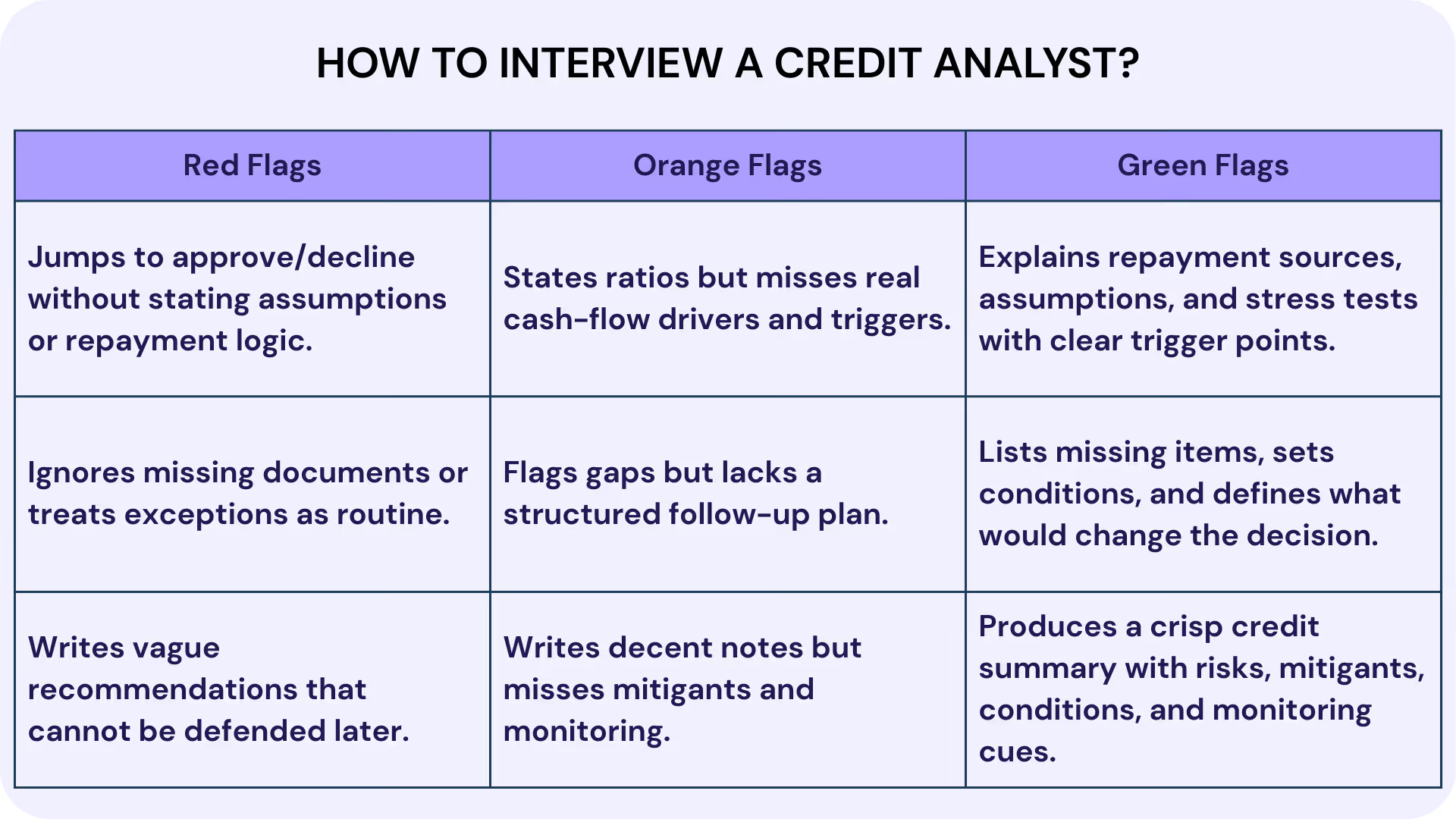
Bonus Resource: Use structured Credit Analyst interview questions to consistently assess cash-flow analysis, policy judgment, and clarity in credit memos.
How Much Does a Credit Analyst Cost?
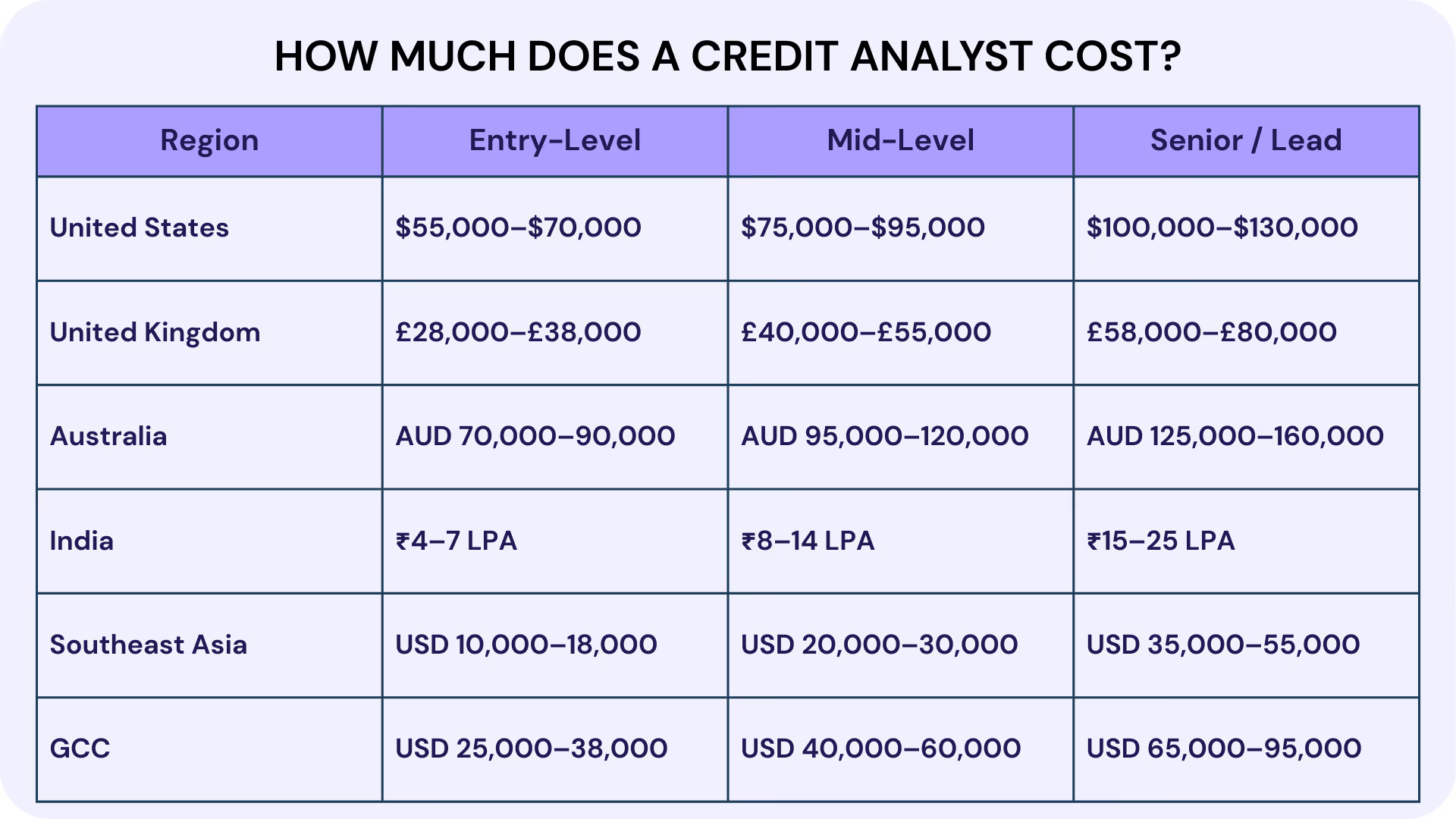
Credit Analyst pay varies by portfolio type, underwriting complexity, and whether the role includes monitoring and covenant tracking. Entry roles support file reviews and basic analysis. Mid-level analysts own credit memos and recommendation quality. Senior analysts handle complex borrowers, policy exceptions, and portfolio risk reporting when you hire a credit analyst.
Conclusion
Hiring Credit Analyst talent requires clarity in expectations, structured evaluation, and consistent measurement of credit judgment. Prioritizing cash-flow assessment, policy discipline, and defensible documentation helps reduce portfolio risk and improve approval consistency. A defined hiring process ensures analysts are ready to make sound, accountable decisions. For role-based assessments and screening support, contact PMaps at 8591320212 or assessment@pmaps.in.