.webp)
.webp)



Customer success manager skills now extend beyond retention to impact product adoption, upselling, and long-term loyalty. By 2026, the CSM role is shifting from post-sales support to a strategic revenue advisor.
An experienced CSM ensures alignment between sales promises and product delivery. They drive adoption, support expansion, and reduce churn. Selecting the right candidate requires more than a resume review. This guide outlines the top 10 customer success skills to seek in 2026 and explains how to evaluate them during hiring.
What Does a Customer Success Manager Actually Do?
A Customer Success Manager (CSM) assumes responsibility once a deal is closed. Their main objectives are to convert new users into loyal advocates, increase customer lifetime value, and secure recurring revenue through renewals and expansion. Their core responsibilities often include:
- Onboarding new users with clarity and intent
- Leading quarterly business reviews (QBRs) to realign value
- Managing churn risks proactively
- Spotting upsell or cross-sell opportunities early
- Collaborating with product and support to resolve roadblocks
Unlike traditional support or sales roles, the CSM's work is proactive, strategic, and deeply relational. While support teams react to problems and sales focus on conversions, CSMs stay long-term, owning outcomes like customer satisfaction, net revenue retention, and long-term product adoption.
These skills needed for customer success manager roles are increasingly complex. Effective CSMs combine communication, empathy, data fluency, and domain expertise in every interaction. Next, we will examine the hard and soft skills that define effective CSMs in today’s dynamic SaaS environment.
Hard vs Soft Skills in Customer Success
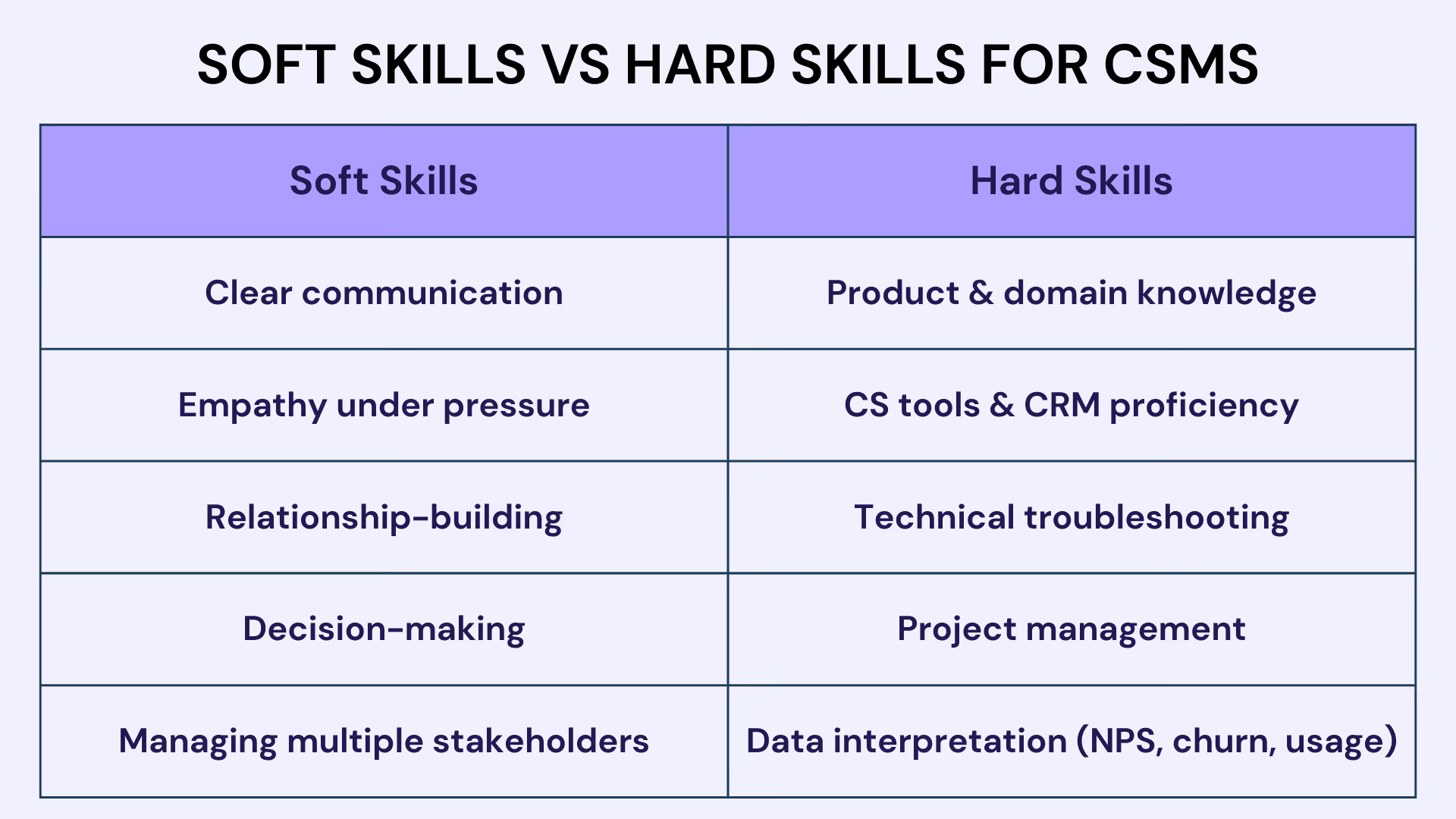
Customer success roles demand both strategic thinking and human connection. That’s why a high-performing CSM needs a blend of hard and soft skills each playing a critical part in shaping long-term client partnerships.
Soft Skills for Customer Success Manager Role:
Soft skills are essential in the customer success journey, shaping every interaction beyond technical problem-solving. These capabilities help CSMs build trust, manage expectations, and influence outcomes, making them critical to long-term client retention. Key soft skills include:
- Clear communication: Enables candidates to share information clearly, reduce errors, align teams, and ensure faster decisions in fast-paced, cross-functional work environments.
- Empathy under pressure: Helps maintain calm, build trust, and respond thoughtfully during high-stress situations, supporting conflict resolution and positive interactions with customers or teams.
- Relationship-building across levels: Allows individuals to collaborate effectively, influence without authority, strengthen partnerships, and move work forward by connecting well with peers, leaders, and clients.
- Decision-making in complex situations: Ensures candidates can analyze information, weigh risks, and make timely, effective decisions that improve project outcomes and operational stability in ambiguity.
- Managing multiple stakeholders with competing priorities: Enables smooth coordination, expectation alignment, and balanced decision-making when different teams need different outcomes, maintaining momentum without damaging relationships.
These shape the tone and depth of customer relationships. While soft skills drive relationship-building, they need to be paired with solid technical capabilities. Let’s now look at the hard skills that enable CSMs to deliver measurable outcomes, handle complexity, and operate confidently in fast-paced SaaS environments.
Hard Skills for Customer Success Manager Role:
Hard skills enable CSMs to translate strategy into action. From navigating tools to interpreting product data, these technical competencies support every customer touchpoint. Without them, even the best communication falls short. Core hard skills for CSMs include:
- Deep product knowledge and niche domain expertise: Enables candidates to solve issues quickly, guide users confidently, and offer accurate, high-value support tailored to complex product needs.
- Comfort with CS tools, CRMs, and reporting dashboards: Ensures smooth workflows, accurate documentation, and real-time visibility into customer health, improving efficiency and decision-making across support and success teams.
- Technical troubleshooting during escalations: Helps resolve advanced problems fast, reduce customer frustration, and prevent churn by offering reliable, skilled support during high-stakes technical situations.
- Project management for onboarding and success plans: Supports structured onboarding, timely deliverables, and clear customer milestones, ensuring predictable progress and strong long-term product adoption.
- Data interpretation tied to metrics like NPS, churn, and product usage: Enables informed decisions, early risk detection, and targeted interventions by analyzing trends that directly impact customer satisfaction and retention.
CSMs who balance both sets of capabilities can navigate complexity while staying customer-first. This dual proficiency becomes non-negotiable as CS teams evolve into revenue-driving engines. Now, let’s explore the top skills for customer success manager roles.
Top 10 Customer Success Manager Skills
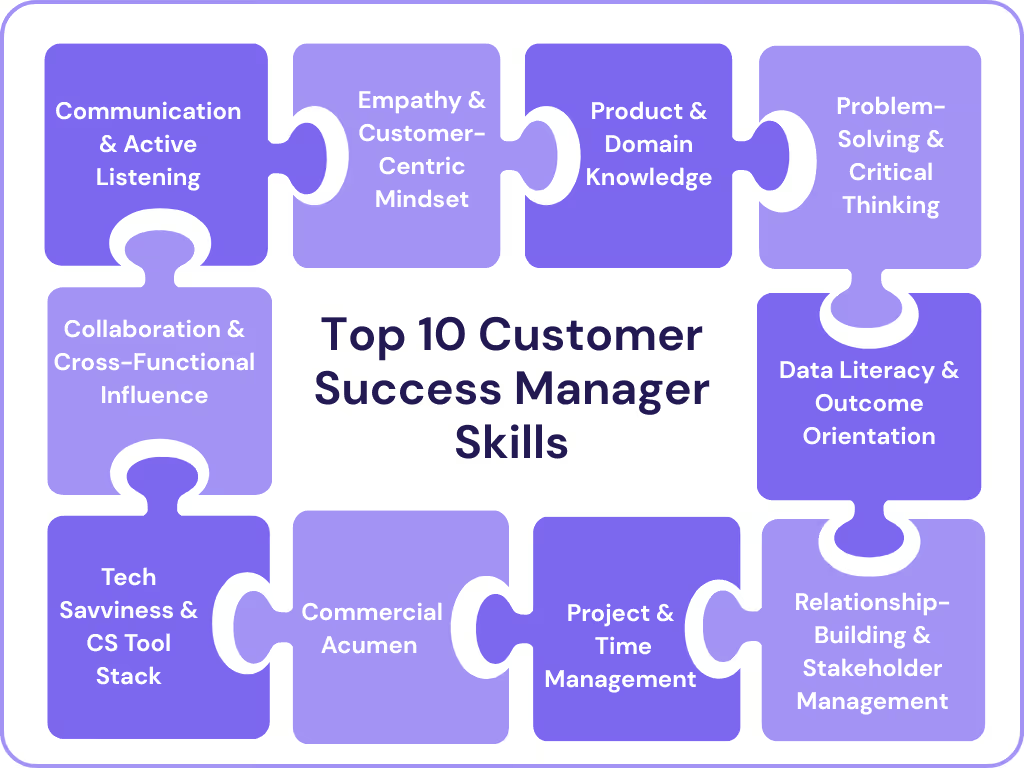
Balancing technical expertise with human connection, a high-performing CSM brings a distinct mix of competencies to the table. Here are the top 10 customer success manager skills to prioritize when hiring for long-term impact:
1. Exceptional Communication & Active Listening
Clear, empathetic communication is the foundation of every successful client interaction. Whether onboarding new users or navigating renewal conversations, the ability to simplify complex ideas is non-negotiable. Great CSMs speak and write with clarity, but more importantly, they listen actively—identifying hidden concerns, goals, and future risks early.
What good looks like: A top CSM doesn’t just wait for their turn to talk. They reflect on what’s said, ask clarifying questions, and tailor follow-ups based on subtle cues. They can explain intricate features to non-technical stakeholders—without jargon.
2. Empathy and Customer-Centric Mindset
Among all soft skills for customer success manager roles, empathy often ranks highest. It enables CSMs to truly understand customer pressures and balance them with business needs. Empathetic CSMs pick up on tone, urgency, and emotional context even when not explicitly stated. They don't just serve customers, they advocate for them.
What good looks like: A skilled CSM stays calm in escalations, validates the customer’s viewpoint, and works collaboratively toward solutions without defensiveness.
3. Deep Product & Domain Knowledge
CSMs are often seen as trusted advisors. But that trust only holds if they bring strong knowledge of the product’s features, use cases, and limitations. In SaaS, this often includes niche domain fluency—such as HRTech, FinTech, or MarTech—making it one of the key skills for customer success manager roles.
What good looks like: They answer tough questions without needing to escalate every time. They provide strategic recommendations, not just support scripts.
4. Problem-Solving & Critical Thinking
The best CSMs don’t put out fires—they prevent them. They assess patterns, dig deeper into issues, and balance short-term requests with long-term feasibility. This is one of the most crucial skills needed for customer success manager roles because it directly impacts customer satisfaction and product value realization.
What good looks like: They approach challenges with structure. Instead of patchwork fixes, they trace the root cause and work cross-functionally to address it.
5. Data Literacy & Outcome Orientation
Modern CS teams rely on metrics—like NRR, churn, CSAT, product usage, and onboarding time to stay accountable. A skilled CSM reads dashboards not just to report but to act. This is where hard skills for customer success manager roles become measurable.
What good looks like: They monitor account health scores, identify drop-offs, and present success plans backed by actual usage trends. They speak the language of outcomes.
6. Relationship-Building & Stakeholder Management
CSMs must build deep trust—not just with end users, but with executive sponsors and procurement gatekeepers. Among all skills of customer success manager roles, this one determines how influence is earned and retained across the customer journey.
What good looks like: They map stakeholder hierarchies, adapt to different communication styles, and maintain consistent engagement without overstepping boundaries.
7. Project & Time Management
Juggling multiple accounts, onboarding timelines, renewal milestones, and internal requests demands serious planning. Without strong time management, even the most empathetic CSMs can drop balls.
What good looks like: They prioritize effectively, stay organized across accounts, and use tools to track commitments—reducing churn risks due to poor follow-through.
8. Collaboration and Cross-Functional Influence
CSMs don't work in silos. Their success depends on syncing with product, support, marketing, and sales to close the loop on customer needs. This skill is critical in enterprise setups where insights must be translated into action without causing internal friction.
What good looks like: They don’t just pass feedback—they connect it to impact, timing, and urgency. They know how to advocate for customers while aligning with internal goals.
9. Commercial Acumen: Upsell, Expansion & Renewal Strategy
Many CS teams now own revenue KPIs. That means CSMs must feel confident leading commercial conversations without sounding salesy. This is one of the top skills for customer success manager roles in growth-stage SaaS companies.
What good looks like: They can spot expansion signals, quantify ROI, and loop in sales at the right time. They know when to ask and how to position value.
10. Tech Savviness & CS Tool Stack Proficiency
A CSM's day-to-day depends on tools from CRMs like Salesforce to CS platforms like Gainsight or Totango. Tech-savvy CSMs don’t just use tools, they leverage them to improve response times, health scoring, and task automation.
What good looks like: They adapt quickly to new systems, troubleshoot basic issues, and teach customers how to self-serve where possible.
Knowing the top customer success manager skills is only half the job. The real challenge lies in identifying these traits during hiring. Let’s explore how to assess both hard and soft skills effectively in real-world recruitment scenarios.
Common Mistakes When Hiring CSMs
Even experienced hiring teams sometimes misjudge what makes a great Customer Success Manager. Here are the most frequent mistakes that derail long-term success—and what to do instead.
1. Over-Prioritizing Domain Experience
While industry familiarity helps, it shouldn’t overshadow critical thinking, relationship-building, and communication. Many teams hire for FinTech or HRTech experience but overlook candidates with strong transferable customer success skills.
Better approach: Prioritize adaptability, learning curve, and problem-solving during assessment. Domain knowledge can be taught—core skills are harder to build.
2. Treating CSMs Like Support Agents
A CSM’s role isn’t about solving tickets. It's about driving adoption, identifying expansion, and retaining revenue. When hiring managers confuse the role with traditional support, they attract the wrong candidates and set the wrong expectations.
Better approach: Highlight strategic ownership, customer lifecycle planning, and stakeholder influence in your customer success manager job description.
3. Ignoring Data Literacy and Commercial Acumen
Many teams still overlook a candidate’s comfort with numbers. But CSMs today work with health scores, CSAT trends, and renewal metrics. They also need to drive upsells and justify ROI.
Better approach: Test candidates on data interpretation and expansion strategy planning. This ensures they’re ready to own outcomes—not just conversations.
Hiring mistakes are expensive—not just in salary, but in churned accounts and lost revenue. Align your evaluation methods to the skills of customer success manager roles today, not what they used to be five years ago.
How to Assess Customer Success Manager Skills While Hiring
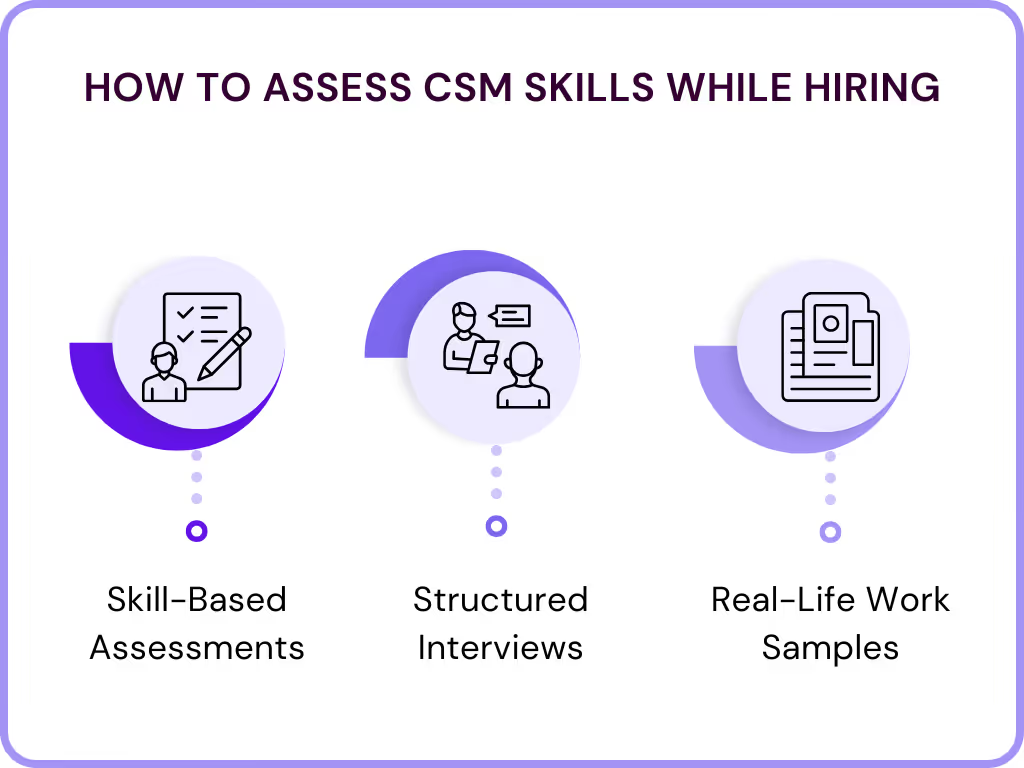
Evaluating the right customer success skills during hiring goes far beyond gut instinct. A structured approach can significantly reduce bad hires, lower churn, and strengthen client relationships from day one. Here’s a proven evaluation framework:
1. Skill-Based Assessments
Tests reveal how candidates think and act in real-world scenarios. Include a combination of:
- Customer Service Assessment: Test how they resolve common client issues.
- Email Writing Test: Review tone, clarity, empathy, and structure.
- Voice and Accent Test: Crucial for global accounts and BPO-style delivery models.
- Culture Fit Assessment: Checks alignment with your brand's tone, pace, and values.
- Managerial Skills Test: Ideal for senior or strategic CSM roles. For leadership hiring, a Head of Customer Success Test helps assess decision-making, revenue ownership, stakeholder influence, and long-term retention strategy.
Quick Tip: Use a combined Customer Success Manager Test that includes both skill and behavior evaluations. Integrate it with AI-powered interviews to remove bias and boost hiring accuracy.
2. Structured Interviews
Instead of informal conversations, use an AI voice interview or AI video interview to ask specific, structured questions tied to real outcomes. Look for evidence of each skill in past roles— especially around:
- Handling critical customer escalations
- Cross-functional collaboration during feature rollouts
- Managing renewals under pricing objections
3. Real-Life Work Samples
Work samples offer a direct window into how candidates think, write, and solve problems. They help validate actual capability, not just confidence. Ask them to:
- Draft a renewal strategy plan
- Write a follow-up email after a QBR
- Interpret a sample customer health dashboard
This helps surface practical knowledge, thought process, and writing tone which is far better than theoretical responses. This approach helps you verify both soft skills for customer success manager roles and technical expertise, ensuring that candidates are equipped for the dynamic nature of SaaS customer success.
Even with the right assessment strategy, hiring missteps can still happen. To build a strong customer success team, it’s just as important to recognize and avoid the common mistakes that often lead to poor long-term hires.
Conclusion
Hiring a Customer Success Manager is not just about filling a post-sales role. It’s about onboarding a strategic partner who influences retention, product adoption, and account growth. The ten skills covered here from stakeholder management to commercial acumen which reflects what separates average hires from top-performing CSMs.
But identifying these skills requires more than just an interview. Use structured assessments, simulate real-world tasks, and benchmark candidates with a dedicated Customer Success Manager Test. Combine this with AI-led interviews and culture-fit analysis to ensure every hire drives measurable value. Talk to our experts at PMaps Assessments or reach out at 8591320212 / assessment@pmaps.in.