
.webp)
.webp)

Compare leading Thomas International alternatives that deliver deeper behavioral insights, modern psychometrics, and scalable talent evaluation tools. Choose platforms suited for culture fit, leadership assessment, and role-based prediction accuracy.


78% of organizations now use behavioral assessments, according to Gartner, to improve hiring accuracy, reduce bias, and strengthen talent decisions across leadership and high-impact roles.
Thomas International is known for behavioral profiling and workplace personality insights, but many organizations now seek alternatives that offer expanded cognitive testing, better user experience, or broader role coverage. This guide compares leading platforms that enhance prediction accuracy, improve culture alignment, and support scalable, science-backed hiring across growing organizations


PMaps is a visual-first psychometric and skills assessment platform designed to evaluate personality, cognitive ability, and workplace behavior through engaging, language-light formats. Its assessments reduce bias and improve accessibility for diverse candidate groups. PMaps offers predictive analytics, customizable role-based frameworks, and multilingual delivery, helping organizations measure job fit, workplace tendencies, and performance potential with clarity. Its science-backed assessments support hiring decisions across frontline, corporate, and customer-facing roles.
A great choice for organizations seeking modern, accessible psychometrics that combine behavioral insights with cognitive and job-fit prediction ideal for improving consistency, reducing bias, and enhancing hiring accuracy in diverse workforce settings.
Mettl is a comprehensive talent assessment platform offering cognitive, behavioral, technical, and domain-specific testing for hiring and development. Its validated psychometric tools measure personality traits, workplace behavior, and leadership potential, while its aptitude assessments evaluate analytical, numerical, and critical-thinking skills. With AI-based proctoring, customizable test batteries, and scalable delivery, Mettl helps organizations run structured, secure assessments across high-volume recruiting, lateral hiring, and internal talent development programs.
A solid option for teams seeking a scalable, all-in-one assessment suite that blends psychometrics, aptitude, and technical testing supporting consistent, competency-driven decision-making across hiring and development.
Bryq is a science-based talent assessment platform that evaluates personality, cognitive ability, and culture alignment using validated psychometric models. Its AI-supported engine provides clear fit scores against predefined job profiles, helping organizations predict performance and long-term potential. Bryq’s structured insights reveal strengths, behavioral tendencies, and collaboration styles, enabling hiring teams to select candidates who not only meet role demands but also complement team dynamics and support future organizational growth.
An excellent option for organizations focusing on culture alignment, behavioral predictability, and long-term performance potential ideal for building cohesive teams and improving quality-of-hire with structured, science-backed insights.
TestGorilla is a skills-based assessment platform offering cognitive, personality, language, and technical tests designed for scalable screening. Its large test library supports a wide range of roles, while automated scoring and structured evaluations help teams shortlist candidates consistently. The platform includes integrity features, job-specific templates, and asynchronous video responses, enabling organizations to build an objective, data-backed assessment process that reduces bias and improves early-stage selection efficiency.
Ideal for organizations that need fast, structured screening across multiple roles offering scalable skills assessments, consistent scoring, and flexible test combinations suited for diverse hiring needs.

Korn Ferry provides enterprise-grade talent assessments rooted in decades of organizational psychology and leadership science. Its tools evaluate cognitive ability, personality traits, learning agility, and leadership potential using validated competency frameworks. The platform supports hiring, succession planning, and development by offering predictive insights into how individuals think, lead, and collaborate. Korn Ferry’s extensive benchmarks and role libraries help organizations align talent decisions with long-term business strategy and leadership pipelines.
A strong choice for organizations that prioritize leadership readiness, deep behavioral science, and long-term talent strategy ideal when high-stakes roles require rigorous evaluation and alignment with organizational competencies.
WeCP (We Create Problems) is a technical assessment platform that evaluates coding skills, problem-solving ability, and real-world technical aptitude through curated challenges and project-style tasks. It offers a large library of technical questions, customizable assessments, and scalable workflows suitable for both small and large hiring teams. With strong proctoring, automated scoring, and ATS integrations, WeCP helps organizations identify technically competent candidates quickly and accurately across engineering, IT, and digital roles.
A strong option for organizations prioritizing reliable, scalable technical screening ideal when evaluating engineering, IT, and digital talent where accuracy, speed, and fraud prevention are essential.
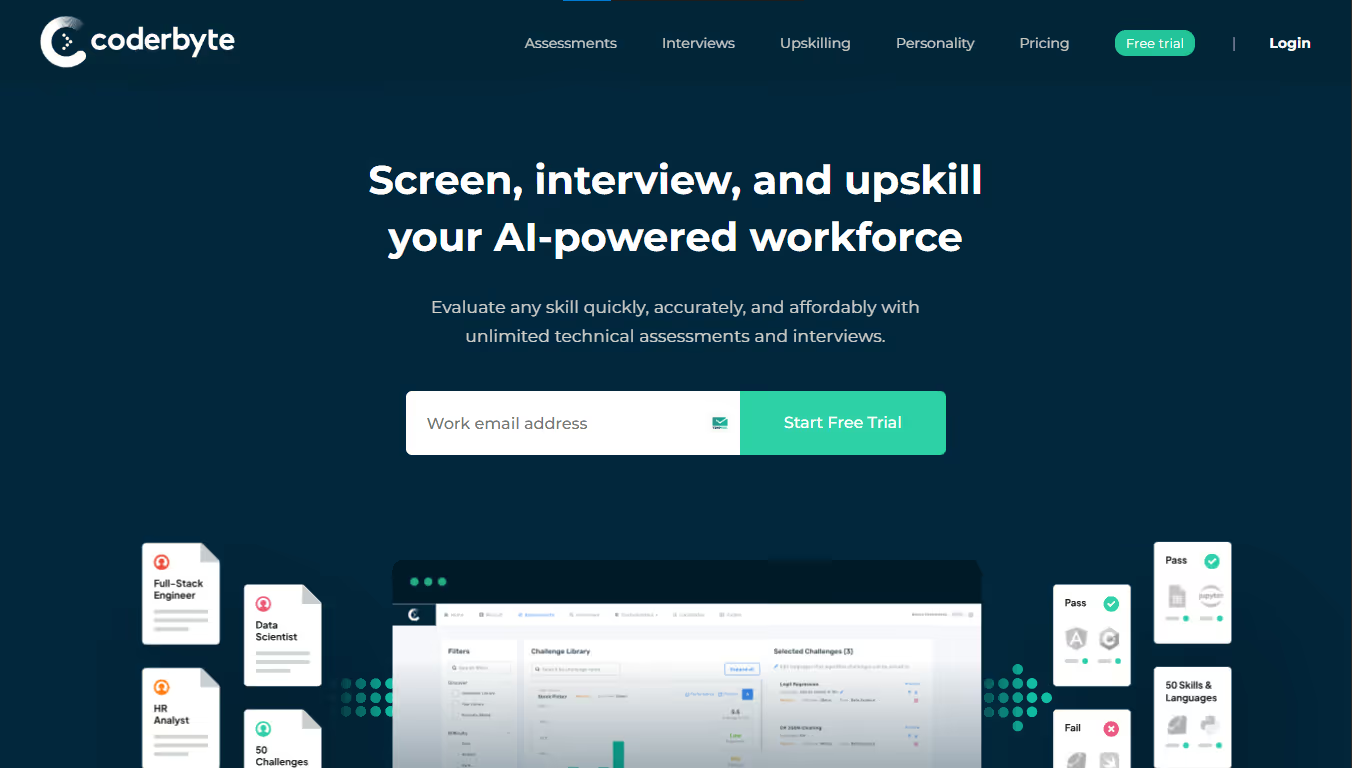
Coderbyte is a technical assessment and interview platform designed to evaluate coding ability through automated challenges, project-based tasks, and customizable assessments. It supports multiple programming languages and offers a large question library for algorithms, full-stack development, and data skills. With integrated interview tools, candidate code playback, and benchmarking analytics, Coderbyte enables teams to run fast, consistent, and scalable technical hiring workflows across junior and mid-level engineering roles.
A good option for teams needing fast, scalable, and customizable technical assessments especially when evaluating junior and mid-level developers efficiently with structured, automated scoring.
Hogan Assessments is a personality and behavioral evaluation suite grounded in decades of research in workplace psychology. Its core assessments HPI, HDS, and MVPI measure everyday personality, derailment risks, and core values to predict job performance and leadership behavior. Organizations use Hogan to uncover strengths, identify potential performance risks, and evaluate how individuals align with role expectations and organizational culture. Hogan is widely used for leadership selection, succession planning, and executive development.
Ideal for organizations seeking rigorous behavioral science, high predictive validity, and detailed insight into leadership readiness useful when evaluating high-impact roles where personality dynamics and potential risks significantly influence performance.
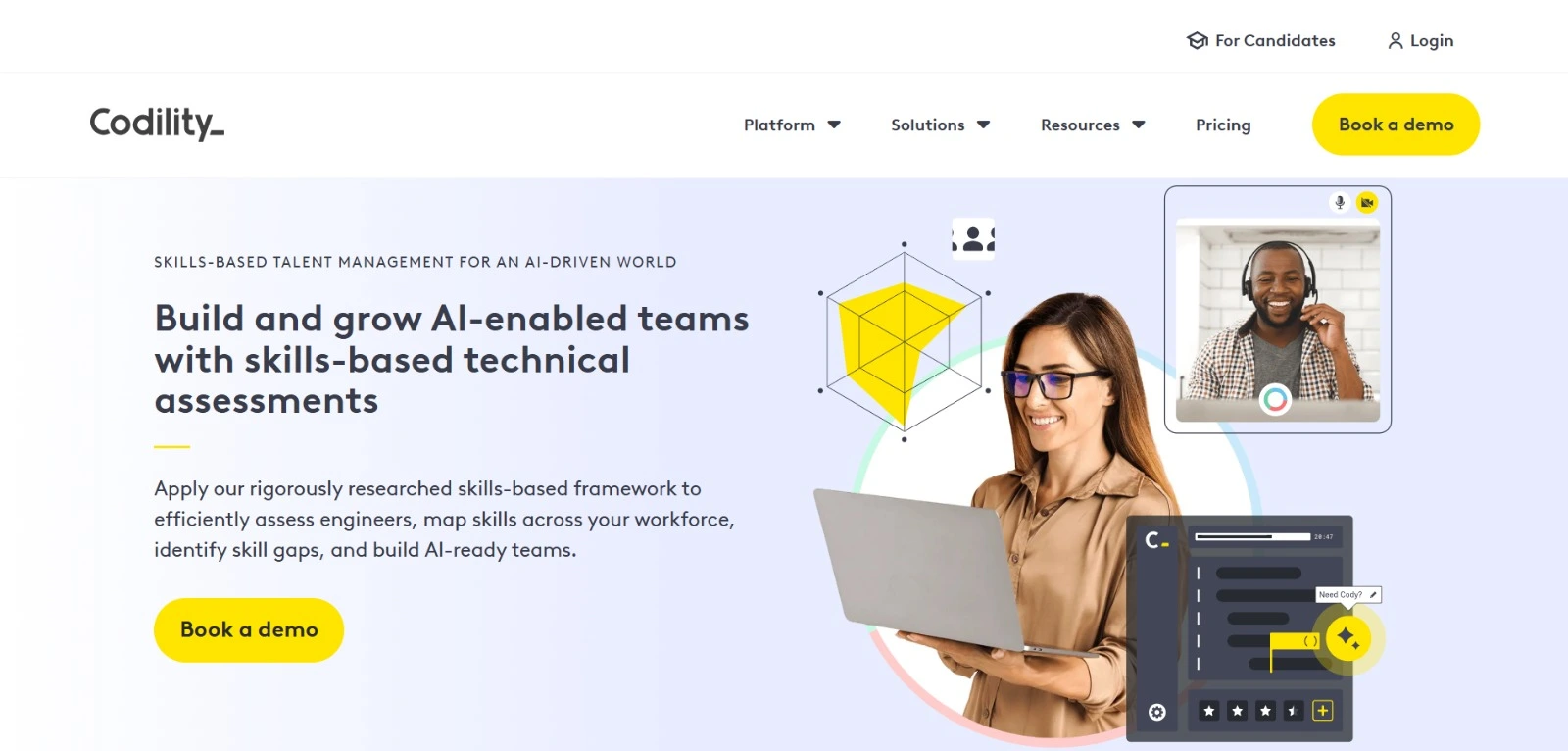
Codility is a technical hiring platform built to evaluate programming skills through online coding tasks, automated scoring, and integrity tools. It offers role-based assessment templates, real-world coding environments, and multiple language support to help teams shortlist engineering talent quickly. Codility’s Coding Tasks, CodeLive interviews, and Plagiarism Detection create a structured workflow for assessing developers across varying experience levels while maintaining fairness, security, and consistency throughout the hiring process.
A solid option for organizations prioritizing structured, scalable coding evaluation ideal when accurately measuring programming fundamentals, speed, and problem-solving capabilities is essential for engineering hiring success.
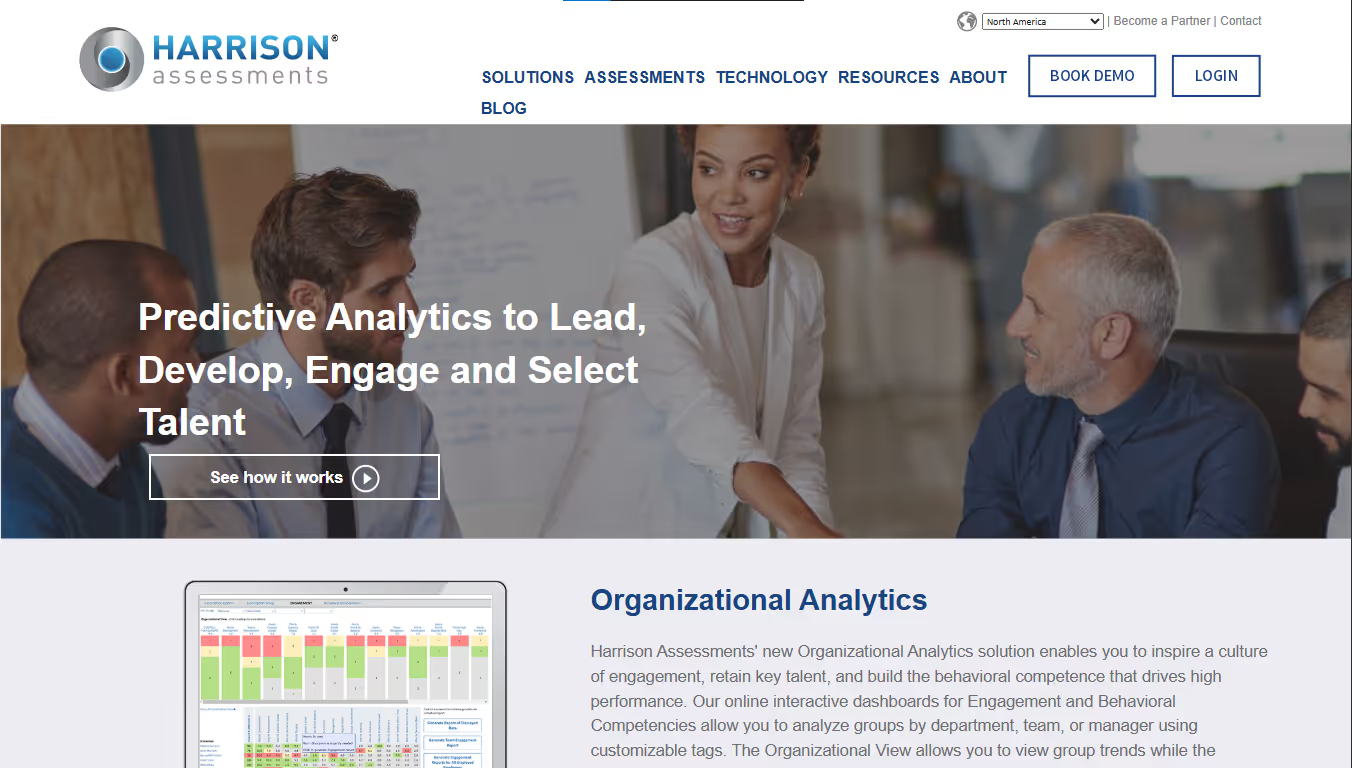
Harrison Assessment is a comprehensive behavioral and talent analytics platform that evaluates personality traits, work preferences, and job suitability using its unique Paradox methodology. It measures how individuals behave under normal conditions and stress, offering nuanced insights into strengths, derailers, and performance risks. With detailed job-fit scores, team analytics, and development recommendations, Harrison helps organizations make more informed talent decisions across hiring, succession planning, and leadership development.
Ideal for organizations seeking deep, nuanced behavioral insights that reveal both strengths and potential risks supporting better hiring, stronger leadership decisions, and tailored development that aligns with role expectations.
Choosing the right Thomas International alternative starts with clarifying your priority: deeper behavioral insight, cognitive measurement, role-based prediction, or scalable workflows. Compare platforms on scientific validity, reporting clarity, pricing, and integration needs. Select a solution that strengthens prediction accuracy, reduces bias, and supports both hiring and long-term talent development.

Prioritize platforms backed by published validation studies, reliability coefficients, norm groups, and documented predictive correlations that connect assessment results directly to on-the-job performance outcomes.

Move beyond surface-level personality profiling and ensure the alternative combines behavioral tendencies, cognitive indicators, and role benchmarking to create a more performance-aligned hiring framework.

Select tools offering quantified insights, benchmarking comparisons, and structured decision summaries so leaders can confidently explain, document, and defend hiring decisions with measurable evidence.

Verify SOC 2 or ISO certifications, encrypted data storage, role-based access controls, audit trails, and transparent privacy compliance to meet enterprise governance and procurement expectations.

Ensure reports translate complex behavioral data into practical interview guidance, risk flags, and role-fit narratives that hiring managers can use without specialist psychological expertise.

Confirm seamless ATS integrations, API flexibility, centralized reporting dashboards, and multi-role benchmarking capabilities to support consistent, data-driven hiring across growing teams.
Thomas International offers strong behavioral insights, but exploring alternatives helps organizations find platforms better aligned with role demands, scalability, and assessment depth. Compare each option based on scientific rigor, reporting clarity, pricing, and integration needs. The right alternative should enhance prediction accuracy, reduce bias, and support long-term talent and leadership development.
Start by clarifying what insights matter most behavioral traits, cognitive ability, cultural alignment, or leadership potential. Then compare platforms on scientific rigor, reporting clarity, ease of use, and pricing. The best choice will align with your talent strategy and role demands.
Yes when assessments are validated and aligned to role competencies, they highlight behavioral strengths, motivators, and risks that influence long-term performance. Pairing these insights with structured interviews and skills data significantly enhances prediction accuracy and reduces subjective decision-making.
Personality insights help reveal leadership tendencies, but combining them with cognitive measures and situational judgment exercises offers a more complete picture. Leadership roles benefit from understanding how someone thinks, reacts under pressure, and aligns with organizational expectations.
Use validated tools, standardized scoring, and role-based benchmarks. Communicate the purpose clearly to candidates and avoid overreliance on a single result. Fairness improves when assessments are part of a structured, multi-step evaluation process.
Expect a brief transition period where competency frameworks, hiring teams, and reporting formats must be realigned. Training stakeholders and calibrating benchmarks early helps ensure consistent interpretation and better adoption across the organization.
Shorter assessments can deliver reliable insights when backed by strong validation research. They reduce fatigue and improve completion rates while still capturing key behavioral traits especially when combined with cognitive or role-specific evaluations.

Need support? Fill out the form and we'll get back to you shortly.
